
AI Gives a Face to a Pompeii Man Dead for Nearly 2,000 Years
Zero Signal Staff
Published April 28, 2026 at 2:41 AM ET · 152 days ago
Reuters / AP News / NPR
For the first time, archaeologists at Pompeii have used artificial intelligence to digitally reconstruct the appearance of a man killed when Mount Vesuvius erupted in AD 79 — producing a visual portrait of a victim whose remains have lain in the volc
For the first time, archaeologists at Pompeii have used artificial intelligence to digitally reconstruct the appearance of a man killed when Mount Vesuvius erupted in AD 79 — producing a visual portrait of a victim whose remains have lain in the volcanic ruins for nearly two millennia. The project, a collaboration between the Pompeii Archaeological Park and the University of Padua, drew on archaeological survey data from excavations near the ancient city's walls to generate the reconstruction.
The Details
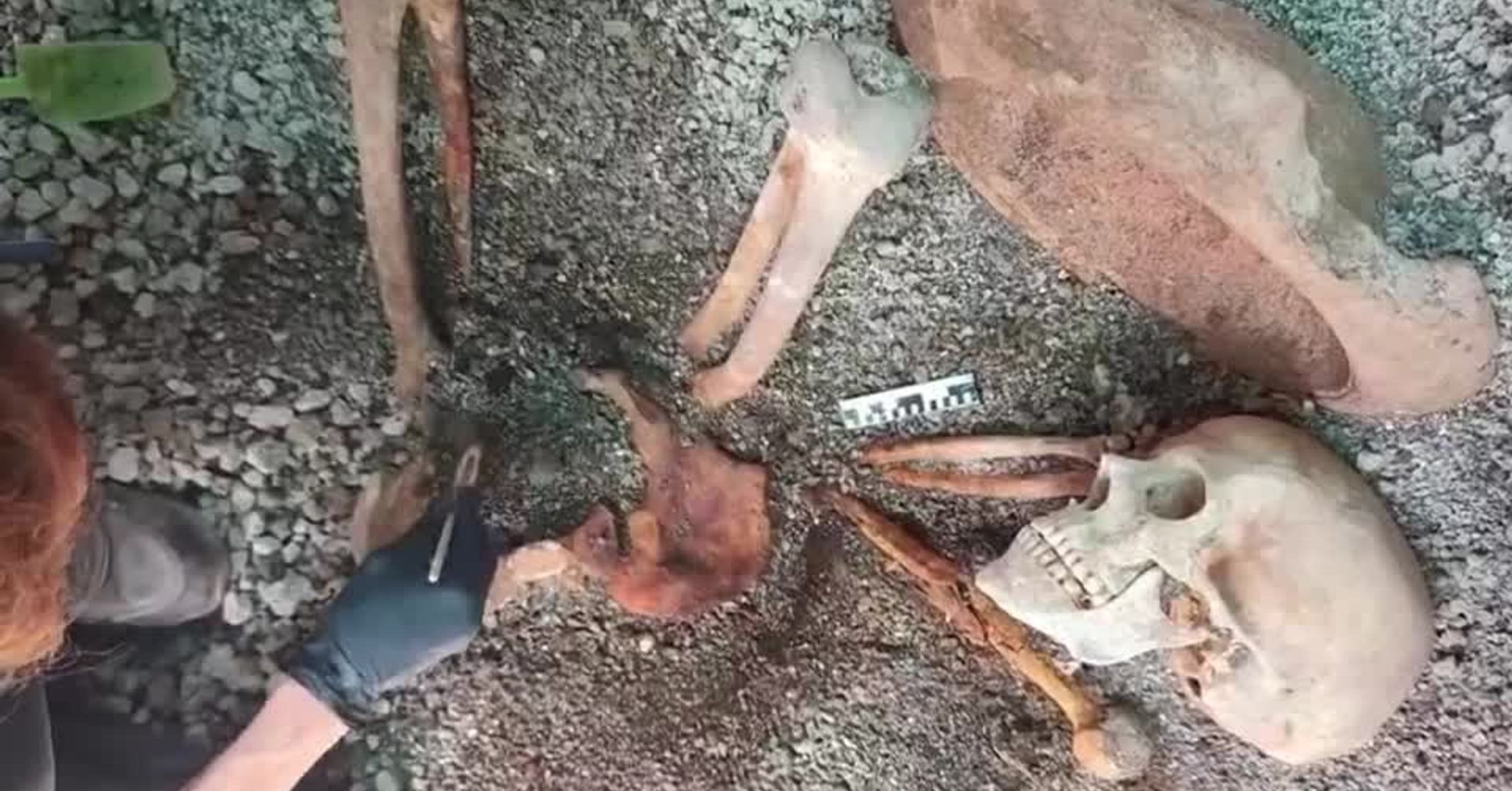
The reconstruction emerged from excavations near the Porta Stabia necropolis, a burial area outside the ancient city's walls, according to AP News. The man's skeletal remains and the objects found alongside him were analyzed using archaeological survey data, which was then processed with AI to produce the digital portrait — the first application of this technology to a Pompeii victim.
Researchers believe the man died attempting to flee toward the coast, NPR reported. His death likely came during an early shower of volcanic rocks rather than the later pyroclastic surges that would engulf much of the city. His remains were found near a terracotta mortar, which researchers say he appears to have been using to shield his head from the deadly barrage.
Among the objects found with the man were an oil lamp, a small iron ring, and 10 bronze coins, according to NPR. Researchers say these items offer a rare glimpse into both his final desperate moments and the texture of daily life in Pompeii before the eruption — the coins suggesting his economic circumstances, the lamp indicating he was moving in darkness or near dark, the ring a detail of personal adornment.
Gabriel Zuchtriegel, the director of the Pompeii Archaeological Park, said the technology opens new possibilities for how the ancient world can be studied and presented. "If used well, artificial intelligence can contribute to a renewal of classical studies, illustrating the classical world in a more immersive way," Zuchtriegel said, according to Reuters.
Zuchtriegel also addressed the broader case for AI in archaeology. "The vastness of archaeological data is now such that only with the help of artificial intelligence will we be able to adequately protect and enhance them," he said, according to NPR. The scale of Pompeii alone — a city frozen in the moment of catastrophe — generates research data that traditional methods struggle to process at speed.
Context
Pompeii was buried under ash and pumice when Mount Vesuvius erupted in AD 79, preserving the city and many of its inhabitants in extraordinary detail, NPR reported. The disaster killed thousands and sealed the city beneath volcanic debris, a catastrophic event that paradoxically created one of the world's most complete records of ancient Roman urban life.
The site, located near Naples in southern Italy, is a UNESCO World Heritage site and one of Italy's most significant archaeological destinations, according to Reuters. Excavations have continued for centuries and the volume of material recovered — skeletal remains, household objects, frescoes, food remnants, and architectural structures — is vast by any measure.
The use of AI to reconstruct the appearance of a specific individual from skeletal data marks a notable shift in how archaeological teams at the site are approaching that data. Where traditional analysis has produced maps, catalogs, and physical reconstructions of spaces and objects, this application turns the technology toward the individuals themselves — generating representations of people who lived and died in the city.
What's Next
The Pompeii Archaeological Park and the University of Padua have not publicly announced plans for additional AI-based reconstructions of other victims, according to available reporting from Reuters, AP News, and NPR. Whether the methodology will be expanded to further subjects at the site remains an open question for researchers.
Zuchtriegel's remarks suggest the park views this reconstruction as a proof of concept for a broader integration of AI tools into its work. "If used well, AI can contribute to a renewal of classical studies," he said, framing the project as the beginning of a longer research direction rather than a standalone effort.
Never Miss a Signal
Get the latest breaking news and daily briefings from Zero Signal News directly to your inbox.