
Asian Markets Retreat as Investors Await Iran Ceasefire Extension
Zero Signal Staff
Published April 17, 2026 at 6:20 AM ET · 183 days ago
AP News
Major Asian stock indices declined on Friday, April 17, 2026, as investors grew cautious ahead of the expiration of a U.S.-Iran ceasefire.
Major Asian stock indices declined on Friday, April 17, 2026, as investors grew cautious ahead of the expiration of a U.S.-Iran ceasefire. The retreat came despite a record-breaking close on Wall Street the previous day, with markets shifting focus toward the diplomatic deadline on April 21. Oil prices also slid as hopes for a prolonged truce dampened the war premium.
The Details
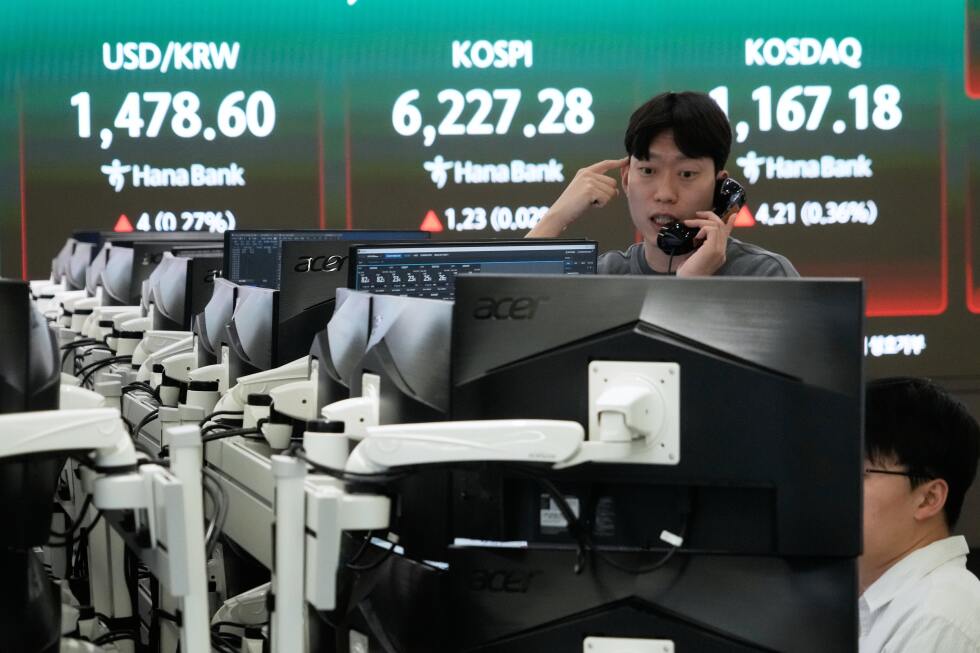
Tokyo's Nikkei 225 saw a significant drop, falling 1.8% to 58,475.90 by the close, reversing gains from Thursday when the index had hit an all-time high. Other regional markets followed suit: South Korea's Kospi declined 0.6% to 6,191.19, Hong Kong's Hang Seng dropped 1% to 26,126.86, and the Shanghai Composite edged down 0.1% to 4,051.45. Overall, the MSCI Asia Pacific Index fell 0.4%, breaking a three-day rally.
Energy markets reflected similar uncertainty. Brent crude oil fell 1.1% to approximately $98.31 per barrel, while U.S. benchmark WTI crude dropped roughly 1.4% to around $89.90. This follows a period of extreme volatility; oil prices had surged nearly 40% since the conflict began in late February and peaked near $120 in March before the Friday retreat.
Amidst the broader downturn, some sectors showed resilience. In Hong Kong, Manycore Tech—a Chinese spatial design software firm—surged more than 140% on its first day of trading, driven by the ongoing artificial intelligence boom. Precious metals also saw modest gains, with gold rising 0.1% to $4,814.60 an ounce and silver increasing 0.4% to $79.04 per ounce.
Japan is taking proactive steps to stabilize regional energy interests. Finance Minister Satsuki Katayama announced that the Japan Bank for International Cooperation will establish an investment window of up to 600 billion yen ($3.8 billion) to help Asian nations secure energy supplies, citing the impact of oil volatility on foreign exchange markets. Simultaneously, Bank of Japan Governor Kazuo Ueda emphasized that the central bank must consider Japan's low real rates when determining future policy.
Context
The current market instability is rooted in the conflict that began in late February 2026, following U.S. and Israeli attacks on Iran. A tenuous two-week ceasefire was established on April 8, which is set to expire on April 21. While global equities have experienced a 'perfect V-shaped recovery'—ralllying for 10 consecutive days through Thursday to erase most war-related losses—the looming deadline has reintroduced risk aversion.
On the U.S. side, the S&P 500, Dow Jones Industrial Average, and Nasdaq all closed at record highs on April 16. However, domestic tensions persist, with President Donald Trump reigniting a dispute with Federal Reserve Chair Jerome Powell, threatening his removal when his term ends on May 15.
Diplomatically, the situation remains complex. President Trump confirmed a separate 10-day ceasefire between Israel and Lebanon. Meanwhile, Iran's parliament speaker has indicated that the cessation of Israeli attacks on Lebanon is a mandatory condition for formal negotiations between Tehran and Washington to begin.
What's Next
Attention now turns to the April 21 ceasefire expiration. President Trump has stated he is open to extending the truce and suggested that a new round of in-person talks between the U.S. and Iran could potentially occur next weekend. He recently noted, "We're very close to making a deal," and suggested the war should be ending soon.
Tehran has expressed a level of 'cautious optimism' regarding these negotiations. Reports indicate Iran may consider allowing ships to sail freely through the Omani side of the Strait of Hormuz as a gesture of good faith during the talks.
However, the trajectory remains uncertain. U.S. lawmakers have recently rejected a military pullback from Iran, signaling continued involvement that may clash with the administration's diplomatic efforts. The market's reaction in the coming days will likely depend on whether a formal extension is announced before the 21st.
Never Miss a Signal
Get the latest breaking news and daily briefings from Zero Signal News directly to your inbox.