
Baltic Leaders Express Confidence in NATO Despite Trump Withdrawal Threats
Zero Signal Staff
Published April 17, 2026 at 3:04 AM ET · 1 day ago
Reuters
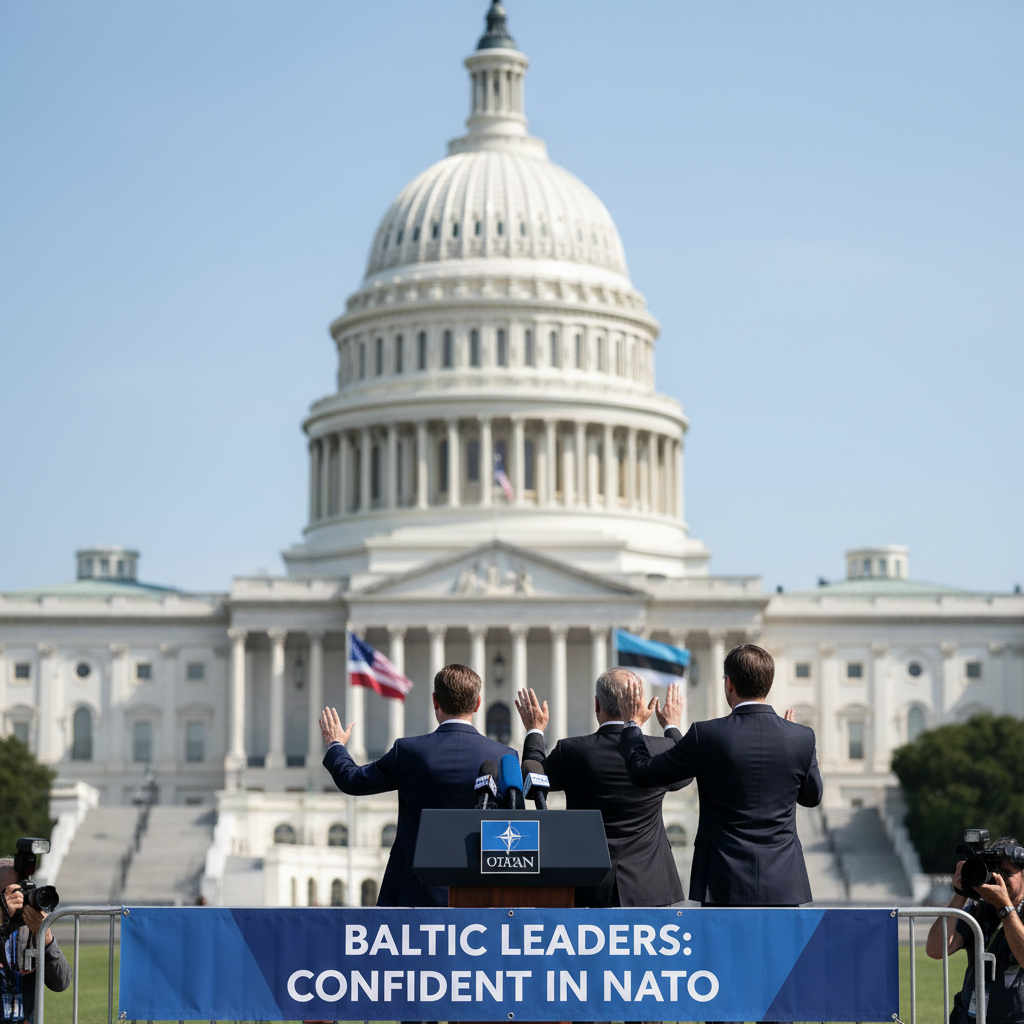
Leaders across the Baltic states have dismissed fears that NATO will collapse following threats from U.S. President Donald Trump to withdraw the United States from the alliance.
Leaders across the Baltic states have dismissed fears that NATO will collapse following threats from U.S. President Donald Trump to withdraw the United States from the alliance. Estonian Defence Minister Hanno Pevkur and other regional officials maintain that the U.S. remains committed to the collective defense of its allies. The confidence comes amid heightened tensions over a dispute regarding the Strait of Hormuz and ongoing Russian military preparations.
The Details
Estonian Defence Minister Hanno Pevkur stated he has no doubt that the U.S. would defend Estonia in the event of a Russian attack, emphasizing his trust in both the United States and other NATO allies. Pevkur likened the alliance's current frictions to the challenges of a long-term marriage, noting that differences are inevitable over 50 years and must be worked through rather than viewed as a sign of failure.
The current instability stems from President Trump's April 2026 threat to pull the U.S. out of NATO after several European members refused to send ships to unblock the Strait of Hormuz near Iran. This follows earlier tensions caused by the U.S. administration's stated intentions to acquire Greenland from Denmark, another NATO member.
Estonian Prime Minister Kristen Michal argued that NATO's practical military operations remain robust despite political rhetoric. He pointed to recent examples of functional cooperation, including NATO ships protecting Baltic Sea cables during the region's desynchronization from Russia's power grid and the use of Italian F-35s stationed in Estonia to escort Russian aircraft from Estonian airspace.
Lithuanian President Gitanas Nausėda echoed this sentiment, describing NATO as the most successful defense project since World War II. He dismissed the possibility that Trump's criticisms would lead to the alliance's demise, asserting that the organization's history of endurance proves it can withstand periods of severe strain.
President Alar Karis of Estonia similarly dismissed Trump's threats as a "war of words," stating that it is unrealistic to believe the U.S. would actually leave. Karis argued that President Trump understands the strategic necessity of the U.S. remaining within the alliance to maintain global stability.
Context
The push for Baltic confidence coincides with warnings from Estonian intelligence that Russia is stockpiling ammunition for potential future conflicts following the conclusion of the war in Ukraine. While Russia has dismissed claims of an imminent attack on NATO as nonsense, Estonian President Alar Karis noted that the Kremlin still fears the alliance's strength. Karis suggested that while Russia may not attack within the next two to three years, it only understands the "language of force."
Financial commitments to defense have become a central point of contention for the Trump administration. Last year, NATO heads agreed to a target of spending at least 5% of GDP on defense, a demand heavily pushed by Trump. While most members have struggled to meet this threshold, Estonia has led the way, spending 5.1% of its GDP on defense this year.
This level of spending is seen as critical, as Minister Pevkur admitted that Europe is not yet capable of standing up militarily on its own. He stressed that all NATO members must increase their investments to achieve the desired level of autonomy and security.
What's Next
Diplomatic efforts are now focused on resolving the conflict in Iran. Minister Pevkur argued that stabilizing the situation in the Strait of Hormuz is essential, as it would allow the United States to redirect its military and political focus back toward Ukraine, which he described as the primary problem for the Baltic region.
In the interim, Baltic leaders continue to rely on the authority of NATO SACEUR Alexus G. Grynkewich, whose wide-ranging command over defense operations is viewed as a stabilizing force that operates independently of the shifting political messages exchanged between allied capitals.
The alliance now awaits further signals from the White House regarding the Hormuz dispute, which will likely determine if the U.S. moves from rhetorical threats of withdrawal to actual policy changes.
Never Miss a Signal
Get the latest breaking news and daily briefings from Zero Signal News directly to your inbox.