
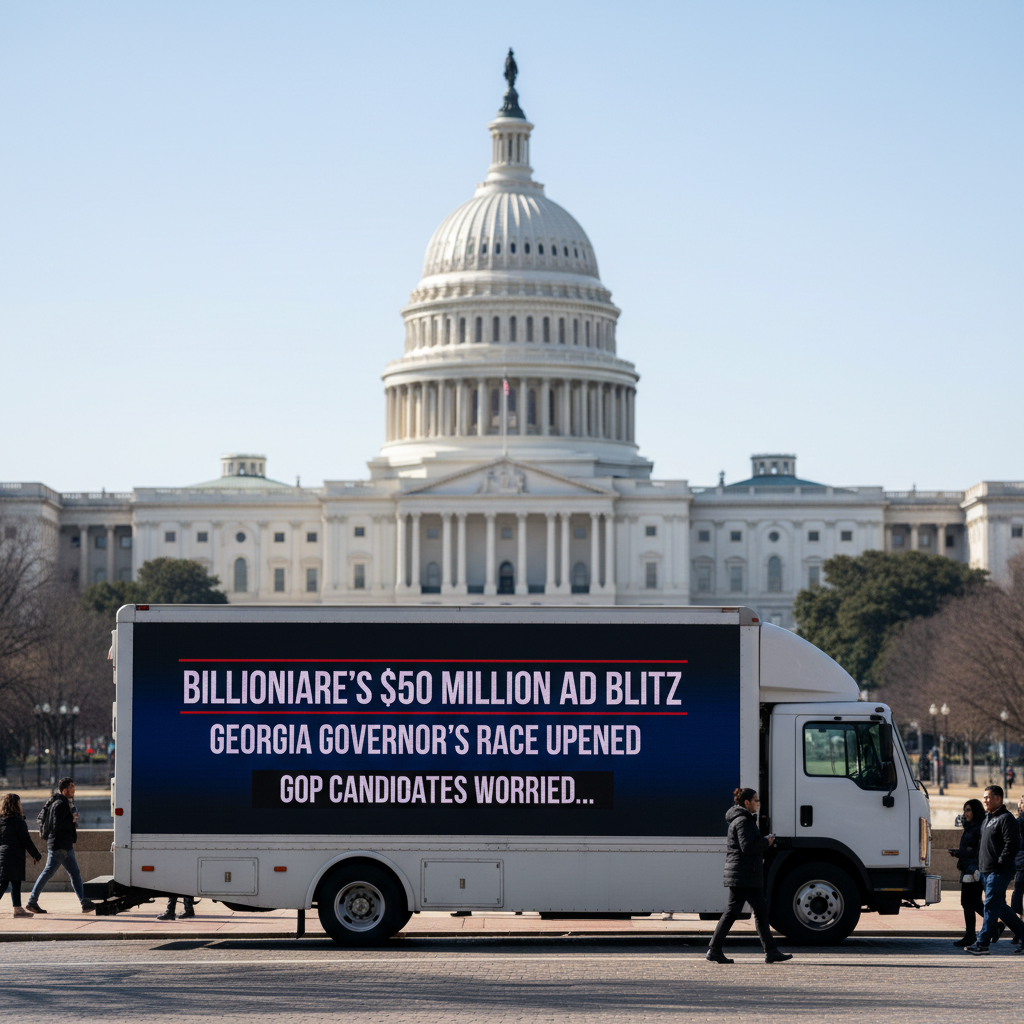
Billionaire's $50 Million Ad Blitz Upends Georgia Governor's Race, Worries Other GOP Candidates
Zero Signal Staff
Published April 15, 2026 at 9:03 AM ET · 184 days ago
Politico
Rick Jackson, a health care executive, has spent $50 million of his own money in two months to become a frontrunner in Georgia's Republican gubernatorial primary, nearly doubling the combined ad spending of all other candidates in both parties.
Rick Jackson, a health care executive, has spent $50 million of his own money in two months to become a frontrunner in Georgia's Republican gubernatorial primary, nearly doubling the combined ad spending of all other candidates in both parties. His media dominance is now creating problems for other Republican candidates statewide who say they cannot break through the noise to reach voters.
Jackson entered the race as a virtual unknown two months ago and rose to near-parity with Trump-backed Lt. Gov. Burt Jones through an aggressive advertising campaign across television, social media, and direct mail. According to AdImpact analysis, Jackson's spending has exceeded $50 million—nearly double the combined spending of all gubernatorial candidates in both primaries. One Republican strategist told Politico that in a 30-minute television window, six separate Rick Jackson ads aired.
The spending surge is creating collateral damage across the ballot. Republican strategists involved in state legislative races, constitutional office contests, and a critical U.S. Senate primary told Politico that Jackson's media presence is making it nearly impossible for their candidates to gain traction. Spiro Amburn, a longtime Georgia Republican strategist, said the situation creates scenarios where "many of these races are essentially crapshoots" because down-ballot candidates cannot secure meaningful media attention. A Georgia-based Republican operative suggested Jackson's spending is partly responsible for the GOP's chaotic Senate primary, as candidates struggle to build momentum.
Jones, who previously led most polls, now finds himself in a statistical tie with Jackson despite Trump's endorsement. Jones told Politico that Jackson is misrepresenting himself as a hard-nosed conservative outsider when he actually depends on state and federal contracts for his business. Jackson, in an interview, said he had not considered the effects on other races and promised to help Republicans win once he secures the GOP nomination. He stated he would do "whatever it takes" to win and added, "When I win, that's when I'm done."
THE
Context
Georgia's 2026 governor's race represents an unusual dynamic in Republican primary politics. Traditionally, endorsements from sitting presidents and established party figures determine primary outcomes. Trump's backing of Jones would have been expected to secure his path to the nomination in most cycles. However, the proliferation of self-funded candidates has shifted primary dynamics nationally. In 2022, Pennsylvania Republican David McCormick spent $43 million of his own money in a Senate primary but lost to celebrity TV doctor Mehmet Oz, who spent $60 million. Jackson's $50 million spending level in a gubernatorial primary now exceeds most precedents for such races, according to Republican strategists interviewed for the story.
The concentration of advertising in a single race has measurable effects on voter attention. Media markets in Georgia have finite ad inventory, and Jackson's purchase of large blocks of airtime directly reduces availability and increases costs for other candidates. This dynamic particularly affects lower-profile races where candidates rely on earned media and modest ad budgets to reach voters.
What's Next
The June runoff will test whether Jackson's spending advantage translates to a general election victory or whether Jones's Trump endorsement proves more durable than current polling suggests. If Jackson wins the primary, Republican strategists expect his promised financial support for down-ballot candidates will materialize, though the timing and scale remain unclear. The outcome will likely influence how future wealthy self-funded candidates approach state primaries, particularly in states with large media markets where advertising costs are prohibitive for traditionally funded campaigns.
Never Miss a Signal
Get the latest breaking news and daily briefings from Zero Signal News directly to your inbox.