
Captive Breeding Milestone as 30,000 Rare Pine Hoverflies Return to Scottish Highlands
Zero Signal Staff
Published April 22, 2026 at 4:02 AM ET · 158 days ago
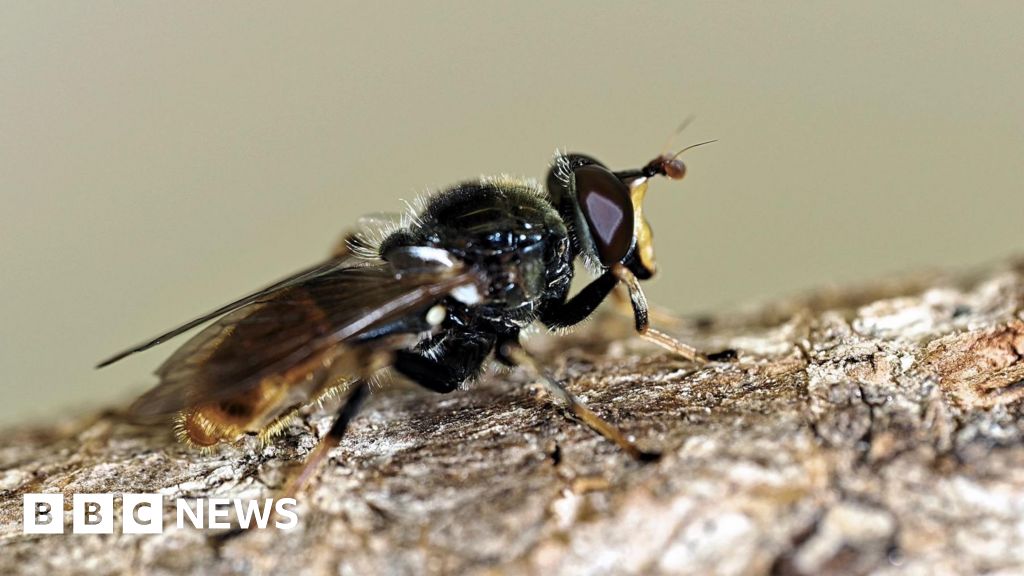
BBC News / RZSS
Conservationists have reached a major milestone in the effort to save one of Britain's rarest insects, releasing over 30,000 pine hoverflies into the Cairngorms National Park.
Conservationists have reached a major milestone in the effort to save one of Britain's rarest insects, releasing over 30,000 pine hoverflies into the Cairngorms National Park. The cumulative releases, conducted by the Royal Zoological Society of Scotland (RZSS), now outnumber the local human population of approximately 18,000. This effort marks a critical turning point for the species, which is classified as Critically Endangered in Scotland.
The Details
The reintroduction program, which began in 2018, operates out of the RZSS Highland Wildlife Park at Kincraig, near Aviemore. In March 2026 alone, nearly 7,000 larvae were released across four strategic sites. These releases were carried out on land managed by the Anagach Woods Trust, Forestry and Land Scotland, and RSPB Scotland.
To achieve these numbers, keepers employ an unconventional breeding method using jam jars and hummus pots. These containers are used to replicate the natural conditions of rot holes in old pine trees, which serve as the larvae's primary habitat in the wild. The process involves mixing rain water with pine wood chippings harvested from the flies' natural environment to create a nutritious soup, with the jars plugged with damp moss to maintain humidity.
The scale of the operation has transformed the species' prospects. In 2019, it was estimated that only 50 pine hoverflies remained, all inhabiting a single woodland site. The recovery has been slow but steady; notably, an adult fly spotted in 2022 was the first wild sighting in a decade.
Georgina Lindsay, RZSS field conservation manager, highlighted the scale of the achievement, noting that the number of flies released is nearly double the human population of the park. She described the milestone as a tribute to the collaborative work between various organizations sharing a common mission.
Recent data indicates that the intervention is working. Wild-bred pine hoverflies are now being recorded at release sites and in previously unoccupied areas, suggesting that the species is beginning to establish self-sustaining populations in the wild.
Context
The pine hoverfly (Blera fallax) depends on highly specific woodland habitats, specifically rot holes found in ancient pine trees. While these habitats were once widespread across the United Kingdom, they have dwindled significantly and are now restricted to a few isolated sites within the Cairngorms.
This effort is part of the broader Rare Invertebrates in the Cairngorms (RIC) project. The initiative is a wide-ranging partnership involving the Cairngorms National Park Authority, NatureScot, Buglife, the RZSS, and Butterfly Conservation.
Funding for the project is provided by the Scottish Government's Nature Restoration Fund, with additional support from the National Geographic Society, the Postcode Lottery, and Cheeky Panda. The project emphasizes the necessity of restoring diverse and dynamic pine forests, including the flowering shrubs and trees that adult hoverflies rely on for survival.
What's Next
The primary objective now shifts toward monitoring the long-term viability of these wild-bred populations. Project officers, including Gen Tompkins, have noted the excitement of seeing individuals breeding independently, which is the ultimate goal of the reintroduction effort.
Future work will continue to focus on habitat restoration. The success of the species depends not only on the number of insects released but on the availability of old-growth pine forests. Continued collaboration with land managers will be essential to ensure that the forest floor and canopy provide the necessary rot holes and floral resources.
As the pine hoverfly begins to spread beyond the initial release sites, conservationists hope this model of intensive captive breeding and strategic release can be applied to other critically endangered invertebrates facing similar habitat loss across the UK.
Never Miss a Signal
Get the latest breaking news and daily briefings from Zero Signal News directly to your inbox.