
China Orders Refiners to Defy U.S. Sanctions on Iranian Oil as Trump-Xi Summit Nears
Zero Signal Staff
Published May 5, 2026 at 3:58 AM ET · 160 days ago
Reuters / White House / CNBC / New York Times / Ministry of Foreign Affairs of the People's Republic of China
China's Ministry of Commerce has directed domestic companies not to comply with U.S. sanctions targeting five refineries tied to Iranian crude purchases, invoking Beijing's anti-sanctions law for the first time in the energy dispute.
China's Ministry of Commerce has directed domestic companies not to comply with U.S. sanctions targeting five refineries tied to Iranian crude purchases, invoking Beijing's anti-sanctions law for the first time in the energy dispute. The move deepens a bilateral clash over Iran's oil exports, which the White House is seeking to drive to zero through a campaign of secondary sanctions and financial pressure.
The Details
The confrontation accelerated after a February 2025 White House national security memorandum, NSPM-2, ordered a 'robust and continual campaign' to reduce Iran's oil exports to zero, explicitly including exports of Iranian crude to China. The directive set the stage for a months-long escalation in enforcement targeting buyers, banks, and refineries.
On April 15, U.S. Treasury Secretary Scott Bessent said the United States was prepared to impose secondary sanctions on countries purchasing Iranian oil. In remarks reported by Reuters, Bessent stated, 'We have told countries that if you are buying Iranian oil, that if Iranian money is sitting in your banks, we are now willing to apply secondary sanctions.' He also disclosed that two Chinese banks had been warned they could face sanctions if Iranian money flowed through their accounts.
Two weeks later, on April 29, the U.S. Treasury warned financial institutions that transactions involving Chinese independent, or 'teapot,' refineries processing Iranian oil could expose them to sanctions. According to a CNBC report citing Treasury, China purchases roughly 90 percent of Iran's oil exports. The Treasury warning flagged the risk of sanctions exposure for banks doing business with those refineries.
On May 4, Reuters reported that China's Ministry of Commerce ordered companies not to comply with U.S. sanctions on five refiners, including Hengli Petrochemical. The order marked the first use of Beijing's anti-sanctions law to counter the U.S. refinery blacklist tied to Iranian crude purchases. A New York Times report, cross-checked against the Reuters account, described Beijing as telling China's independent refineries to disregard the U.S. measures.
An unnamed White House official, speaking to Reuters after China's order, said, 'Any company considering skirting U.S. sanctions should think twice.'
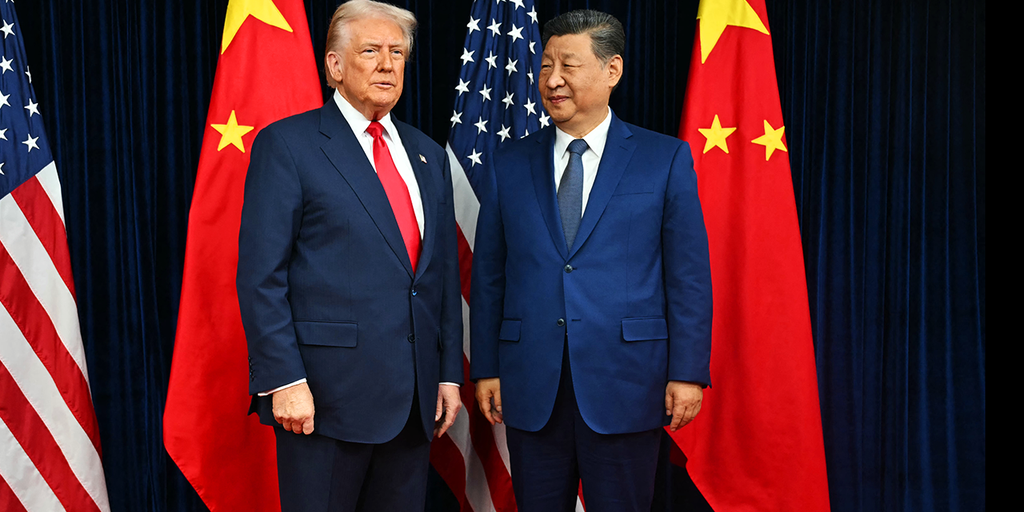
On the same day, Bessent publicly urged China to use its diplomatic leverage with Iran to reopen the Strait of Hormuz. In a Fox News interview reported by Reuters, he said, 'China, let's see them step up with some diplomacy and get the Iranians to open the strait.' He added that President Donald Trump and President Xi Jinping would discuss Iran during their planned summit in Beijing on May 14-15.
Context
The sanctions fight sits inside a broader U.S. maximum-pressure policy on Iran that combines sanctions enforcement, shipping restrictions, and diplomatic pressure on states buying Iranian crude. The policy was formalized by the February 2025 White House memorandum and has since been amplified through public warnings from Treasury officials and targeted financial measures.
Beijing has consistently framed its response as resistance to what it calls unlawful unilateral sanctions. Chinese Foreign Minister Wang Yi, during talks with Iran's foreign minister in April 2025, said, 'China has always been committed to the political and diplomatic settlement of the Iranian nuclear issue, and opposed the abuse of force and illegal unilateral sanctions.' That statement, published by China's Ministry of Foreign Affairs, aligns with Beijing's use of its anti-sanctions law to shield domestic companies from foreign penalties.
The timing of China's order and Bessent's remarks is notable: both came just days before a planned Trump visit to Beijing, raising the likelihood that Iran oil enforcement will enter broader U.S.-China diplomacy and trade discussions.
What's Next
The May 14-15 summit between Trump and Xi in Beijing is now set to include Iran on the agenda, according to Bessent. How the two leaders address the oil sanctions dispute remains to be seen, but the summit offers a direct channel for both sides to lay out their positions.
For now, the Treasury warning to banks and China's counter-order to refineries have created a standoff. Financial institutions must weigh the risk of U.S. sanctions against the obligation to comply with Chinese law. Chinese refineries, meanwhile, face competing directives from Washington and Beijing about whether to halt or continue handling Iranian crude.
Never Miss a Signal
Get the latest breaking news and daily briefings from Zero Signal News directly to your inbox.