
CNN Founder Ted Turner Dies at 87
Zero Signal Staff
Published May 6, 2026 at 11:15 PM ET · 158 days ago
CNN
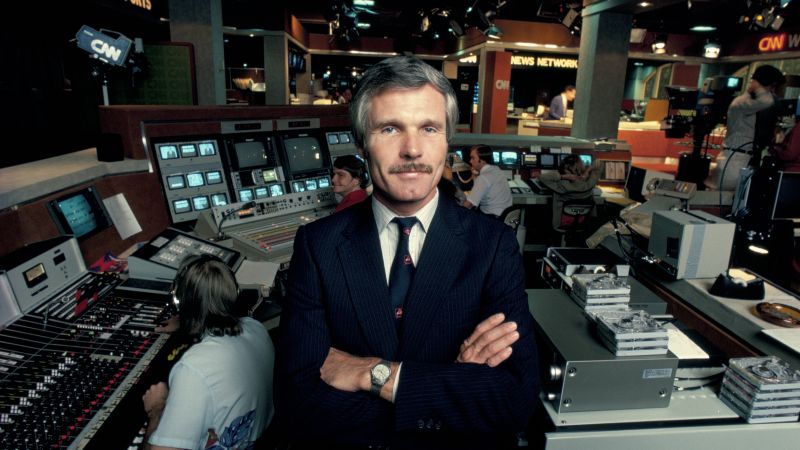
Ted Turner, the media entrepreneur who founded CNN and built a cable television empire that reshaped how news is consumed worldwide, died May 6 at his home near Tallahassee, Florida. He was 87.
Ted Turner, the media entrepreneur who founded CNN and built a cable television empire that reshaped how news is consumed worldwide, died May 6 at his home near Tallahassee, Florida. He was 87. His death was confirmed by Phillip Evans, a spokesman for Turner Enterprises, who said in a news release that Turner died peacefully and was surrounded by his family. Turner had revealed in 2018 that he had Lewy body dementia, a progressive brain disorder that affects thinking, movement, and behavior.
The Details
Robert Edward 'Ted' Turner III was born on November 19, 1938, in Cincinnati, Ohio. The trajectory of his life shifted abruptly at age 24 when he took over his father's billboard company following his father's suicide. He inherited a modest regional outdoor advertising operation that would serve as the foundation of a media empire spanning cable news, basic cable entertainment, professional sports, and international philanthropy. The circumstances of his death were announced Wednesday by Turner Enterprises through an official news release distributed by Evans, who confirmed that Turner died peacefully at home.
Context
Turner launched the Cable News Network on June 1, 1980, from a converted Jewish country club in Atlanta. It was the first 24-hour all-news cable network, a concept that established broadcast networks initially mocked and dismissed. Industry skeptics questioned whether audiences would watch news around the clock, and early financial returns were uneven. Turner persisted despite the criticism, and CNN did not become profitable until the mid-1980s. The venture ultimately altered the landscape of American journalism by introducing continuous television news coverage to a global audience and establishing a round-the-clock format that competitors would later emulate.
What began as a single billboard company grew into Turner Broadcasting System, a portfolio that included TBS, which became the first cable superstation, along with the Cartoon Network and Turner Classic Movies. These channels extended Turner's reach beyond news into entertainment programming for national audiences and demonstrated the scope of the media holdings he had assembled from his father's original business.
Turner also held a prominent place in American sports. He won the America's Cup in 1977 and owned both the Atlanta Braves and the Atlanta Hawks for extended periods. His involvement in competitive sailing and professional baseball became as much a part of his public identity as his media holdings.
His ambitions extended into philanthropy and environmental advocacy. He donated $1 billion to the United Nations and created the Captain Planet cartoon, which promoted ecological themes to younger viewers. He also became one of the largest private landowners in the United States, accumulating vast tracts of property across the American West.
In 1996, Turner sold Turner Broadcasting System to Time Warner Inc. for $7.34 billion. The transaction ranked among the most significant media deals of its era. The sale capped decades of aggressive expansion that had turned his father's modest billboard operation into an entertainment and news conglomerate with influence across multiple industries and a footprint in millions of American households.
Turner was known as 'The Mouth of the South,' a nickname that reflected his outspoken nature and occasionally brash public demeanor. He married actress Jane Fonda in 1991. The couple divorced in 2001. The union drew sustained media attention as one of the most prominent pairings of Hollywood and the media business during the 1990s.
What's Next
Turner's death marks the end of a career that spanned from regional billboard advertising to the creation of a global cable news industry. The network he launched from Atlanta more than four decades ago was the first of its kind, and the broader portfolio of Turner Broadcasting channels and franchises represented a transformation of American media that began with a single billboard company. Former CNN chief news executive Eason Jordan described him as 'a visionary, a trailblazer, a rabble-rouser, a do-gooder, and he thought there would be a market for it.' A sign Turner kept on his desk in 1985 summed up his philosophy: 'Either Lead, Follow or Get Out of The Way.'
Never Miss a Signal
Get the latest breaking news and daily briefings from Zero Signal News directly to your inbox.