
Congress Passes Second Short-Term Extension of Section 702 Surveillance Authority as Warrant Fight Stalls
Zero Signal Staff
Published April 30, 2026 at 6:33 PM ET · 149 days ago
NPR
Congress passed a second stopgap extension of Section 702 of the Foreign Intelligence Surveillance Act on April 30, giving the spy program 45 more days of legal authority after lawmakers failed again to resolve a long-running dispute over whether the
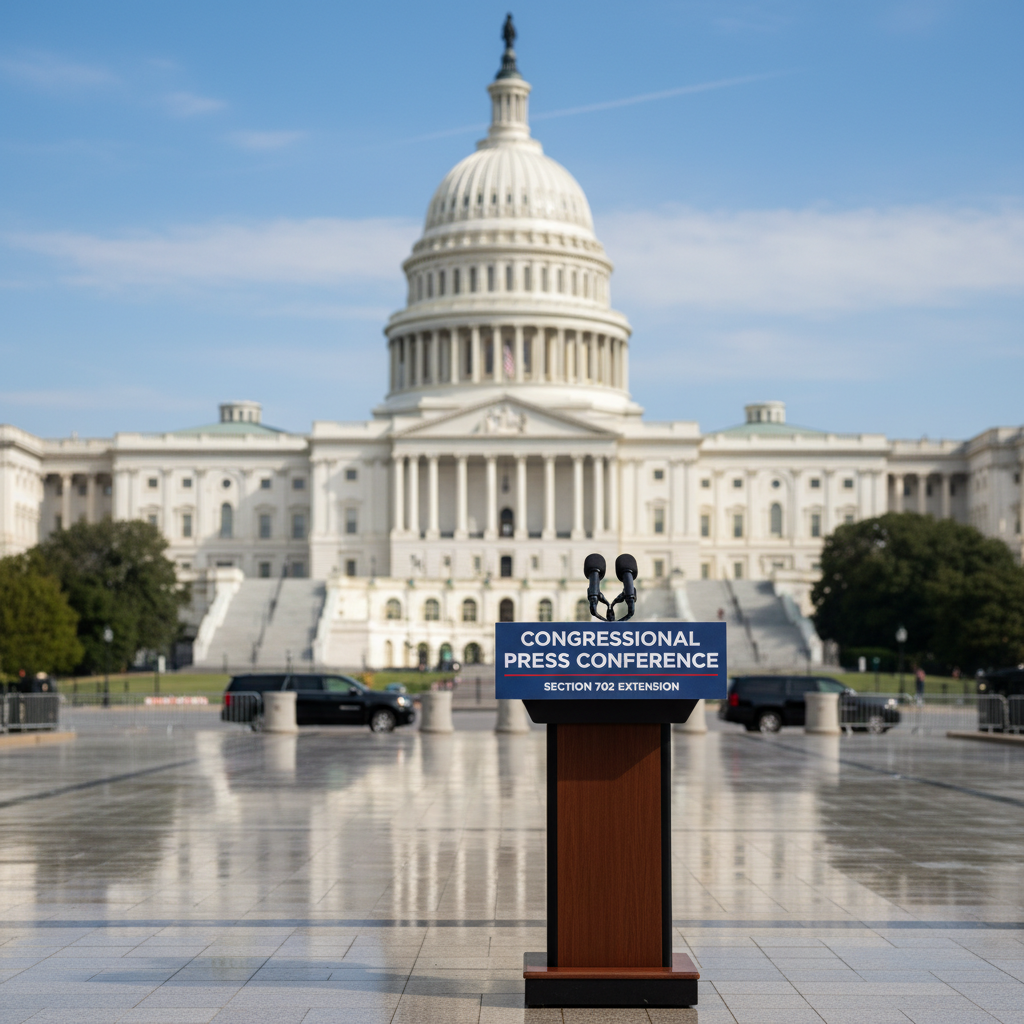
Congress passed a second stopgap extension of Section 702 of the Foreign Intelligence Surveillance Act on April 30, giving the spy program 45 more days of legal authority after lawmakers failed again to resolve a long-running dispute over whether the government should need a court warrant before searching Americans' communications collected under the surveillance program. The House approved the extension 261-111, according to NPR, marking the second punt in two weeks on a law that has divided civil liberties advocates and national security officials across both parties.
The Details
Section 702 allows U.S. intelligence agencies to collect communications of foreign targets overseas without a warrant. Americans' communications can be swept up when they interact with those foreign targets — a practice that privacy-focused lawmakers from both parties have called an unconstitutional backdoor into domestic communications, according to NPR, Reuters, and The Guardian.
The April 30 vote was the second time in two weeks that Congress declined to pass a longer reauthorization. Reuters reported that Congress had already passed a shorter 10-day extension on April 17 after a late-night House failure to advance a more permanent renewal. The 45-day window approved April 30 extends Section 702's authority through roughly mid-June, according to NPR and The Guardian.
Legislators had considered multiple longer-term paths before turning to the stopgap. The House separately advanced a multi-year reauthorization bill that included added oversight measures, but NPR reported that bill was dead on arrival in the Senate after lawmakers attached an unrelated ban on central bank digital currencies. Five-year and 18-month renewal proposals had also failed to win enough support in the chamber, according to NPR.
The central fault line in the debate is whether FBI agents must obtain court approval before querying Section 702 databases for information about Americans. Intelligence officials and Republican leaders have argued the surveillance authority is indispensable for counterterrorism and counterespionage work. Privacy-minded members from both sides of the aisle contend the lack of a warrant requirement exposes Americans to government surveillance with no judicial check, according to NPR, Reuters, PBS NewsHour, and The Guardian.
Rep. Brad Knott acknowledged the tension on the House floor. "FISA is undeniably useful in protecting America against foreign attacks," Knott said, according to NPR, while also warning the tool can violate Americans' Fourth Amendment rights if left unchecked. Rep. Jamie Raskin, a leading critic of the current framework, attacked the longer-term reform bill the House had advanced: "Under this bill, FBI agents can still collect, search and review Americans' communications without any review from a judge," he said, according to PBS NewsHour.
Context
Section 702 was created in 2008 and has been a recurring flashpoint in Congress since its authority requires periodic reauthorization. The law permits the collection of foreign communications without a traditional warrant, but because Americans routinely communicate with people abroad, their messages can be captured in the same dragnet, according to NPR, The Guardian, and PBS NewsHour.
Reformers from both parties have pressed for years to add a warrant requirement specifically covering searches of Americans' data held in Section 702 databases, arguing the current framework effectively bypasses Fourth Amendment protections. Intelligence officials have countered that requiring individual court orders before domestic queries would slow down investigations and compromise the program's core value against foreign adversaries, according to Reuters and NPR.
The political dynamics complicating reform are layered. Reuters and PBS NewsHour reported that Donald Trump and some Republicans who previously criticized Section 702 have recently backed extending the law without major reforms, narrowing the coalition available for stricter privacy guardrails and putting civil libertarians in both parties at odds with the White House and party leadership.
What's Next
The new 45-day extension gives Republican leaders roughly six more weeks to seek consensus on a longer-term path before the authority lapses again, according to NPR and The Guardian, potentially forcing a renewed confrontation over warrant requirements and other reforms in June.
Rep. Jamie Raskin framed the stopgap as conditional on good-faith negotiations. "We're willing to give you 45 more days for us to negotiate this thing if the Speaker will actually sit down with us," Raskin said on the House floor, according to The Guardian. Jake Laperruque, deputy director of the Center for Democracy and Technology, called on Congress to use the extension window to advance a warrant-focused bill: "It's time to put a bill on the floor that will close the backdoor search loophole and protect Americans from surveillance abuse," Laperruque said, according to Reuters.
Never Miss a Signal
Get the latest breaking news and daily briefings from Zero Signal News directly to your inbox.