
Courtroom Camera Debate Reignites as Charlie Kirk Killing Case Heads Toward Trial
Zero Signal Staff
Published April 17, 2026 at 7:32 PM ET · 182 days ago
AP News
Tyler Robinson, the man accused of fatally shooting conservative activist Charlie Kirk in September 2025, is seeking to ban cameras from his upcoming courtroom proceedings.
Tyler Robinson, the man accused of fatally shooting conservative activist Charlie Kirk in September 2025, is seeking to ban cameras from his upcoming courtroom proceedings. Robinson's defense argues that live broadcasts violate his right to a fair trial and fuel sensationalism. Prosecutors and media organizations are fighting the request, citing the need for transparency in a case of significant national interest.
The Details
The dispute centers on whether the presence of cameras ensures public accountability or compromises the judicial process. Robinson's attorneys claim that livestreamed coverage has been driven by 'advertising profit, sensationalism, political agendas, and, most prominently, the vilification of Mr. Robinson.' They argue that such biased media coverage is actively tainting the pool of potential jurors.
Utah County prosecutors have countered this position, asserting that transparency serves as a critical corrective to misinformation. They argue that allowing cameras would help dispel the conspiracy theories and distorted narratives that have emerged since Kirk's shooting at Utah Valley University.
This tension has already manifested in the courtroom. Judge Tony Graf has intervened twice regarding media access: once in December to stop a livestream that showed Robinson in shackles, and again in January to halt close-up filming of the defendant following concerns over 'lip-reading analysis' of his private conversations with counsel. A New York Post story based on such analysis claimed Robinson confessed to 'thinking about the shooting daily,' a claim the defense dismissed as misleading.
Erika Kirk, the widow of the activist, has joined media organizations including the Associated Press and Fox News in requesting that the court safeguard meaningful media access.
As the trial approaches, the prosecution's evidence remains a focal point. Prosecutors claim DNA consistent with Robinson was found on the rifle's trigger, a fired cartridge, and a towel used to wrap the weapon. The defense disputes this, stating that forensic reports show DNA from multiple individuals on some items, necessitating deeper analysis. Additionally, while a Daily Mail report previously suggested the killing bullet did not match Robinson's rifle, court documents indicate that preliminary ballistics were inconclusive and the FBI is conducting further tests.
Context
Charlie Kirk, the founder of Turning Point USA, was killed on September 10, 2025, while speaking to thousands of people at Utah Valley University in Orem. Given Kirk's prominence in conservative circles, the case has drawn intense national scrutiny and has already sparked legislative action, such as Tennessee's 'Charlie Kirk Act,' which mandates specific free speech policies at colleges.
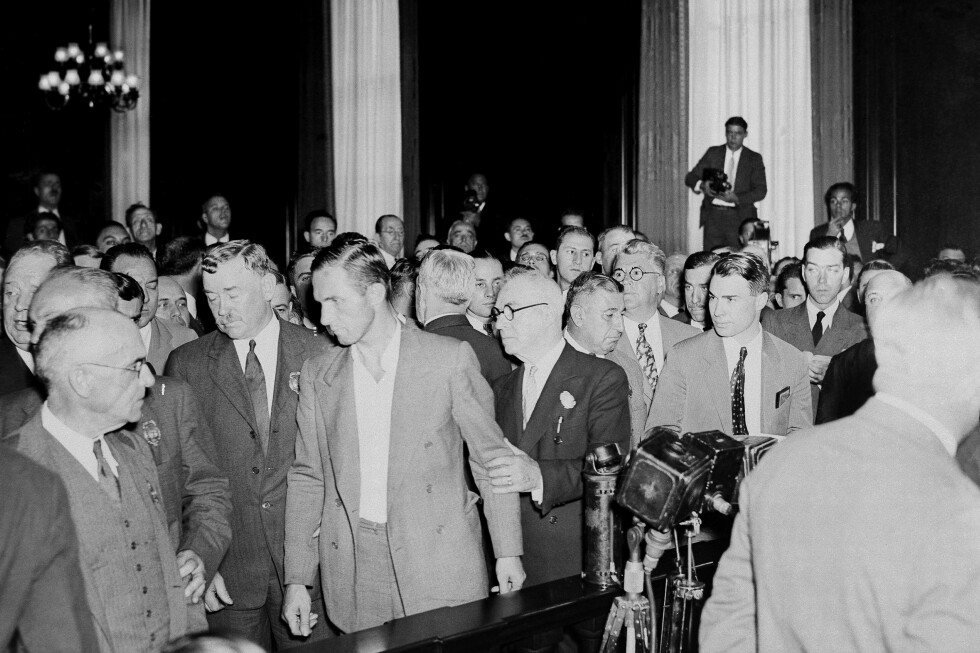
The debate over courtroom cameras is a recurring theme in American legal history. The AP notes a trajectory of landmark cases—from the 1935 Lindbergh baby kidnapping trial to the 1995 O.J. Simpson trial—each testing the balance between the public's right to know and a defendant's right to a fair trial.
Legal experts emphasize that while courts are generally open to the public, that access does not automatically grant a right to broadcast. University of Utah law professor Teneille Brown noted that Supreme Court precedent does not establish an absolute right to record or broadcast. Similarly, Cornell Law School professor Valerie Hans pointed to the O.J. Simpson trial as a cautionary tale, where observers felt the judge and attorneys were 'playing to the cameras' as much as to the jury.
What's Next
A pivotal preliminary hearing is scheduled for May 18, where prosecutors must demonstrate they have sufficient evidence to proceed to trial. The prosecution intends to present surveillance footage from the university, circumstantial evidence linking Robinson to the rifle, a confession note allegedly written to a roommate, and DNA evidence.
Robinson, who turned 23 on April 17, has not yet entered a plea. The outcome of Judge Graf's ruling on cameras will likely set the tone for the trial's public consumption and could serve as a modern precedent for high-profile cases involving political figures.
If convicted, prosecutors have stated their intention to seek the death penalty.
Never Miss a Signal
Get the latest breaking news and daily briefings from Zero Signal News directly to your inbox.