
Earth's Shooting Gallery: Unexplained Surge in Massive Fireballs Hits Record Highs
Zero Signal Staff
Published April 22, 2026 at 3:55 AM ET · 158 days ago
American Meteor Society / New York Times
The American Meteor Society (AMS) has recorded an unprecedented surge in fireball activity during the first quarter of 2026, marking the highest volume of events on record.
The American Meteor Society (AMS) has recorded an unprecedented surge in fireball activity during the first quarter of 2026, marking the highest volume of events on record. While total event counts are only marginally higher than previous peaks, the frequency of exceptionally large and impactful bolides has doubled. Scientists are currently unable to explain why the Earth is suddenly encountering a higher volume of massive space rocks.
The Details
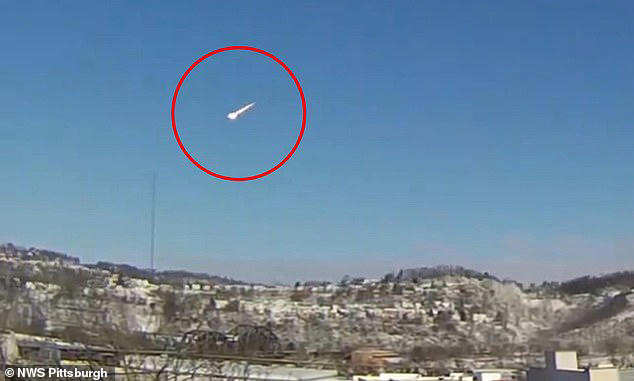
In Q1 2026, the AMS documented 2,322 fireball events. While this is slightly above the 2,168 events recorded in 2022, the statistical significance lies in the scale of the objects. Events with 50 or more witness reports jumped to 40, doubling the 2018–2025 average of approximately 20. Similarly, events with over 100 reports doubled from an average of 8 to 16.\n\nMarch 2026 emerged as a particularly volatile month, seeing five fireball events with over 200 eyewitnesses—surpassing the total for all previous Marches combined since 2011. The sheer physical impact of these objects was evident in the atmosphere; 82.5% of the largest fireball events produced audible sonic booms, resulting in an average of one boom every three days.\n\nSpecific events highlighted the intensity of the surge. On March 8, a daytime bolide was observed across five European countries, generating a record-breaking 3,229 witness reports. Less than ten days later, on March 17, a two-meter asteroid weighing approximately seven tons entered the atmosphere over Lake Erie. The resulting energy release was estimated at 250 tons of TNT, with the flash captured by NOAA's GOES lightning mapper from space.\n\nFurther dramatic activity occurred on March 21, when a one-ton meteoroid detonated 29 miles above Houston. The 26-ton TNT equivalent airburst produced sonic booms and resulted in a meteorite fragment penetrating the roof of a home in the Ponderosa Forest area.\n\nAnalysis of the debris revealed a statistical anomaly: two rare achondritic meteorite falls from the HED family occurred within nine days. A diogenite fell in Germany on March 8, while a eucrite landed in Ohio on March 17. Despite their similar composition, radiant analysis shows they originated from opposite parts of the sky on unrelated orbits, suggesting they were not part of a single fragmented body.
Context
Fireballs, or bolides, are exceptionally bright meteors capable of being seen during the day. While the AMS reporting system has been stable since 2005, the current data represents a significant departure from the established baseline. Poisson statistical analysis indicates that the current volume of high-witness events has only a 1 in 21,400 chance of occurring randomly, representing a 3.9σ significance level.\n\nAstronomers have identified two anomalous clusters in the radiant data. Activity from the Anthelion source—a region opposite the sun that typically provides a steady stream of Q1 fireballs—has approximately doubled. Additionally, twelve events originated from high-declination radiants (Dec >70°), which correspond to objects on steeply inclined orbits relative to the ecliptic plane. This increase in high-inclination objects is considered highly unusual by the scientific community.\n\nNASA's Meteoroid Environments Office, led by Bill Cooke, continues to monitor the situation using a network of satellites, telescopes, and government sensors to determine if these events signal a long-term change in the near-Earth environment.
What's Next
The American Meteor Society has explicitly ruled out several factors, including a new meteor shower, seasonal effects, or artificial origins. While some suggest that the proliferation of smartphones and AI chatbots—which can direct witnesses to reporting pages—may inflate witness counts, the AMS notes that this cannot explain the increased rate of sonic booms, satellite detections, or the physical recovery of meteorites.\n\nResearchers are now focused on determining whether the Earth has entered a denser region of space debris or if a previously unknown asteroid family is breaking apart. The scientific community is treating the surge as a genuine physical change in the incoming material rather than a reporting artifact.\n\nImmediate attention is being directed toward the anomalous high-declination radiants. If these objects continue to appear at double the normal rate, it may force a reassessment of current models regarding the distribution of meteoroids in the inner solar system.
Never Miss a Signal
Get the latest breaking news and daily briefings from Zero Signal News directly to your inbox.