
Europe's Software Firms Post Better-Than-Expected Q1 Results Despite AI and Geopolitical Fears
Zero Signal Staff
Published April 30, 2026 at 4:02 AM ET · 150 days ago
Bloomberg / Reuters / Temenos
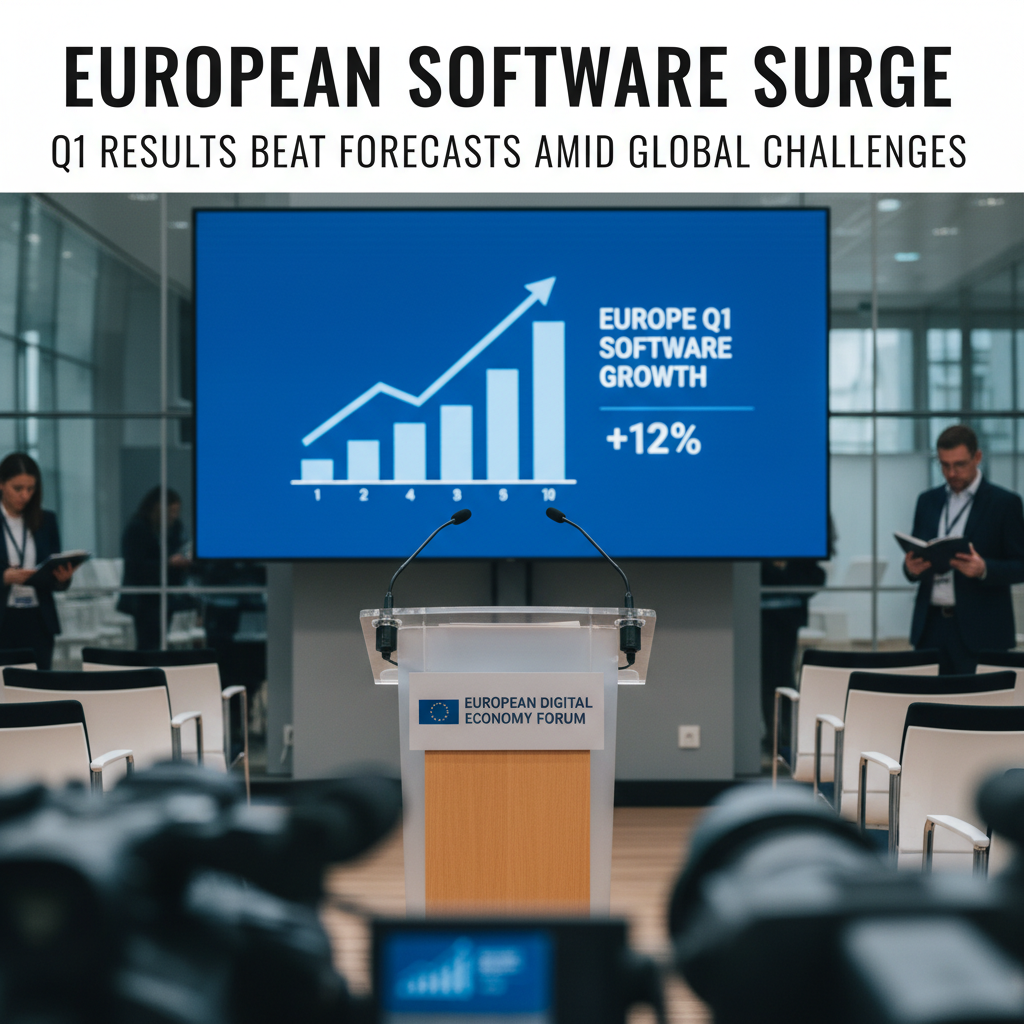
Europe's software sector delivered stronger-than-expected first-quarter results, easing investor anxieties about AI disruption and the economic drag of the Iran war.
Europe's software sector delivered stronger-than-expected first-quarter results, easing investor anxieties about AI disruption and the economic drag of the Iran war. SAP, the continent's largest software maker, posted a 17% jump in first-quarter profit on robust cloud demand, while Swiss banking-software firm Temenos beat earnings forecasts and reconfirmed its full-year guidance. The results signal that enterprise spending on software has held up so far, though both companies cautioned that the geopolitical outlook remains a genuine risk to the full-year picture.
The Details
SAP reported April 23 that first-quarter profit rose 17% from the year-earlier period, topping analyst estimates on stronger-than-expected cloud revenue, according to Reuters. Cloud revenue reached 5.96 billion euros, compared with the 5.88 billion euro analyst consensus, underscoring continued enterprise appetite for cloud migration even as companies weigh spending more cautiously in the current environment.
SAP Chief Financial Officer Dominik Asam credited disciplined execution for the results. "We have remained focused on managing our cost base and maintaining profitability as we navigate an increasingly complex and uncertain macroeconomic and geopolitical environment," Asam said, according to Reuters. The company maintained its full-year revenue outlook, though Reuters reported that SAP said the forecast depended in part on de-escalation of the Middle East conflict.
Temenos, which makes core-banking software and counts financial institutions across the Middle East among its clients, also exceeded expectations. Reuters reported April 22 that Temenos beat analyst forecasts for adjusted core earnings in Q1, citing what management described as a stable sales environment. Its shares rose roughly 4% on the day.
Temenos provided granular detail in its April 21 results release. Product revenue climbed 14%, annual recurring revenue rose 13%, and non-IFRS EBIT increased 19% to $82.7 million, the company said. Full-year 2026 guidance was reconfirmed across all metrics. Temenos CEO Takis Spiliopoulos addressed the Middle East directly: "The Middle East remains a growth market for us as it has been over the last year," he said, according to Reuters.
Bloomberg Intelligence analyst Anurag Rana said the results from SAP in particular provided reassurance on two of the biggest investor fears hanging over the sector. "The cloud backlog should allay worries about AI disruption and the Iran conflict's potential to affect the closing of deals," Rana said, according to Bloomberg.
Context
The Q1 earnings season opened against an uncertain backdrop for European companies. Reuters reported April 16 that while European businesses were still expected to post relatively solid first-quarter results despite the Iran war, higher energy prices and supply-chain disruption posed a threat to the full-year outlook. Investors had been particularly nervous about how a prolonged Middle East conflict might dampen corporate decision-making in regions like the Gulf, where software companies including Temenos have built meaningful revenue streams.
Anxiety about artificial intelligence has run in parallel with geopolitical concern. Some investors had worried that the rapid spread of AI tools could slow enterprise spending on traditional software vendors, as clients either deferred decisions pending clarity on AI strategy or reduced headcount — and with it, the per-seat software licenses that underpin many vendor revenue models. The SAP and Temenos results did not eliminate those concerns, but the strength of cloud backlogs offered concrete evidence that deal pipelines had not stalled.
Bloomberg reported April 30 that across Europe's software sector more broadly, companies were performing better than expected this earnings season — a trend that was easing investor fears about both AI disruption and the Iran war's effect on business confidence. The broader picture suggests the sector entered the year with more resilience than the pre-season consensus anticipated, though analysts and company executives alike stopped well short of declaring the risks resolved.
What's Next
SAP's maintained full-year guidance carries an explicit caveat: the forecast rests on the assumption that Middle East tensions de-escalate, according to Reuters. If the conflict widens or lingers through the second half of the year, SAP has signaled the outlook would need revisiting. Investors will watch subsequent quarters closely to see whether the cloud backlog that underpinned Q1 continues to convert into recognized revenue.
Temenos reconfirmed its full-year 2026 guidance in its April 21 release, providing more confidence about near-term visibility. How both companies perform through Q2 — when higher energy costs and any additional geopolitical disruption are more likely to bite into corporate budgets — will determine whether the Q1 earnings strength marks a turning point in sentiment or a reprieve before harder conditions arrive.
Never Miss a Signal
Get the latest breaking news and daily briefings from Zero Signal News directly to your inbox.