
Flower Moon Peaks Friday as May 2026 Delivers Two Full Moons
Zero Signal Staff
Published April 30, 2026 at 9:37 PM ET · 149 days ago
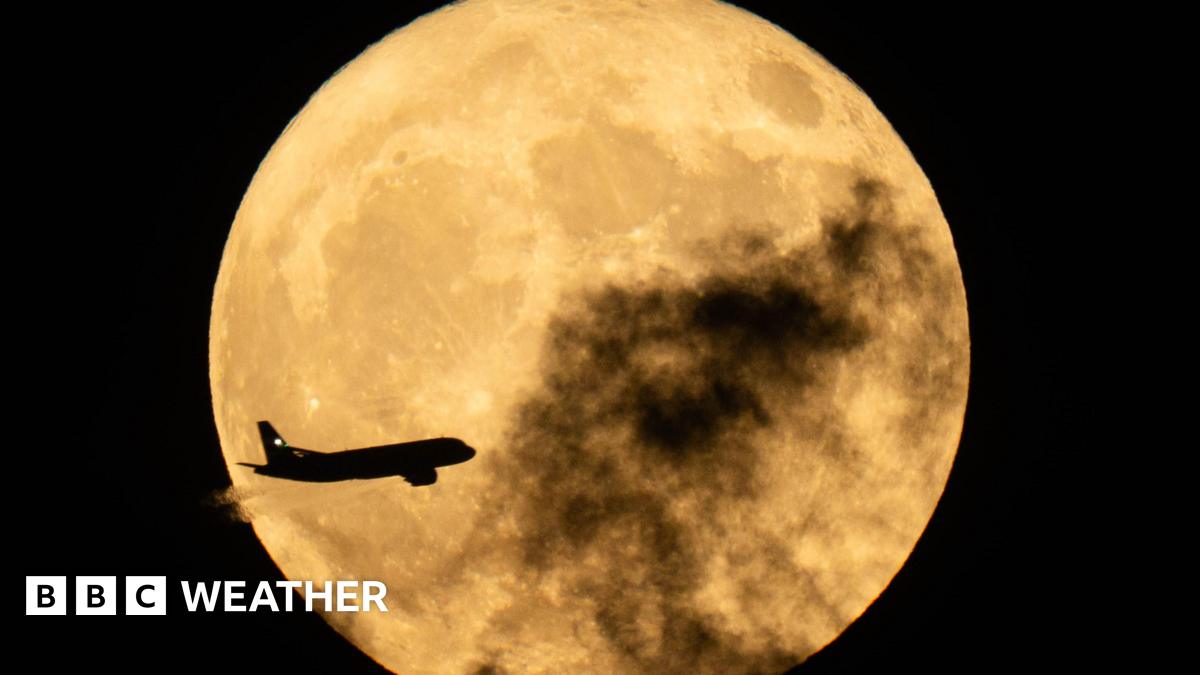
BBC Weather
May 2026 opens with a full Flower Moon on Friday and closes with a rare Blue Moon at month's end, giving skywatchers two chances to see the lunar cycle play out across a single calendar month.
May 2026 opens with a full Flower Moon on Friday and closes with a rare Blue Moon at month's end, giving skywatchers two chances to see the lunar cycle play out across a single calendar month. The Flower Moon reaches peak illumination at 17:23 UTC on May 1 — 18:23 BST for UK viewers and 1:23 p.m. EDT on the US East Coast — according to Star Walk and BBC Weather. This month's full moon is also classified as a micromoon, meaning it appears slightly smaller and dimmer than average because it occurs near the point in the Moon's orbit where it is farthest from Earth.
The Details
The full moon of May carries the traditional name Flower Moon, a title rooted in the season rather than any physical change in the Moon's appearance. According to the Old Farmer's Almanac, the name reflects the abundance of spring blooms that characterize May in the Northern Hemisphere — not a change in the Moon's color or size. The Moon looks the same whether it is called the Flower Moon or any other monthly name; the tradition simply assigns seasonal nicknames to each month's full moon.
This year, the Flower Moon also falls at the lunar apogee, the point in the Moon's elliptical orbit where it sits farthest from Earth. BBC Sky at Night Magazine and multiple other astronomy guides describe the result as a micromoon: the Moon appears slightly smaller and dimmer than an average full moon. The contrast with a supermoon — which occurs near perigee, the closest orbital point — is measurable in photographs and astronomy calculations, though the difference is typically subtle when judging by eye alone.
For UK observers, BBC Weather confirmed the Moon will be at its fullest at 18:23 on Friday 1 May. In the eastern United States, the peak arrives at 1:23 p.m. EDT, well before moonrise for most of the country, according to Star Walk. Observers in other time zones can work from the 17:23 UTC anchor point to calculate local timing.
Star Walk notes that catching the exact minute of peak illumination is not necessary for a rewarding viewing experience. The Moon will appear full on the nights surrounding Friday as well, and the best window for many observers will be around moonrise — when the Moon sits low on the horizon near local sunset. That geometry tends to make the Moon appear larger and more vividly colored regardless of its technical orbital phase.
BBC Weather cautioned that changing conditions could bring cloud cover and showers to parts of the UK on Friday night, affecting visibility for some viewers. Clear skies cannot be guaranteed across the country, and observers in affected regions may find better luck on the nights immediately before or after the peak. Astronomy guides such as Star Walk note that the Moon will appear full on surrounding nights as well.
Context
May 2026 stands out in the lunar calendar because it contains two full moons. The Flower Moon on May 1 is followed by a second full moon on May 31 at 08:45 UTC, according to Star Walk and the Old Farmer's Almanac.
The second full moon in a calendar month is commonly called a Blue Moon. Star Walk explains the underlying timing: the lunar cycle lasts approximately 29.5 days. When a full moon falls early enough in a 31-day month, the cycle completes again before the month ends, producing two full moons. The term Blue Moon in this calendar sense describes the mathematical coincidence rather than any visible change in the Moon's appearance.
The combination of a micromoon at the start of the month and a Blue Moon at the end gives May 2026 a distinctive character in popular astronomy coverage. Both phenomena are products of the relationship between the lunar cycle and the Gregorian calendar rather than physically exceptional events, but they bring periodic attention to the Moon's orbit and its traditional naming conventions.
What's Next
The next scheduled lunar event in this sequence is the Blue Moon on May 31, 2026 at 08:45 UTC, according to Star Walk. That full moon will complete May's two-full-moon pairing and close the month under the same lunar traditions that opened it.
For observers who miss Friday's Flower Moon due to UK cloud cover or weather elsewhere, astronomy guides note the Moon will appear visually full on the nights of April 30 and May 2 as well, according to Star Walk, offering alternative viewing windows without significant loss of the full-moon effect.
Never Miss a Signal
Get the latest breaking news and daily briefings from Zero Signal News directly to your inbox.