
Georgia Declares Emergency as Wildfires Destroy Dozens of Homes Amid Historic Drought
Zero Signal Staff
Published April 22, 2026 at 11:06 PM ET · 157 days ago
AP News
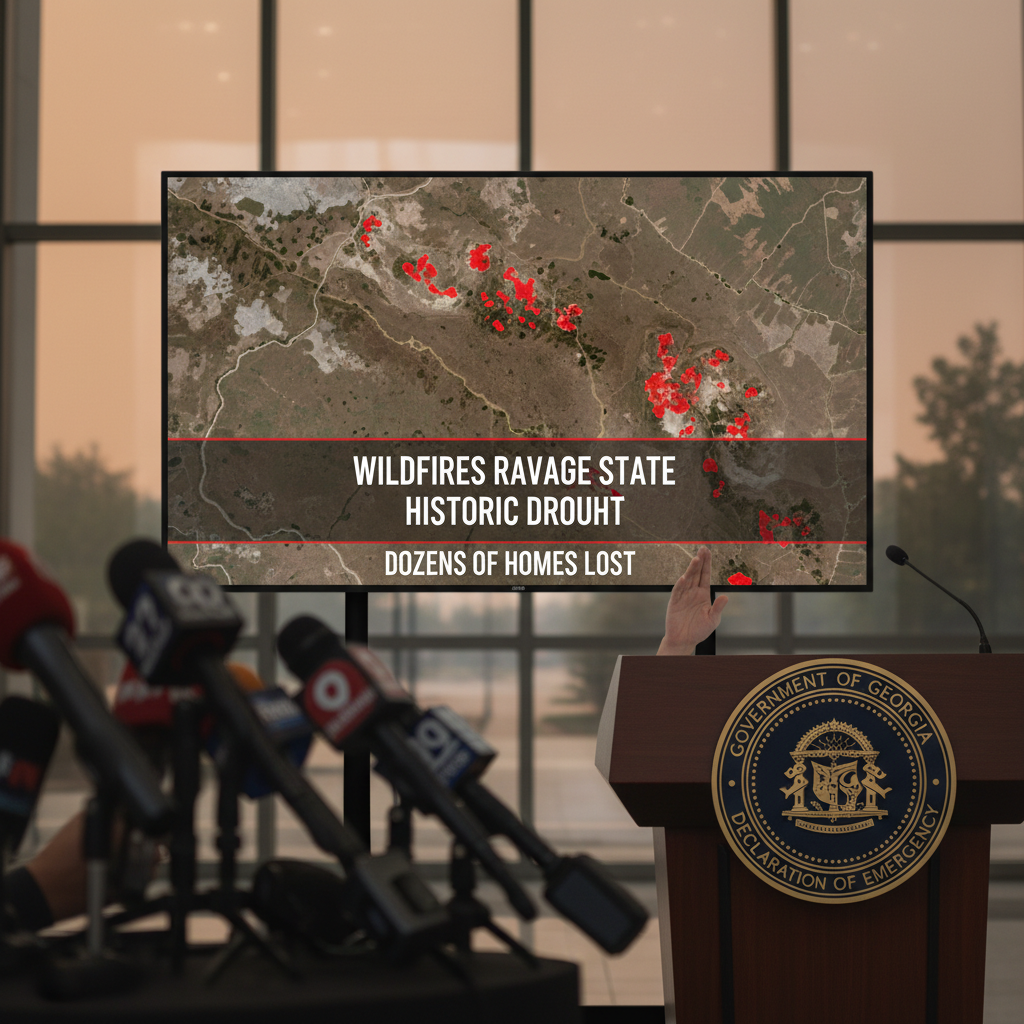
Georgia Governor Brian Kemp has declared a state of emergency for 91 counties in the southern part of the state as fast-moving wildfires ravage the region.
Georgia Governor Brian Kemp has declared a state of emergency for 91 counties in the southern part of the state as fast-moving wildfires ravage the region. At least 50 homes have been destroyed across Georgia, with a single blaze in Brantley County growing sixfold in just eight hours. Mandatory evacuations remain in effect as emergency crews struggle to contain the flames amid a historic drought.
The Details
In Brantley County, a wildfire that covered approximately 700 acres at 10 a.m. Tuesday exploded to over 5,000 acres by 6 p.m. that evening. Brantley County Manager Joey Cason described a chaotic scene where winds shifted rapidly, turning a manageable fire into a major disaster within 30 minutes. Cason noted that some residents were removed from their porches by EMS as flames entered their backyards. Approximately 47 to 49 homes were destroyed in Brantley County alone. The destruction extends beyond a single county. A second major blaze, the Pinelands Road Fire in Clinch County, has grown to between 9,000 and 16,000 acres and continues to spread toward Echols County, triggering further evacuations. In nearby Florida, the Railroad Fire in Clay and Putnam Counties burned over 4,000 acres, contributing to a regional total of nearly 6,000 acres burned in the state. Emergency response has been critical but strained. As of Wednesday morning, the Brantley County fire was only 10% contained. Mandatory evacuations were ordered for at least 10 neighborhoods in Brantley County, affecting roughly 800 people initially, with more orders issued Wednesday afternoon. Local schools, including Waynesville Primary and Atkinson Elementary, were forced to evacuate students to the Brantley County Middle School gym. To combat the crisis, the Georgia Forestry Commission has issued its first-ever mandatory burn ban, covering 91 counties for at least 30 days. This unprecedented measure aims to prevent any new ignitions while crews focus on existing fires. FEMA has approved grants for both Georgia and Florida to provide additional resources for the firefighting effort. Despite the extensive property loss and the speed of the fires, Brantley County Manager Joey Cason reported that no major injuries have been documented as of Wednesday.
Context
The wildfires are fueled by a severe and prolonged drought across the Southeast. Southeastern Georgia has received only 11 inches of rain since September, which is nearly 15 inches below the seasonal norm. The National Weather Service reports that more than 48% of Brantley County is currently under 'Exceptional Drought,' the highest level recorded in over 25 years. Statewide, the situation is equally dire, with more than 69% of Georgia under 'Extreme Drought'—a staggering increase from just 1% at the start of the year. Across the broader Southeast region, over 97% of the area is experiencing moderate drought or higher. Florida is facing its worst drought in a quarter-century, with 71% of the state under extreme or exceptional drought levels. Environmental conditions have turned the landscape into a tinderbox. Seth Hawkins of the Georgia Forestry Commission explained that the region's pine and hardwood forests, combined with swampy lowlands thick with dried leaves and woody debris, have become 'super flammable' due to the lack of moisture.
What's Next
The immediate priority for Georgia officials is containment and the prevention of new fires. The 30-day mandatory burn ban is expected to remain in place as soon as any signs of stabilization occur. The National Centers for Environmental Information indicate that Georgia requires between 12 and 18 inches of rainfall to fully end the current drought, a threshold that will take significant weather shifts to achieve. Residents in evacuation zones are awaiting word on when it is safe to return. For those like Liz Reardon and Brianna Elliott, who lost homes or were blocked from saving livestock, the focus shifts to recovery and the long-term impact of the loss of ancestral land. Smoke from the blazes, located more than 200 miles southeast of Atlanta, is expected to linger in the Atlanta metropolitan area, potentially affecting air quality for residents in the state's capital region.
Never Miss a Signal
Get the latest breaking news and daily briefings from Zero Signal News directly to your inbox.