
GOP Tax Cuts Fail To Gain Traction As Inflation And Iran Crisis Dominate
Zero Signal Staff
Published April 15, 2026 at 9:02 AM ET · 184 days ago
Politico
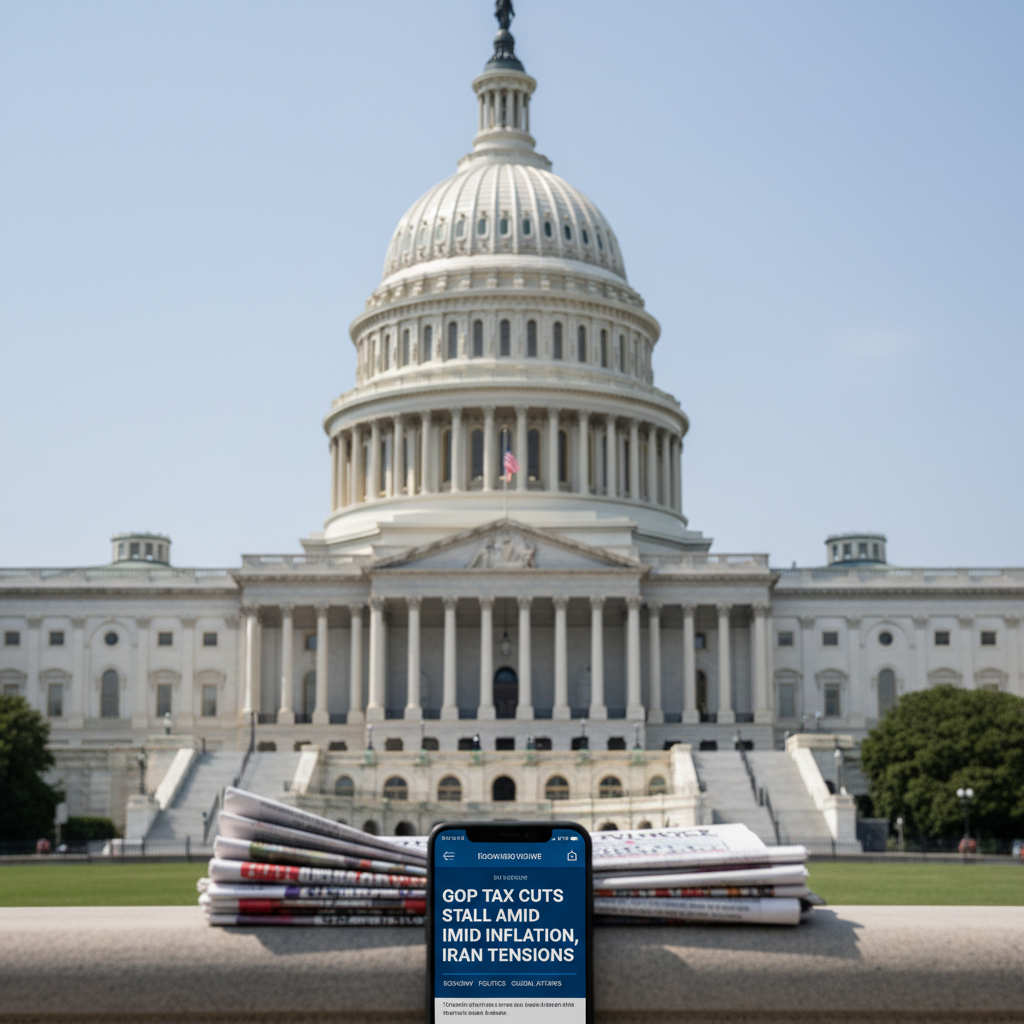
Republicans are struggling to build public support for their tax cut legislation ahead of the April 15 filing deadline, as voter attention remains focused on inflation and international tensions rather than the party's economic agenda.
Republicans are struggling to build public support for their tax cut legislation ahead of the April 15 filing deadline, as voter attention remains focused on inflation and international tensions rather than the party's economic agenda. The cuts, enacted last year, have not translated into improved political standing for the GOP heading into the 2026 midterm cycle.
Republican leadership had positioned the tax reduction package as a centerpiece of their economic messaging, hoping the policy would resonate with voters and strengthen the party's position in upcoming elections. However, polling and public discourse suggest the cuts have been eclipsed by two dominant concerns: the rising cost of living and escalating tensions with Iran.
The party's messaging challenge reflects a broader disconnect between policy implementation and voter priorities. While the tax cuts took effect in the previous fiscal year, their impact on household finances has been difficult to communicate effectively against the backdrop of inflation pressures that have persisted through early 2026. Unnamed GOP strategists acknowledged in recent weeks that the legislative achievement has not translated into the anticipated political dividend.
International developments have further complicated the Republicans' domestic agenda. The Iran situation has consumed significant media coverage and political bandwidth, pushing economic policy discussions to the margins of public discourse. This shift in focus has made it harder for Republicans to sustain a coherent narrative around their tax legislation during what would typically be a high-visibility moment for tax policy debate.
Democratic critics have seized on the timing, arguing that the tax cuts primarily benefited corporations and high earners rather than middle-class households struggling with living costs. The party has used Tax Day as an opportunity to highlight what they characterize as regressive elements of the legislation, further muddying the GOP's messaging environment.
Context
Tax policy has long been a central dividing line between the parties, with Republicans traditionally advocating for lower rates and Democrats pushing for progressive structures. The 2026 tax cuts represented a significant legislative victory for the GOP, marking one of the few major bills passed during the current congressional session. However, the political return on major tax legislation has historically been limited when economic conditions remain challenging for average households—a pattern evident in the 2017 Tax Cuts and Jobs Act, which similarly failed to produce sustained political gains despite significant corporate rate reductions.
Inflation remains elevated compared to pre-pandemic levels, with consumer purchasing power a persistent concern entering the second quarter of 2026. Public opinion data from recent months shows economic anxiety continues to rank among voters' top concerns, often outweighing partisan messaging about specific legislative achievements.
What's Next
The Republican party faces a critical window to reshape its economic messaging before the midterm elections. If international tensions with Iran de-escalate in coming weeks, the political environment may shift back toward domestic economic issues, potentially allowing the GOP to refocus attention on its tax agenda. Conversely, if the Iran situation intensifies or inflation remains elevated through the summer, the tax cuts are likely to remain peripheral to voter decision-making, forcing Republicans to develop alternative messaging strategies centered on different policy areas.
Never Miss a Signal
Get the latest breaking news and daily briefings from Zero Signal News directly to your inbox.