
Hezbollah Buries 44 Fighters in Mass Funerals as Lebanon Observes Ceasefire
Zero Signal Staff
Published April 22, 2026 at 12:56 AM ET · 158 days ago
Associated Press
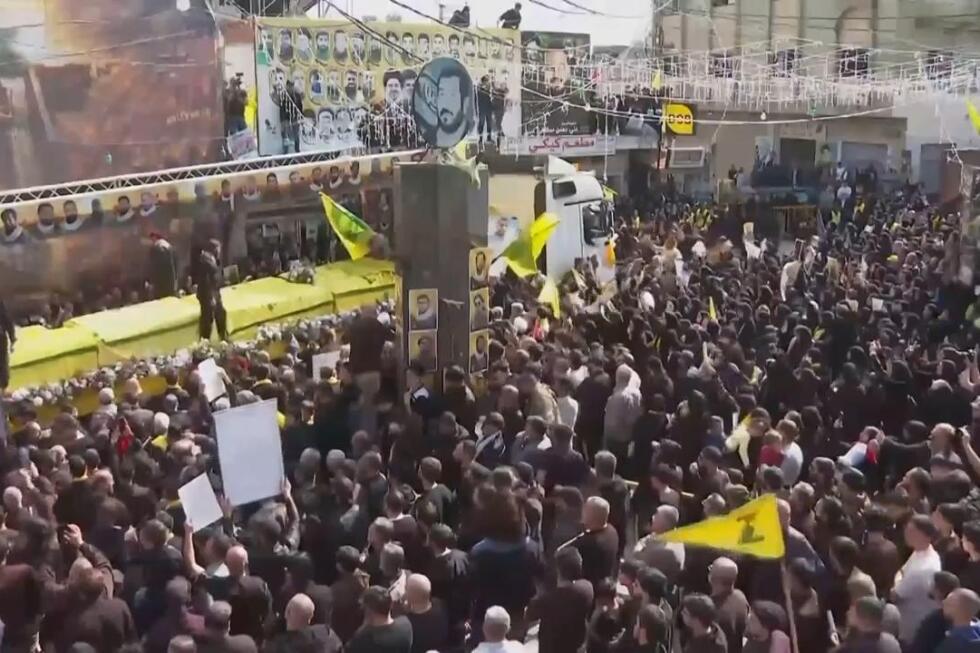
Hezbollah conducted mass funerals on Tuesday, April 21, 2026, for 44 fighters killed during a six-week conflict with Israel. Thousands of mourners gathered across southern Lebanon to bury the dead as a 10-day ceasefire remains in effect.
Hezbollah conducted mass funerals on Tuesday, April 21, 2026, for 44 fighters killed during a six-week conflict with Israel. Thousands of mourners gathered across southern Lebanon to bury the dead as a 10-day ceasefire remains in effect. The ceremonies mark a period of widespread mourning for both combatants and civilians across the region.
The Details
The burials were centered in southern Lebanon, with 29 fighters interred in the town of Kfar Sir. Hezbollah described those buried in Kfar Sir as 'a group of blessed souls to the soil of the south.' In the village of Qlaileh, another 15 fighters and one civilian were buried. Some of these individuals had been placed in temporary graves in other locations, a practice permitted by Shia Muslim rites when active conflict prevents a proper funeral in the deceased's home village. The ceasefire has now enabled their return to their ancestral soil.
These mass ceremonies followed a smaller funeral held on Monday, April 20, in the Kafaat area of Beirut's southern suburbs, where four fighters were buried amidst cheers and gunfire from the crowds. The scale of the mourning extended beyond Hezbollah; in the city of Tyre, families gathered at temporary graves to bury civilians killed in Israeli strikes shortly before the truce took hold.
Official casualty figures remain a point of contention and difficulty. Lebanese authorities report that Israeli strikes have killed at least 2,387 people since the onset of hostilities on March 2, 2026, including 274 women and 177 children. However, the Lebanese health ministry does not formally categorize casualties as combatants or civilians, complicating independent verification of death tolls.
Israel has claimed to have killed more than 1,700 Hezbollah fighters during the operation. This figure has not been independently verified, and Hezbollah has not released an official total of its losses since the start of the war.
Context
The current hostilities began on March 2, 2026, when Israel launched a massive wave of airstrikes followed by a ground invasion of Lebanon. The conflict escalated rapidly, leading to widespread displacement and significant casualties across southern Lebanon and the suburbs of Beirut.
The 10-day ceasefire, announced by US President Donald Trump, went into effect on Friday, April 18, 2026. This window of paused combat has allowed Lebanese communities to retrieve bodies from temporary burial sites and conduct formal funeral rites that were impossible during the height of the fighting.
This local conflict is situated within a broader regional crisis characterized by high tensions between Iran and Israel. Reports indicate that US-Iran negotiations are currently underway in Islamabad, suggesting an international effort to stabilize the region and prevent further escalation.
What's Next
The stability of the region depends on the outcome of the current 10-day ceasefire. Observers are monitoring whether this window will lead to a permanent cessation of hostilities or serve as a temporary pause for military regrouping.
Attention now turns to the diplomatic tracks in Islamabad and Washington. The results of US-Iran negotiations will likely dictate the long-term security arrangements for the Lebanon-Israel border. If a permanent deal is not reached by the end of the ceasefire, the risk of a return to full-scale military operations remains high.
Never Miss a Signal
Get the latest breaking news and daily briefings from Zero Signal News directly to your inbox.