
House GOP Delays FISA Vote as Trump Demands Clash With Conservative Holdouts
Zero Signal Staff
Published April 15, 2026 at 12:27 PM ET · 185 days ago
Politico
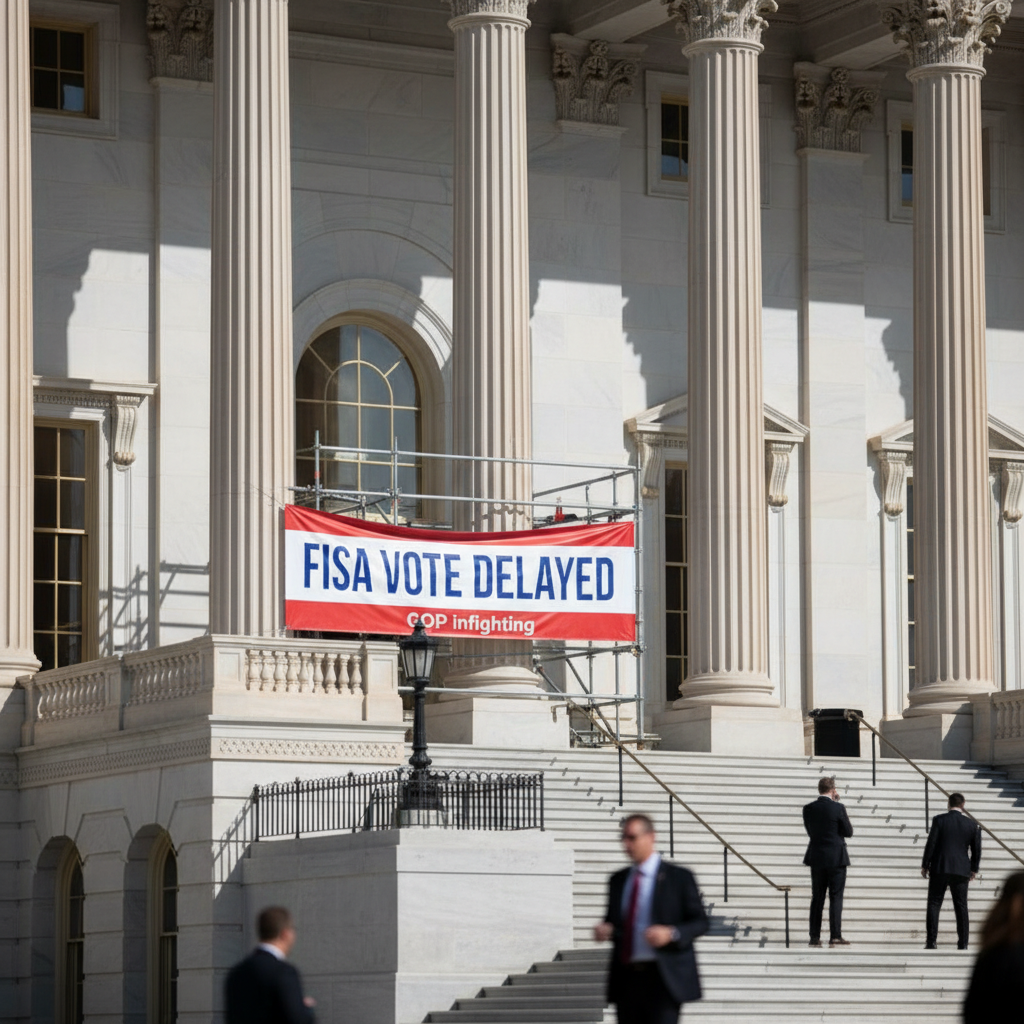
House Speaker Mike Johnson postponed a procedural vote scheduled for Wednesday on a federal surveillance authority extension after conservative Republicans refused to back a clean reauthorization that President Donald Trump is demanding.
House Speaker Mike Johnson postponed a procedural vote scheduled for Wednesday on a federal surveillance authority extension after conservative Republicans refused to back a clean reauthorization that President Donald Trump is demanding. The delay comes as Section 702 of the Foreign Intelligence Surveillance Act faces expiration on April 20, and GOP leaders scramble to negotiate changes with hard-liners who want warrant requirements and other guardrails added to the program.
Johnson and White House officials have been negotiating with Republican holdouts since Tuesday night to find middle ground on the 18-month extension of Section 702, which authorizes bulk collection of foreign communications. The procedural vote was postponed from Wednesday morning, with GOP leaders hoping to reschedule it later in the day if an agreement could be reached, though Johnson remained noncommittal about whether that would happen.
Conservative Republicans, including Freedom Caucus Chair Andy Harris and Reps. Michael Cloud of Texas and Andrew Clyde of Georgia, raised concerns during a closed-door GOP Conference meeting Wednesday morning. They are pushing for warrant requirements and other restrictions on the surveillance program, demands that Trump's administration has resisted. CIA Director John Ratcliffe presented the intelligence case for a clean extension at the meeting, but according to four attendees, some Republicans grew irritated when Ratcliffe spoke until near the end of the scheduled time, limiting opportunity for questions.
The negotiations also involve a separate commitment: conservative holdouts are demanding that House GOP leaders advance a ban on central bank digital currencies (CBDC) as a standalone bill rather than attaching it to the FISA reauthorization. GOP leadership and the White House have proposed using a longer Section 702 extension as leverage to secure that policy or other reforms, but hard-liners are not budging. Majority Leader Steve Scalise confirmed that discussions around "potential amendments" and "minor tweaks" to the procedural rule are ongoing, but emphasized that leaders will not incorporate changes that undermine the surveillance program itself.
Democrats are unlikely to provide votes to help Republicans overcome the procedural hurdle. However, the top Democrats on the House Intelligence and Judiciary Committees—Reps. Jim Himes of Connecticut and Jamie Raskin of Maryland—discussed a joint proposal for FISA overhaul provisions at their party's Monday caucus meeting and plan to advance it if the Republican rule fails.
Context
Section 702 has been a core component of U.S. foreign intelligence gathering since its creation in 2008 as part of the FISA Amendments Act. It allows the government to conduct surveillance of foreign nationals outside the United States without individual warrants, though it has faced criticism from privacy advocates and some lawmakers who argue it can sweep up communications of Americans. Previous reauthorizations have passed with bipartisan support, though recent years have seen growing conservative skepticism about the program's scope.
The Trump administration's push for a clean extension reflects the intelligence community's preference for stability in surveillance authorities. However, the current Republican majority is narrower than in previous Congresses, giving conservative holdouts greater leverage. The April 20 expiration deadline creates time pressure, though Congress could pass a short-term extension of a few months to continue negotiations—an option White House officials and GOP leaders are trying to avoid.
What's Next
If negotiations fail to produce an agreement by Thursday, the most likely outcome is a brief clean extension of a few months, which would defer the conflict rather than resolve it. The hard-liners' refusal to budge despite direct pressure from Trump and CIA leadership suggests the dispute reflects a genuine ideological divide within the Republican caucus on surveillance authority, not a negotiating tactic. Any final agreement will likely require either Trump to accept some guardrails on Section 702 or conservative Republicans to accept a longer extension without the CBDC ban they've demanded—a concession neither side has signaled willingness to make.
Never Miss a Signal
Get the latest breaking news and daily briefings from Zero Signal News directly to your inbox.