
How Foreign Aid Cuts Reshape America's Global Influence
Zero Signal Staff
Published April 10, 2026 at 2:27 AM ET · 1 day ago
NPR Health
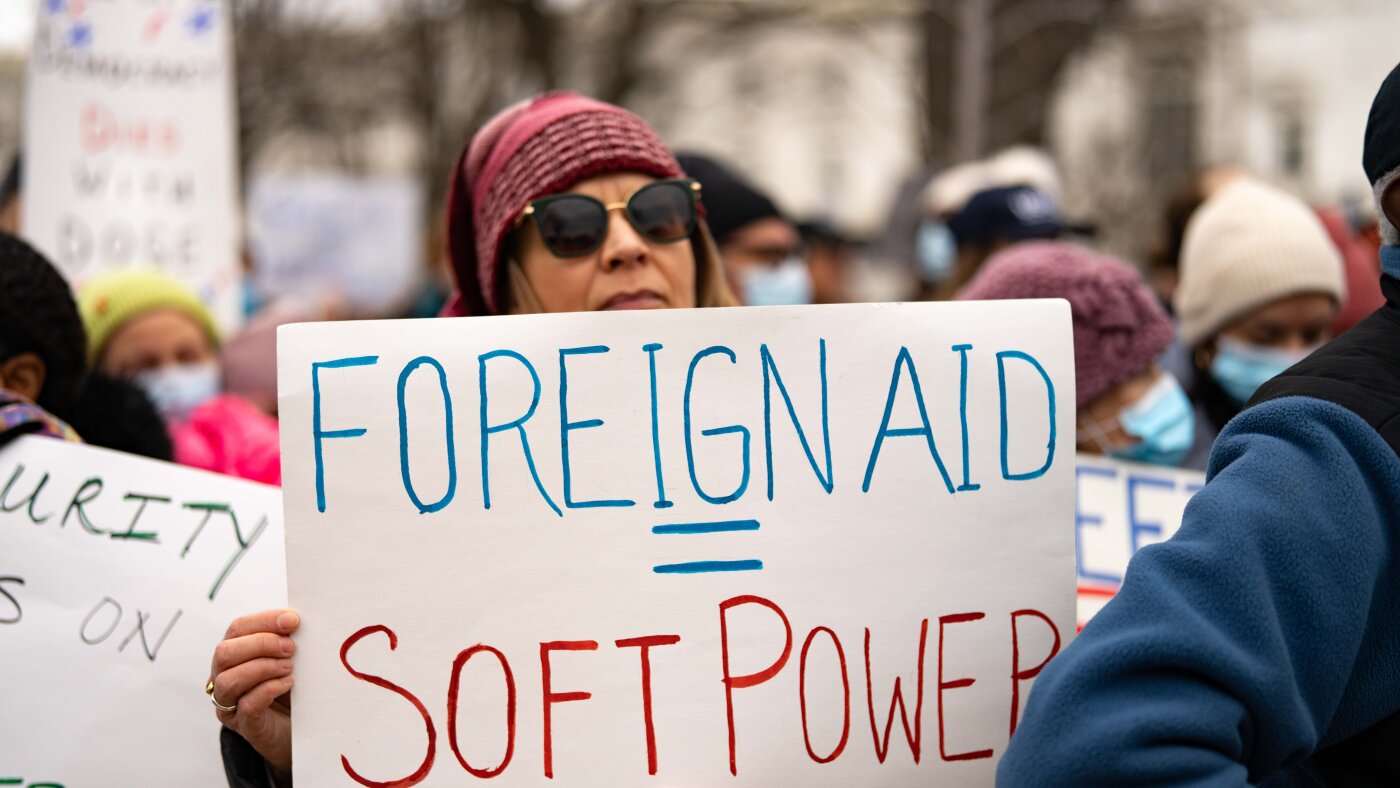
The Trump administration's reduction of foreign aid has reignited debate over "soft power" — the ability to shape global outcomes through attraction rather than coercion.
The Trump administration's reduction of foreign aid has reignited debate over "soft power" — the ability to shape global outcomes through attraction rather than coercion. Political figures across the spectrum now disagree sharply on whether cutting aid strengthens or weakens American influence worldwide.
Senator Dick Durbin (D-Illinois) accused the administration in February 2025 of "recklessly gutting American soft power and providing a huge strategic opening to China," while Senator Lindsey Graham (R-South Carolina), a Trump supporter, stated he remained "a big advocate for soft power." The disagreement reflects deeper uncertainty about how foreign aid translates into geopolitical advantage.
David Haigh, CEO of Brandfinance, which measures soft power through annual surveys of 175,000 people globally, reported that American soft power has declined across multiple measures in the past year, including perceived friendliness and cooperation on shared goals like climate action. Haigh attributed the decline directly to the administration's policy shift, saying "the current administration is rebalancing its foreign policy much more toward hard power and economic power and away from soft power."
The term "soft power" was popularized by American political scientist Joseph Nye in his 1990 book "Bound to Lead: The Changing Nature of American Power." Nye defined it as "the ability to obtain preferred outcomes by attraction rather than coercion or payment." Samuel Brazys, who studies soft power at University College Dublin, noted that migration patterns offer a concrete measure of the concept's effectiveness: "My impression is that soft power was people from all over the world wanting to move to the United States," he said, adding that fewer people now express enthusiasm for relocating to America while interest in moving to China has grown, particularly from Global South nations.
Context
The United States has long viewed foreign aid as a tool for building international goodwill and advancing diplomatic objectives. During the Cold War and post-Cold War periods, aid programs operated through agencies like USAID, which distributed humanitarian assistance globally on behalf of the U.S. government. The concept of soft power emerged as scholars and policymakers sought to measure and explain how nations could influence others without military force or direct payment.
China's rise as a global power over the past 15 years has prompted renewed American focus on soft power competition. Brazys observed this dynamic firsthand while living in Micronesia, where a Chinese acrobat troupe performance at a local college became a defining cultural moment for residents — an example of how entertainment and cultural exchange can shape perceptions of a nation. The contrast between American cultural dominance in the 1990s and 2000s — when MTV and American media were globally aspirational — and current perceptions reflects broader shifts in how nations compete for influence.
What's Next
The administration's stated rationale for aid cuts centers on impatience with soft power's gradual effects. Haigh observed that "one of the things about soft power is you can't be impatient," suggesting that measuring the success of aid reductions will require time. The policy shift creates a test case: if hard power and economic leverage prove more effective at achieving short-term foreign policy goals, the administration may continue reducing aid. Conversely, if American influence continues to erode relative to competitors like China, policymakers may reassess whether the aid cuts have achieved their intended strategic effect.
Never Miss a Signal
Get the latest breaking news and daily briefings from Zero Signal News directly to your inbox.