
IMF Warns Asia Faces Sharpest Hit From Middle East War Energy Shock
Zero Signal Staff
Published April 16, 2026 at 2:41 PM ET · 2 days ago
Reuters
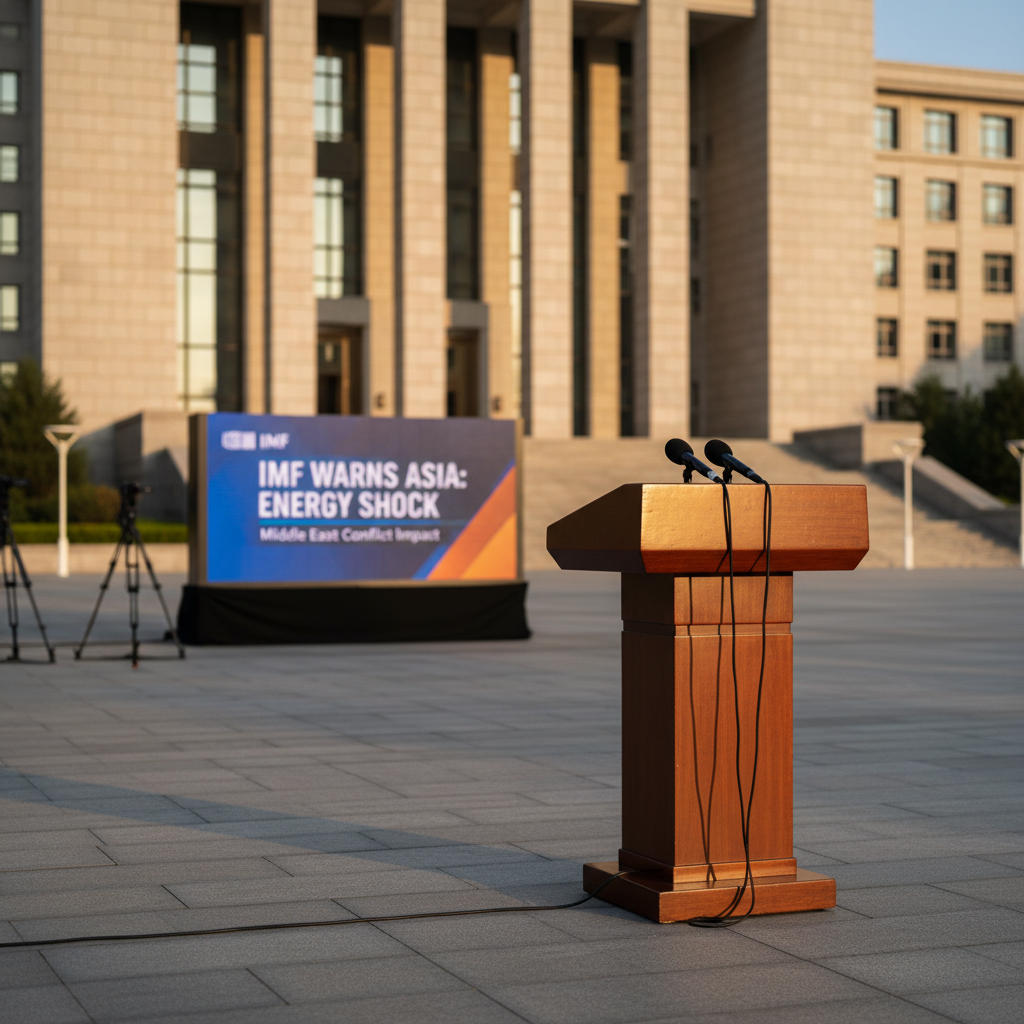
The International Monetary Fund warned that Asia's economies are the most vulnerable to the energy price surge triggered by the escalating Middle East conflict.
The International Monetary Fund warned that Asia's economies are the most vulnerable to the energy price surge triggered by the escalating Middle East conflict. Energy-importing countries across the region face steeper growth slowdowns and rising debt burdens as oil prices remain elevated, the IMF said Wednesday during its Spring Meetings in Washington.
The Details
The IMF cut its global growth forecast due to war-driven energy disruptions, cautioning that the worldwide economy could slip toward recession if conflict worsens and crude oil remains above $100 per barrel through 2027. Asia's heavy dependence on Middle East fuel imports makes the region especially vulnerable—a dynamic that places particular strain on countries with minimal energy reserves.
IMF Fiscal Affairs Director Rodrigo Valdes argued that countries must allow energy prices to rise in the short term rather than imposing broad fuel subsidies, which suppress price signals and distort markets. "We don't have oil. We don't have energy," he told Reuters at the meetings. "Energy needs to be more expensive for everybody, so that the adjustment happens and we consume less." Instead, Valdes recommended that governments deploy targeted, temporary cash transfers to cushion the impact on lower-income households. Such transfers preserve market incentives while protecting vulnerable populations from immediate hardship, allowing economic behavior to adjust without the fiscal distortions created by universal subsidies.
The Philippines—which imports nearly all its energy—faces particularly acute pressure. The IMF slashed its 2026 GDP growth forecast for the country to 4.1 percent from 5.6 percent projected in January, citing both weaker-than-expected 2025 results and the energy shock. That represents a 1.5 percentage-point downward revision in just three months. President Ferdinand Marcos Jr. has already declared a national state of energy emergency in response. IMF Managing Director Kristalina Georgieva acknowledged the hardship directly: "For the energy importers, those that have very little to none energy reserves of oil and gas, the situation is much more difficult. I very much sympathize with the people in the Philippines."
The broader ASEAN-5 region—Indonesia, Malaysia, Philippines, Singapore, and Thailand—is projected to grow at 4.1 percent in 2026, marginally slower than the 4.2 percent estimate issued in January. Georgieva described ASEAN as "a bright spot in terms of growth and economic dynamism," but noted the group's exposure to the energy shock despite resilience. Thai and Philippine central banks are advised to pause rate cuts where inflation remains below target, preserving space for potential easing later if conditions deteriorate further. This guidance reflects the IMF's assessment that energy shocks could trigger secondary inflation pressures even in normally stable economies.
Beyond Asia, global fiscal stress is mounting rapidly. Government debt reached 93.9 percent of global GDP in 2025, up from 92 percent a year earlier, and is on track to hit 100 percent by 2029—a year sooner than forecast twelve months ago and the highest level since World War II. Interest payments on government debt surged to nearly 3 percent of GDP in 2025 from 2 percent four years prior, consuming a larger share of tax revenue for debt service rather than public investment or social spending. If current trends persist, debt is projected to reach 102.3 percent of GDP by 2031, compounding constraints on fiscal flexibility precisely when crisis response capacity is most needed.
Valdes also warned of structural risks emerging in global credit markets. Hedge funds and other mobile investors are assuming larger roles in government bond portfolios, replacing traditional long-term holders like pension funds and insurance companies. These newer market participants, Valdes argued, are "less firm hands to hold debt for the long run," potentially introducing refinancing volatility when interest rates spike or credit sentiment shifts. This reshaping of debt markets could amplify borrowing costs for developing economies during future stress episodes.
Context
The Middle East conflict escalated sharply after U.S. and Israeli strikes on Iran on February 28, 2026, triggering a major oil supply disruption and pushing crude prices higher. The timing coincides with Asia's post-pandemic economic recovery, which has relied on stable energy inputs and robust export demand. Higher energy costs undermine both domestic consumption and export-oriented manufacturing across the region, raising the specter of stagflation—simultaneous growth slowdown and price increases that compress policy options for central banks.
Asia's energy vulnerability stems from geography and development patterns. Indonesia and Malaysia produce oil, but most Southeast Asian economies—the Philippines, Thailand, Vietnam—depend critically on Middle East imports. India and South Korea, major energy importers, similarly face exposure. The region's manufacturing-driven growth model relies on affordable electricity and transport fuels, making energy price shocks immediate headwinds to industrial competitiveness and supply chain stability.
Philippine inflation, already at 4.1 percent in March 2026, has broken through the central bank's 2–4 percent target band for the first time in nearly two years, adding urgency to the country's energy emergency declaration. The central bank faces a classic dilemma: raising rates to suppress inflation would slow an already-weakening economy further; holding rates steady risks inflation expectations becoming unanchored. The combination of external energy shocks and tightening fiscal space creates a narrow corridor for policy action.
The IMF's warnings arrive amid a broader pattern of downward growth revisions globally. The organization has cut 2026 forecasts repeatedly in recent quarters, reflecting both persistent inflation pressures and the cumulative drag of higher-for-longer interest rates. This energy shock adds a new exogenous variable to an already-fragile economic backdrop.
What's Next
The IMF's Spring Meetings conclude this week with no immediate action pledges, but the warnings are likely to shape central bank rate decisions across Asia in the coming months. The Philippines and other energy importers may face pressure to maintain higher interest rates longer than preferred to prevent inflation expectations from drifting higher.
Oil prices will remain a crucial barometer. If crude settles sustainably below $90 per barrel, Asia's growth forecasts may stabilize. Conversely, further Middle East escalation or supply disruptions could force the IMF to cut growth forecasts again, potentially triggering new policy responses from regional governments. Watch for energy-import negotiations and renewable energy investment announcements from Southeast Asian nations in the coming weeks.
Never Miss a Signal
Get the latest breaking news and daily briefings from Zero Signal News directly to your inbox.