
India's Defence Exports Surge 25-Fold Since 2017, Hitting Record $4.1 Billion
Zero Signal Staff
Published May 7, 2026 at 1:56 AM ET · 158 days ago
Reuters / Rubix Data Sciences / SIPRI
India's defence exports reached a record Rs 384.24 billion ($4.11 billion) in the fiscal year ending March 2026, marking a 62% year-over-year increase and a more than 25-fold rise from the Rs 15 billion recorded in fiscal 2017, according to a report
India's defence exports reached a record Rs 384.24 billion ($4.11 billion) in the fiscal year ending March 2026, marking a 62% year-over-year increase and a more than 25-fold rise from the Rs 15 billion recorded in fiscal 2017, according to a report by Rubix Data Sciences.
The Details
The data, corroborated by Reuters and government statements, places India's FY2026 defence export total at Rs 384.24 billion, up from Rs 236.22 billion in FY2025. Domestic defence production also reached a record Rs 1.54 trillion in FY2025, a figure more than triple the output recorded in fiscal 2015.
India's defence budget has expanded almost in parallel, rising from Rs 2.53 trillion in FY2014 to Rs 7.85 trillion projected for FY2027. The current allocation represents about 14.67% of the Union Budget and roughly 2% of GDP.
According to the Rubix Data Sciences report, the Ministry of Defence signed 193 contracts worth Rs 2.09 trillion in FY2025 alone. Of these, Indian firms received 92% of contract volume and 81% of contract value.
The private sector's participation has grown steadily. Its share in domestic defence production increased from 19% in FY2017 to 23% in FY2025, and it accounted for 45% of total defence exports in FY2026. Nearly 16,000 micro, small, and medium enterprises now operate within India's defence ecosystem, and a total of 788 industrial licences have been issued to 462 companies.
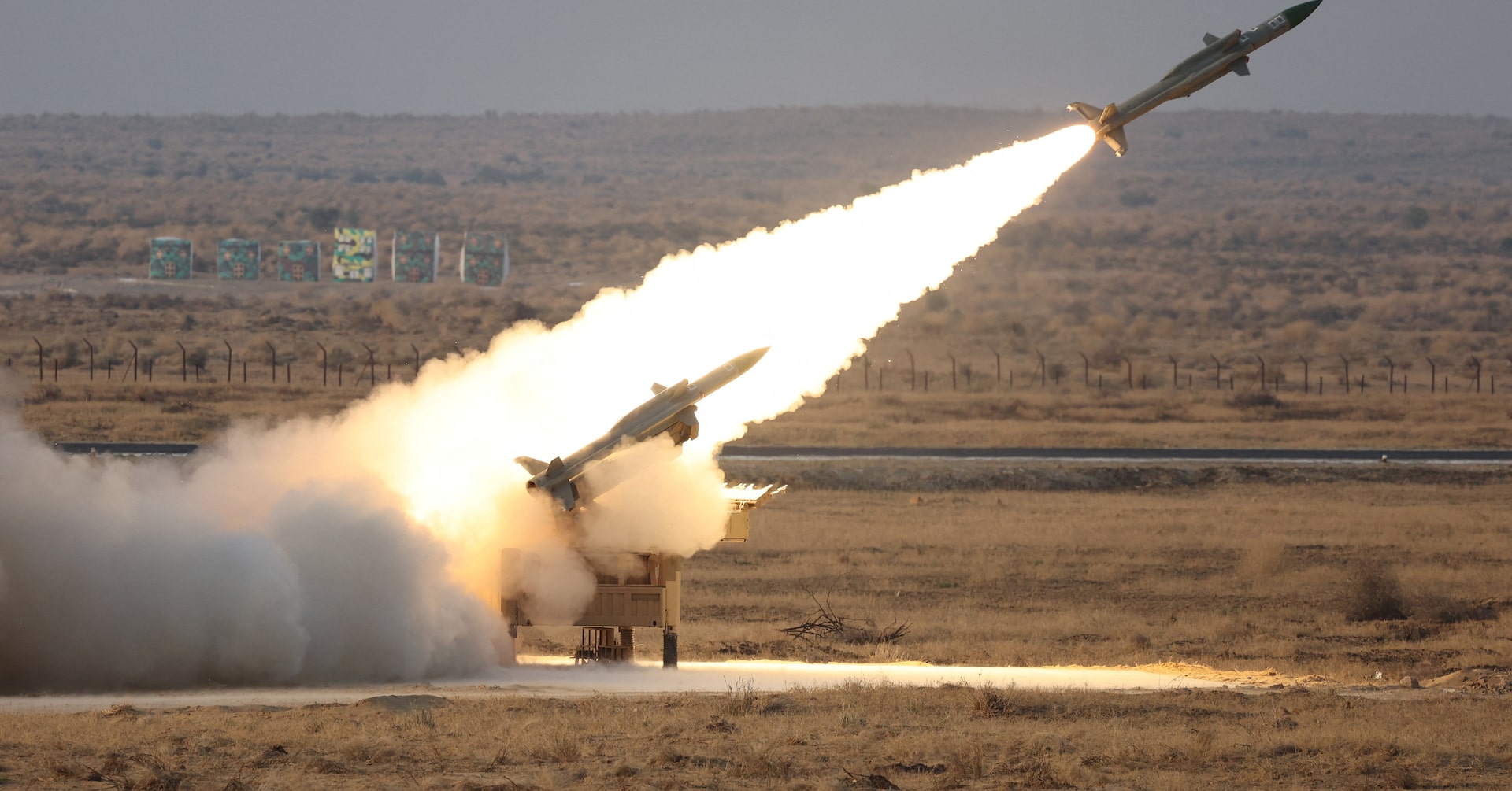
India currently exports defence equipment to more than 80 countries. Major export products include BrahMos cruise missiles, Akash air-defence systems, Pinaka rocket systems, ATAGS artillery guns, Swathi weapon-locating radars, Dornier aircraft, and specialised naval vessels.
Naval platforms have dominated India's export portfolio over the past decade. Stockholm International Peace Research Institute data shows that between 2016 and 2025, naval systems accounted for nearly 55% of India's defence exports, followed by artillery systems at 13% and missiles at 12%. Missile exports recorded approximately 65% compound annual growth between FY2018 and FY2026.
Quoted in a Reuters report dated April 2, 2026, Indian Defence Minister Rajnath Singh stated: "India, which once upon a time used to depend on other countries for weapons or was known for imports, is moving fast in exports as well."
Context
Despite the growth in exports, India remains the world's second-largest arms importer, accounting for 8.2% of global imports between 2021 and 2025, according to SIPRI data. Ukraine overtook India during that period with 9.7% of global imports.
India is also the world's fifth-largest military spender, with SIPRI data recording $92.1 billion in defence spending for 2025.
The composition of India's arms imports has shifted significantly. Russia's share fell from approximately 70% during the 2011-2015 period to about 40% during 2021-2025. France emerged as the second-largest supplier with 29%, followed by Israel at around 15%.
The report attributes the export growth to sustained government focus on self-reliance under the Atmanirbhar Bharat and Make in India initiatives, rising participation of private firms, increased domestic procurement, and growing global demand.
What's Next
India is nearing finalisation of BrahMos missile export deals with Vietnam and Indonesia, collectively valued at more than Rs 40 billion. The country has also set medium-term targets of achieving Rs 3 trillion in domestic defence production and Rs 500 billion in defence exports by fiscal 2029.
During FY2026, India approved a record level of defence procurements, including deals worth USD 71 billion covering Rafale fighter jets, transport aircraft, submarines, missile systems, surveillance platforms, and air-defence systems.
Never Miss a Signal
Get the latest breaking news and daily briefings from Zero Signal News directly to your inbox.