
Iran Re-Closes Strait of Hormuz and Attacks Ships as US Blockade Dispute Escalates
Zero Signal Staff
Published April 18, 2026 at 5:03 PM ET · 181 days ago
AP News
Iran reversed its reopening of the Strait of Hormuz on Saturday, April 18, 2026, declaring the strategic waterway again under the strict control of its armed forces.
Iran reversed its reopening of the Strait of Hormuz on Saturday, April 18, 2026, declaring the strategic waterway again under the strict control of its armed forces. The move coincided with attacks on commercial vessels, including Indian-flagged tankers, as tensions peak over a U.S. naval blockade. President Donald Trump convened a White House Situation Room meeting to address the crisis, affirming that the blockade will remain in force until a deal is reached with Tehran.
The Details
The escalation began Saturday when Iran's joint military command announced that control of the strait had returned to its 'previous state,' placing it under the direct management of the armed forces. The Islamic Revolutionary Guard Corps (IRGC) navy issued a stern warning, stating that any vessel approaching the strait would be viewed as cooperating with the enemy and would be targeted.
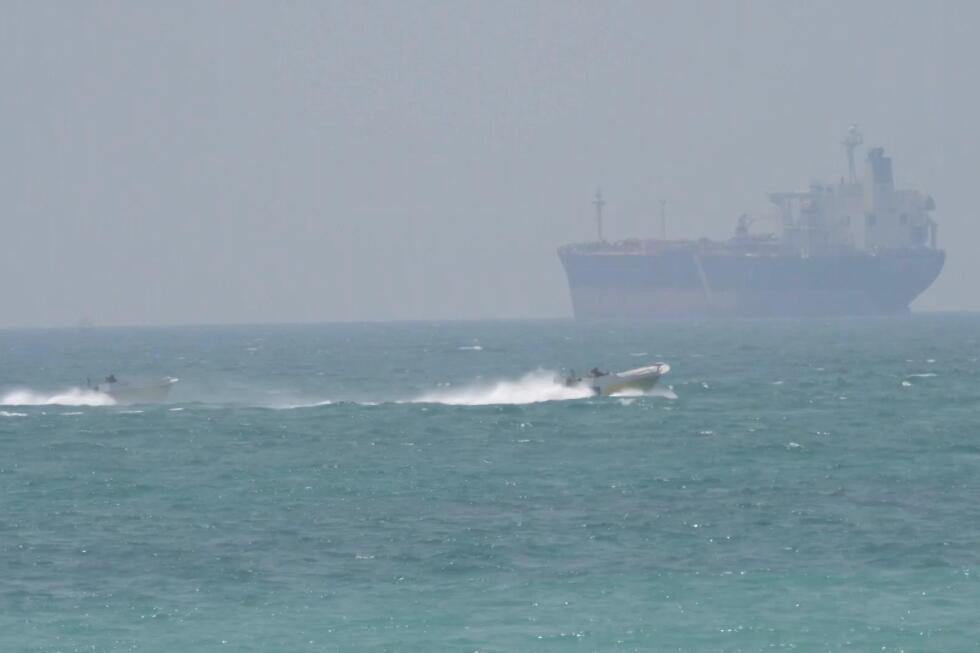
These threats were immediate and active. The British military's UK Maritime Trade Operations (UKMTO) reported that IRGC gunboats opened fire on a tanker transiting the strait, while another container vessel was hit by an unknown projectile. Additionally, two Indian-flagged vessels, including a supertanker carrying Iraqi oil, were attacked while attempting to cross the waterway. In response, India's Foreign Secretary Vikram Misri summoned Iran's ambassador, Mohammad Fathali, to convey deep concern and urge the resumption of safe passage for Indian ships.
In Washington, President Trump met with senior officials, including JD Vance, Marco Rubio, Pete Hegseth, and Scott Bessent, in the Situation Room. Trump dismissed Iran's attempt to leverage the strait, stating that Tehran 'got a little cute' and adding, 'They can't blackmail us.' He emphasized that the U.S. blockade of Iranian ports and ships will not be lifted until a comprehensive agreement is finalized.
Iran's Supreme National Security Council has indicated it is reviewing new U.S. proposals delivered via Pakistan's army chief. However, the council maintained that any further progress requires the U.S. to abandon 'excessive demands' and adjust its requests to match the realities on the ground. Iran’s Deputy Foreign Minister, Saeed Khatibzadeh, warned that the U.S. is risking the entire ceasefire package and the global economy through these 'miscalculations.'
Adding to the friction, Iran has declared that the idea of handing over its remaining 970 pounds of enriched uranium to the United States is a 'non-starter.' This follows previous statements from President Trump, who claimed the U.S. would enter Iran to 'get all the nuclear dust.'
To ensure prolonged control, Iran's security council stated it will maintain full authority over the strait, requiring transit certificates and imposing tolls on all passing vessels until a lasting peace is achieved.
Reports from the Wall Street Journal indicate that the U.S. military is now preparing to board Iran-linked tankers and seize commercial ships in international waters in the coming days.
Context
The current crisis is part of a broader conflict that began on February 28, 2026, involving the U.S., Israel, and Iran. The war has resulted in at least 3,000 deaths in Iran, over 2,290 in Lebanon, and casualties across Israel and Gulf Arab states. A temporary ceasefire began on April 8, but stability has remained fragile.
Shipping traffic through the Strait of Hormuz has plummeted by more than 95% since the start of the hostilities. Out of the thousands of ships that typically transit the area, only 45 have entered or exited since the April 8 ceasefire. This disruption has cut the global oil supply by approximately 20%, leading to a 50% surge in oil prices—the largest fuel supply disruption in history.
Diplomatic efforts are currently led by Pakistan, which is mediating between Washington and Tehran. A second round of negotiations is expected early next week in Pakistan, though Iranian officials claim the U.S. maintains a 'maximalist position' that prevents face-to-face talks.
Simultaneously, regional instability persists in Lebanon. Despite a 10-day ceasefire between Israel and Hezbollah, a French UN peacekeeper was killed on Saturday in an attack on UNIFIL forces, further complicating the geopolitical landscape.
What's Next
The immediate focus centers on the Tuesday deadline, when the current ceasefire is set to expire. President Trump has expressed hope to end the conflict before then, but U.S. officials warn that without a diplomatic breakthrough, full-scale war could resume within days.
Market analysts are closely monitoring the potential for further U.S. seizures of Iranian ships, which could prompt Iran to escalate its attacks on commercial shipping further. The result of the upcoming negotiations in Pakistan will likely determine whether the Strait of Hormuz remains a combat zone or returns to commercial viability.
Furthermore, the resolution of the enriched uranium dispute remains a primary sticking point. If the U.S. proceeds with plans to seize nuclear materials by force, it could trigger a total collapse of the mediating efforts and a rapid escalation of kinetic operations.
Never Miss a Signal
Get the latest breaking news and daily briefings from Zero Signal News directly to your inbox.