
Iran Re-Closes Strait of Hormuz as Ceasefire Deadline Approaches
Zero Signal Staff
Published April 19, 2026 at 2:38 AM ET · 161 days ago
CNN / Reuters / NPR
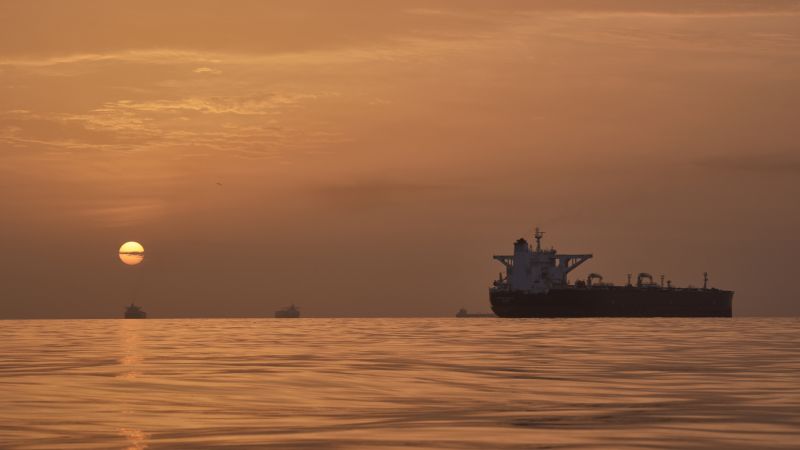
Iran announced the re-closure of the Strait of Hormuz on Saturday, April 18, reversing a brief reopening of the critical waterway.
Iran announced the re-closure of the Strait of Hormuz on Saturday, April 18, reversing a brief reopening of the critical waterway. The move coincided with reports of IRGC gunboats firing on commercial tankers, escalating tensions just days before a US-Iran ceasefire expires on April 22. The closure threatens global energy markets and signals a severe breakdown in trust between Washington and Tehran.
The Details
The Islamic Revolutionary Guard Corps (IRGC) targeted commercial vessels shortly after the closure announcement. According to the UK Maritime Trade Operations (UKMTO), gunboats fired upon a tanker attempting to transit the Strait, while a second vessel was reportedly hit by a projectile. India has since summoned the Iranian ambassador in New Delhi after confirming that two Indian-flagged vessels were involved in these incidents.
Tehran justified the closure by accusing the United States of 'breaches of trust' during the current ceasefire. Iranian officials specifically cited the ongoing US naval blockade of Iranian ports as a primary provocation. Mohammad Bagher Ghalibaf, speaker of the Iranian parliament, warned that the Strait would not remain open as long as the blockade continues, stating that Washington and Tehran still have 'a long way to go' before reaching a final agreement.
In response, President Donald Trump characterized Iran's actions as 'getting a little cute,' referencing a 47-year history of such maneuvers. Trump affirmed that the US naval blockade, which spans approximately 300km in the eastern Gulf of Oman and involves roughly a dozen military vessels, will remain in place. US Central Command reports that 19 ships have already turned back following naval warnings issued over the last four days.
The current diplomatic crisis is centered on Iran's enriched uranium stockpile. President Trump claims that Iran has agreed to hand over the stockpile, a move he suggested would involve 'lots of excavators.' However, Iran's foreign ministry has explicitly denied this, asserting that enrichment is a sovereign right and that the uranium will not be transferred.
This latest escalation follows a brief window of optimism on Friday, April 17, when Iran temporarily reopened the Strait following a ceasefire agreement in Lebanon between Israel and Hezbollah. That news caused global stocks to jump and oil prices to tumble by nearly 10%, only for those gains to be erased by Saturday's re-closure.
Context
The current conflict stems from joint US and Israeli airstrikes on Iran on February 28, 2026, which resulted in the death of Supreme Leader Ali Khamenei. Iranian state media reports that at least 3,375 people have been killed in Iran since the strikes began. The Strait of Hormuz is a critical global chokepoint, typically carrying about one-fifth of the world's crude oil and natural gas, making any disruption a matter of global economic concern.
A two-week ceasefire, mediated by Pakistan, was established on April 8, 2026, to provide a window for negotiations. Pakistan's army chief, Field Marshal Asim Munir, has been central to these efforts, conducting high-level meetings in Tehran and Islamabad. The US has proposed a 20-year suspension of Iranian nuclear activity, while Iran has countered with a proposal for a 3-to-5-year halt.
Regional stability remains fragile. A 10-day ceasefire between Israel and Hezbollah began on April 17, but was immediately marred by the death of French UN peacekeeper Sergeant-Chef Florian Montorio on April 18. While French President Macron accused Hezbollah of the killing, the group has denied involvement.
What's Next
The global community is now looking toward April 22, the expiration date of the US-Iran ceasefire. President Trump has warned that the US may not extend the agreement, stating that if it expires, the same naval blockade will remain and the US may 'start dropping bombs again.'
Negotiations are reaching a critical juncture, with Defense Secretary Pete Hegseth and the CIA director recently arriving at the White House for emergency consultations. The primary hurdle remains the nuclear compromise; unless a verified agreement on the enriched uranium stockpile is reached, a return to full-scale military conflict appears likely.
Economically, the US Treasury Department has already extended a pause on sanctions for Russian oil shipments to mitigate the energy shortages caused by the Iran war. Market volatility is expected to intensify as the April 22 deadline nears, with oil prices likely to spike if the Strait remains closed.
Never Miss a Signal
Get the latest breaking news and daily briefings from Zero Signal News directly to your inbox.