
Iran Rejects Reopening of Strait of Hormuz as Ship Seizures Escalate Despite US Ceasefire Extension
Zero Signal Staff
Published April 22, 2026 at 7:53 PM ET · 157 days ago
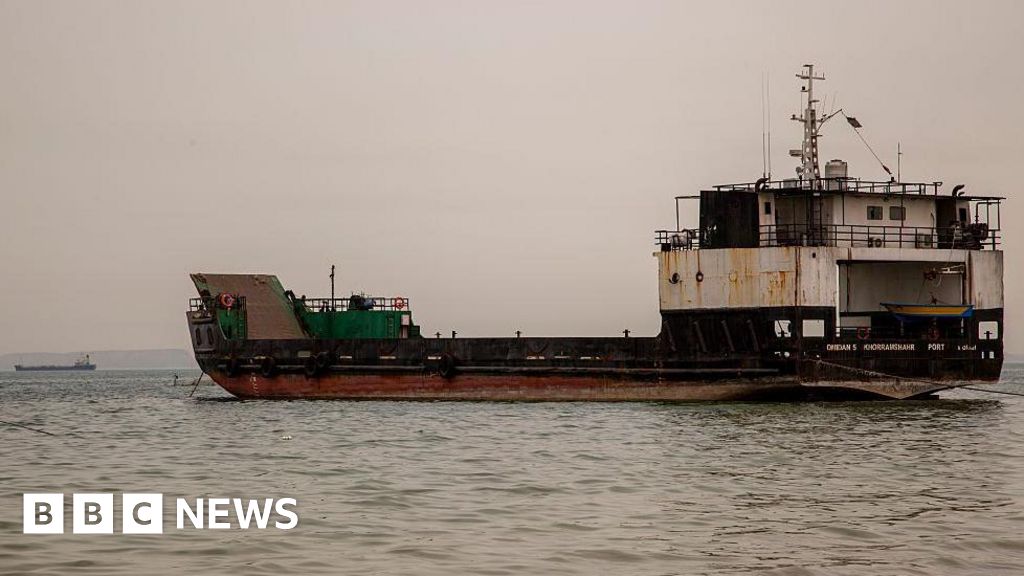
BBC News
Iran has declared that the Strait of Hormuz will remain closed, citing 'blatant violations' of a ceasefire by the United States and Israel.
Iran has declared that the Strait of Hormuz will remain closed, citing 'blatant violations' of a ceasefire by the United States and Israel. The announcement coincided with the seizure of two container ships by the Islamic Revolutionary Guard Corps (IRGC) and a third attack on a UAE-owned vessel, signaling a precarious stalemate despite a recent open-ended ceasefire extension by President Trump.
The Details
On Wednesday, IRGC forces seized the Liberia-flagged Epaminondas and the Panama-flagged MSC Francesca in the Strait of Hormuz. Iranian officials accused the vessels of operating without authorization and tampering with navigation systems. During the operation, an IRGC gunboat fired on the Epaminondas approximately 20 nautical miles northwest of Oman, causing significant damage to the ship's bridge, though no injuries were reported.\n\nA third vessel, the UAE-owned Euphoria, was also attacked in the strait. Analysis of MarineTraffic data by BBC Verify indicates that the Euphoria managed to continue sailing and eventually anchored near a port in the UAE.\n\nMohammad Bagher Ghalibaf, Iran's parliament speaker and chief negotiator, stated that reopening the strait is 'not possible' due to US and Israeli actions, specifically highlighting the ongoing US naval blockade of Iranian ports. Iran's Supreme National Security Council further clarified that it will block any 'conditional and limited reopening' of the waterway. Any future transit will require the use of Iran-designated routes, the payment of fees, and the issuance of official transit certificates.\n\nIn Washington, White House Press Secretary Karoline Leavitt defended the current posture, stating that President Trump is 'satisfied' with the continuing naval blockade. The White House explicitly dismissed the seizure of the container ships as a breach of the ceasefire, with Leavitt noting that the targeted vessels were neither American nor Israeli.\n\nMeanwhile, the geopolitical tension was underscored in Tehran, where Iran showcased ballistic missiles during a parade. Banners at the event read 'Indefinitely under Iran's Control' and 'Trump could not do a damn thing,' reflecting a defiant stance despite the diplomatic ceasefire.
Context
The current conflict began on February 28, 2026, following joint US-Israeli strikes on Iran conducted during nuclear negotiations. The resulting war has caused significant casualties, with at least 3,000 deaths in Iran, over 2,290 in Lebanon, 23 in Israel, and several dozen across other Gulf Arab states. This includes 15 Israeli soldiers in Lebanon and 13 US service members in the region.\n\nThe Strait of Hormuz is one of the world's most critical maritime chokepoints, typically handling approximately one-fifth of global oil and gas trade. Before the conflict, more than 100 ships transited the strait daily. The current closure has been described as the largest oil supply disruption in history, causing Brent crude prices to climb back above $100 a barrel for the first time in two weeks.\n\nDiplomatic efforts have struggled to gain traction. Peace talks scheduled in Pakistan on Tuesday failed to materialize after the US delegation leader, Vice President JD Vance, remained in the United States. While Pakistani mediators are attempting to organize a second round of talks, the gap between the two nations remains wide, particularly regarding Iran's refusal to hand over 970 lbs of enriched uranium, which Tehran has labeled a 'nonstarter.'
What's Next
The immediate future of the region depends on whether the open-ended ceasefire extension can prevent a full-scale return to hostilities. However, Iran's insistence on strict control over the Strait of Hormuz suggests that the maritime blockade will remain a primary point of leverage and contention.\n\nEconomic analysts are watching the oil markets closely. Rystad Energy estimates that it will take until July for oil flows to return to 90% of prewar levels, meaning global energy prices are likely to remain volatile in the short term.\n\nInternal US military leadership is also in flux following the immediate ousting of Navy Secretary John Phelan. The Pentagon's decision to remove Phelan suggests a potential shift in the US approach to the naval blockade or an admission of strategic failure in managing the regional escalation.
Never Miss a Signal
Get the latest breaking news and daily briefings from Zero Signal News directly to your inbox.