
Iran Threatens to Block Red Sea Shipping If U.S. Maintains Port Blockade
Zero Signal Staff
Published April 15, 2026 at 9:01 AM ET · 184 days ago
ABC News
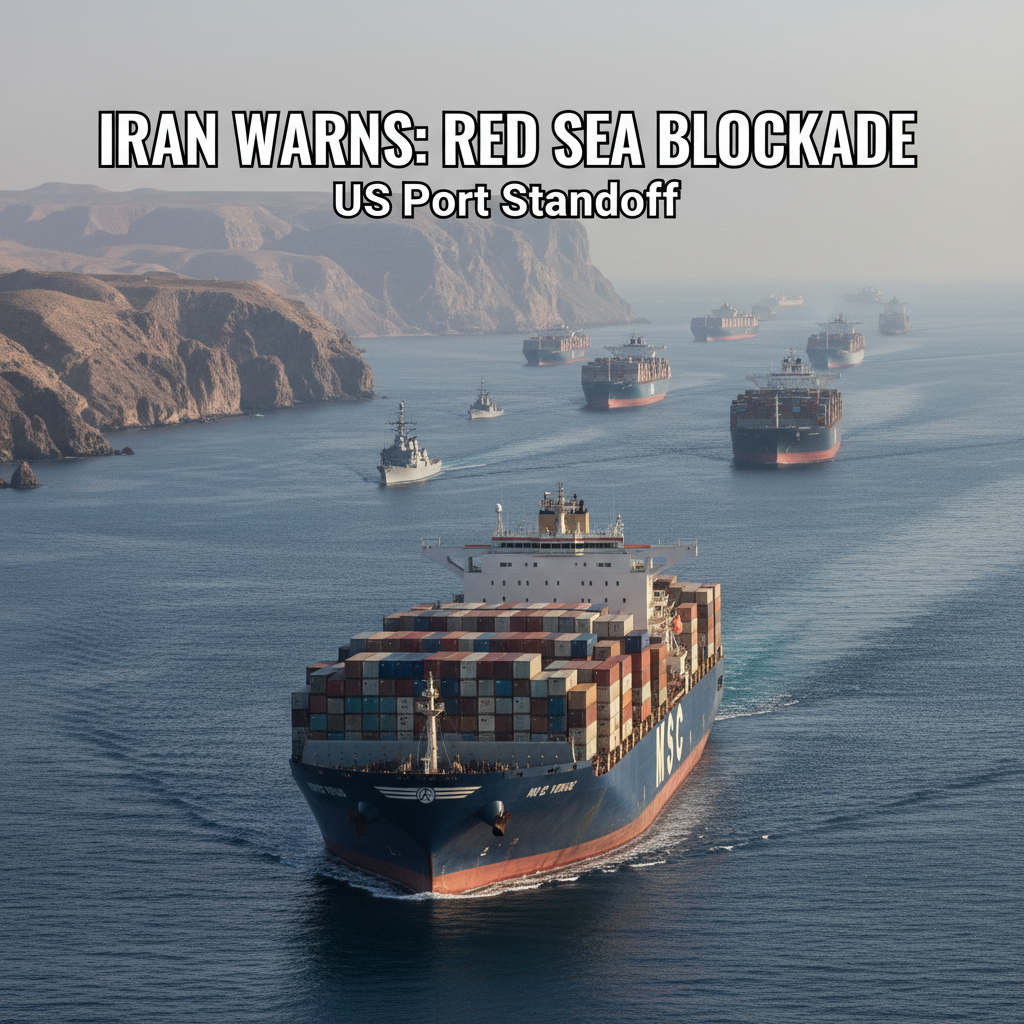
Iran's military commander warned on April 15 that Tehran will prevent all exports and imports through the Persian Gulf, Gulf of Oman, and Red Sea if the United States continues its blockade of Iranian ports.
Iran's military commander warned on April 15 that Tehran will prevent all exports and imports through the Persian Gulf, Gulf of Oman, and Red Sea if the United States continues its blockade of Iranian ports. The threat came one day after the Trump administration implemented the blockade on April 14, which Iran claims violates a ceasefire agreement reached earlier this month.
Gen. Ali Abdollahi of Iran's Khatam Al-Anbiya Central Headquarters issued the warning through the official Islamic Republic News Agency on Wednesday, stating that the U.S. blockade constitutes a violation of the ceasefire. The blockade began at 10 a.m. ET on Monday, April 14, according to Trump's announcement, with the head of U.S. Central Command confirming it was "fully implemented" that evening.
The escalation follows failed diplomatic talks in Pakistan aimed at resolving the standoff. Trump had initially set a deadline for Iran to reopen the Strait of Hormuz or face strikes on critical infrastructure. Two weeks before the deadline expired, Trump agreed to suspend planned bombing if Iran reopened the strait, but subsequent negotiations broke down over Iran's nuclear program, prompting Trump to order the blockade.
The military confrontation intensifies an already volatile regional situation. Israel has continued ground operations and airstrikes in Lebanon against the Iran-backed Hezbollah militia, with the Israeli Defense Forces issuing an urgent warning on April 15 for residents south of the Zahrani River to evacuate as strikes continued "with significant force." Israeli Prime Minister Benjamin Netanyahu said he supported the Iran ceasefire but noted that Lebanon was not covered by the agreement, despite Iranian objections.
Vice President JD Vance defended U.S. military actions during a campaign event in Athens, Georgia on April 14, invoking just war theory in response to hecklers criticizing the administration's conduct in Iran and Gaza. Vance also responded to Pope Leo XIV's anti-war statements, stating that religious leaders should be careful when opining on theology and matters of public policy.
Context
The current confrontation began when Trump announced "major combat operations" against Iran on February 28, with massive joint U.S.-Israeli strikes targeting military and government sites. The blockade represents a significant escalation in economic pressure on Iran, which depends heavily on maritime trade through the Persian Gulf and Red Sea. The Strait of Hormuz, a critical chokepoint through which roughly 30 percent of global maritime petroleum trade passes, has been a focal point of U.S.-Iran tensions for decades. Iran's threat to block all shipping in these waters would dramatically affect global energy markets and international commerce if implemented.
The Vatican has emerged as an unexpected flashpoint in the conflict. Pope Leo XIV has publicly opposed the military operations, prompting Trump to criticize the pontiff repeatedly on social media in recent days. This marks a notable departure from typical diplomatic protocol, as U.S. presidents have historically maintained careful relations with the Catholic Church.
What's Next
The immediate question is whether Iran will follow through on its threat to block Red Sea and Persian Gulf shipping, an action that would constitute a direct escalation beyond rhetoric. Such a move would likely trigger a severe international response and could disrupt global energy supplies, given that the region handles a substantial portion of world oil and liquefied natural gas exports. Trump has indicated he views the conflict as " close to over," but the competing blockade threats and continued Israeli operations in Lebanon suggest the situation remains volatile with no clear off-ramp currently visible. The Trump administration has not publicly stated whether it intends to modify the blockade in response to Iran's warning.
Never Miss a Signal
Get the latest breaking news and daily briefings from Zero Signal News directly to your inbox.