
Israel and Lebanon Begin 10-Day Ceasefire Following Trump-Brokered Negotiations
Zero Signal Staff
Published April 16, 2026 at 3:37 PM ET · 2 days ago
Politico, New York Post, Jerusalem Post, Times of Israel
President Donald Trump announced on April 16, 2026, that Israel and Lebanon have agreed to a 10-day ceasefire effective immediately at 5 p.m. EST.
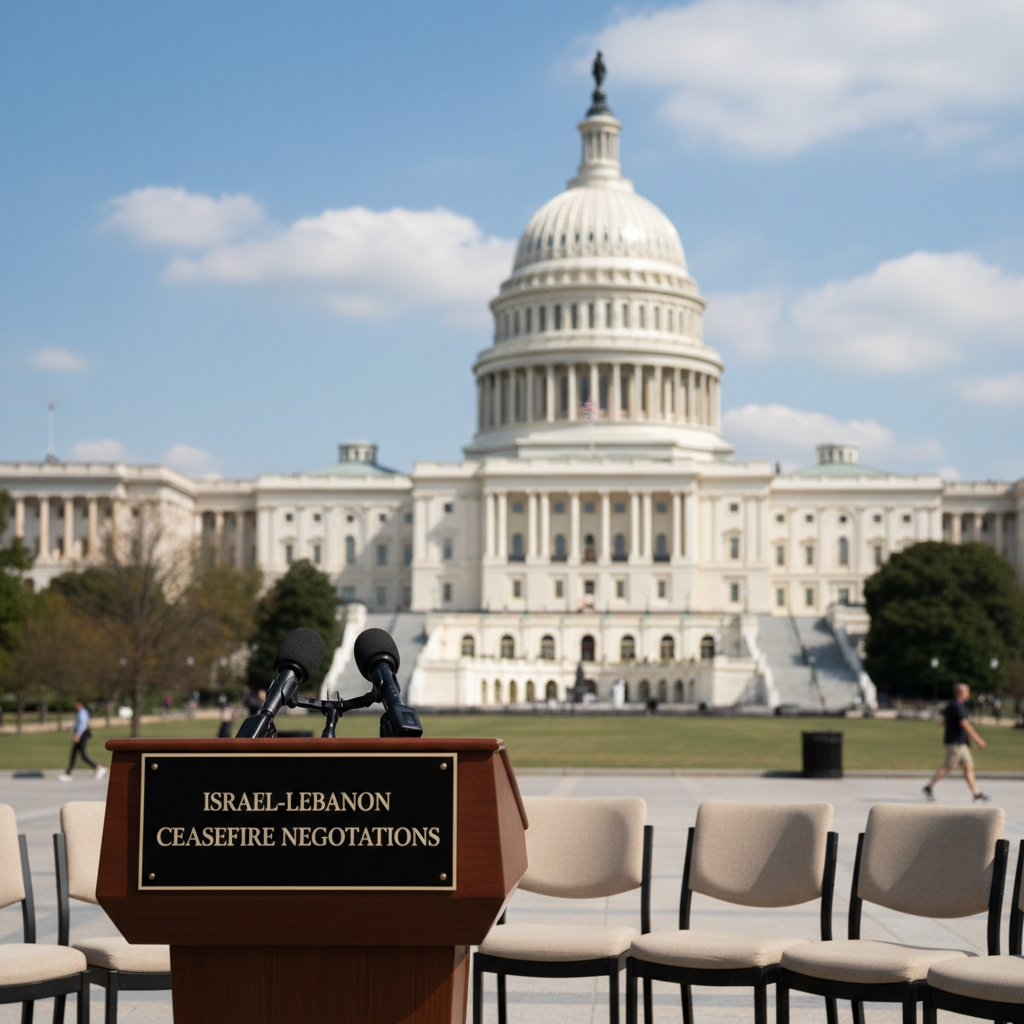
President Donald Trump announced on April 16, 2026, that Israel and Lebanon have agreed to a 10-day ceasefire effective immediately at 5 p.m. EST. The agreement followed separate conversations between Trump and Israeli Prime Minister Benjamin Netanyahu and Lebanese President Joseph Aoun. The ceasefire marks the outcome of a historic summit held two days prior, when Israeli and Lebanese envoys met directly at the U.S. State Department—the first such meeting in 34 years.
The Details
Trump's announcement came via Truth Social, where he stated that the two countries had agreed to formally begin the ceasefire 'in order to achieve PEACE between their Countries.' The timing corresponds to midnight in Israel's time zone, ensuring synchronized implementation across both nations. Trump described the agreement as laying groundwork for future peace discussions and invited both Netanyahu and Aoun to the White House for further talks within the coming weeks.
Netanyahu confirmed the ceasefire and reframed it as 'an opportunity to make a historic peace agreement with Lebanon,' while noting that Israel had 'changed the balance of security.' The Israeli prime minister reiterated that Israeli forces would maintain a security buffer extending 10 kilometers into southern Lebanon throughout the truce period. Israeli military units will remain deployed deep inside Lebanese territory during the ceasefire, mirroring arrangements established in the previous November 2024 truce.
Lebanese Prime Minister Nawaf Salam welcomed the agreement, calling it Lebanon's 'primary goal in the Washington meeting on Tuesday' and expressing gratitude to regional and international partners who facilitated the negotiations. Notably, Aoun initially refused direct conversation with Netanyahu, instead coordinating solely with Trump, who then relayed messages to the Israeli premier separately.
The ceasefire agreement triggered varied responses from non-state actors. Hezbollah issued a conditional statement indicating it would respect the truce if Israeli military operations cease entirely. However, the organization warned that Israel's territorial presence in Lebanon grants Lebanese forces the 'right to resist' and demanded strict adherence to ceasefire terms, citing previous violations during the 2024 truce when the group claimed Israel struck civilians despite the agreement.
An Israeli official stated that should the Lebanese government fail to dismantle Hezbollah within the 10-day window, Israel would act 'with great force immediately afterward.' This statement underscores underlying uncertainty regarding Lebanon's ability or willingness to enforce the ceasefire unilaterally, given the government's historically limited control over the militant organization.
Trump announced plans to dispatch a senior diplomatic and military delegation to both countries. Vice President JD Vance, Secretary of State Marco Rubio, and Joint Chiefs of Staff Chair Dan Caine will coordinate continued negotiations aimed at achieving a more permanent resolution. The administration signaled optimism about the prospects, with Trump telling reporters that 'both sides want to see peace, and I believe that will happen, quickly.'
Notably, Israel's security cabinet did not formally vote on the ceasefire prior to its announcement. Cabinet ministers learned of the agreement through media reports after the cabinet meeting concluded, indicating that the decision was made by Netanyahu in direct consultation with Trump.
Context
The ceasefire emerges from a decades-long conflict between Israel and Hezbollah, punctuated by repeated cycles of violence and periodic truces. Israel has substantially degraded Hezbollah's operational capacity in recent years through targeted operations, including the 2024 pager and walkie-talkie device attack—Operation Grim Beeper—and the 2024 assassination of long-time organization leader Hassan Nasrallah. These operations significantly diminished Hezbollah's ability to project power in the region.
The immediate trigger for recent hostilities derives from broader regional conflict. In February 2026, military operations between the United States and Iran escalated significantly. Israel launched a substantial bombing campaign against Hezbollah targets in Lebanon soon afterward, capitalizing on perceived Iranian strategic weakness. The current ceasefire is independent of a separate, concurrent U.S.-Iran truce that expires imminently. Iran had previously insisted that any regional ceasefire include Lebanon, but the United States declined to make Lebanon a formal component of Iran talks.
Regional economic pressures have intensified during the conflict. Iran's effective closure of the Strait of Hormuz in response to U.S.-Israeli military operations has driven global oil and gas prices substantially higher, creating broader economic consequences across the region and globally. Both Israel and Lebanon face internal political divisions regarding continued hostilities. Polling data indicates Jewish Israelis support continued operations against Hezbollah by a decisive margin, while Arab Israelis oppose such action. Lebanese political factions hold varying positions on the value of continued conflict versus peace negotiation.
The April 14 summit at the U.S. State Department represented an unprecedented diplomatic moment. The direct engagement between Israeli and Lebanese delegations—brokered by Secretary of State Marco Rubio—constituted the first official dialogue between the two governments since 1983. This meeting established the foundation for the current ceasefire agreement and signals potential willingness from both sides to pursue diplomatic resolution despite decades of mutual hostility.
What's Next
The 10-day ceasefire window creates limited time for substantive negotiations toward a permanent peace arrangement. Both Israeli and Lebanese leadership have signaled optimism, but significant obstacles remain. Israel's insistence on maintaining military presence in southern Lebanon and its implicit threat of renewed offensive operations if Hezbollah is not dismantled presents a core point of contention. Lebanese government capacity to enforce organizational discipline on Hezbollah remains uncertain, complicating prospects for verifiable compliance.
The dispatch of the Vance-Rubio-Caine delegation signals sustained U.S. diplomatic engagement aimed at translating the ceasefire into a durable agreement. The stated intention to host both leaders at the White House within days could provide opportunity for face-to-face negotiations with Trump serving as mediator. However, the brief timeframe—merely 10 days—leaves minimal margin for breakthrough or implementation of complex agreements.
Regional actors including Iran, European powers, and Gulf states will monitor developments closely. Iran has characterized the ceasefire as a product of 'efforts by the axis of resistance,' framing the temporary halt as favorable to Iran's regional posture. The European Union, through Commission President Ursula von der Leyen, has already welcomed the ceasefire as 'a relief,' signaling support for continued peace efforts. The outcome of these initial 10 days will substantially influence whether the agreement transitions into a more permanent framework or reverts to conflict.
Never Miss a Signal
Get the latest breaking news and daily briefings from Zero Signal News directly to your inbox.