
Israeli Strikes on Medical Crews in South Lebanon Kill Four Paramedics
Zero Signal Staff
Published April 18, 2026 at 8:17 AM ET · 181 days ago
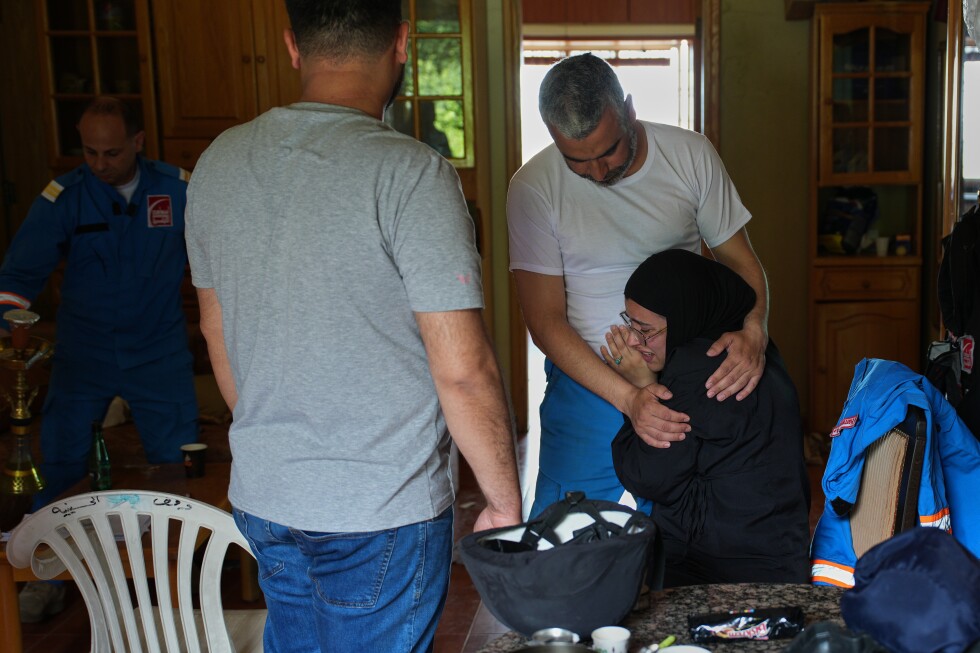
AP News / The Guardian
Israeli forces carried out a series of consecutive strikes on ambulances and medical workers in the village of Mayfadoun, southern Lebanon, on Wednesday, April 16, 2026.
Israeli forces carried out a series of consecutive strikes on ambulances and medical workers in the village of Mayfadoun, southern Lebanon, on Wednesday, April 16, 2026. The attacks killed four paramedics and wounded six others across three different ambulance corps. The incident has intensified accusations from the Lebanese Health Ministry that Israel is deliberately targeting medical personnel in violation of international humanitarian law.
The Details
The attacks in Mayfadoun followed a pattern of consecutive strikes, described by some as a 'triple-tap' or 'quadruple-tap,' where initial hits are followed by subsequent strikes on the first responders who arrive to help. Video captured by a GoPro camera strapped to a paramedic shows a barrage of fire hitting an ambulance while medical workers were administering first aid to two colleagues whose clothes were soaked in blood.
Mohammed Jaber, a 43-year-old paramedic with Nabatiyeh Emergency Services, described the scene as harrowing. 'I felt sick. I couldn't believe my eyes,' Jaber said, questioning why medics and civilians are being targeted rather than fighters at the border. Mohammed Suleiman, chief paramedic for Nabatiyeh Emergency Services, noted that the systematic targeting of medical workers makes this conflict fundamentally different from previous wars.
The scale of the impact on Lebanon's medical infrastructure is significant. The World Health Organization reports that 59 primary health care centers have been shut down due to Israeli attacks. The Lebanese Health Ministry has accused Israel of a 'total disregard for all norms and principles established by international humanitarian law,' stating that paramedics have become direct targets and are being 'pursued relentlessly.'
Casualty figures for healthcare workers since the conflict began on March 2 vary slightly by source, reflecting different counting timestamps. The Guardian reported 91 healthcare workers killed and 214 wounded, while AP News recorded at least 100 medical workers killed. These figures highlight a targeted toll on the Lebanese medical community during the ongoing bombing campaign and ground invasion.
Context
Lebanon entered the conflict on March 2, 2026, after Hezbollah opened fire at Israel in support of Iran, following joint Israeli and U.S. strikes against Iran. Since the start of the campaign, Israeli attacks have killed nearly 2,300 people and displaced more than 1.2 million residents, according to Lebanese health officials.
Under international humanitarian law, medical personnel are classified as protected non-combatants. This protection remains absolute regardless of the political affiliation of the patients they treat or the region in which they operate. The systematic targeting of such personnel is widely regarded as a grave breach of these conventions.
The geopolitical tension remains high, as the military operation in southern Lebanon has led to a complete collapse of local healthcare accessibility in several districts, forcing civilians to travel long distances for basic emergency care.
What's Next
A 10-day ceasefire between Israel and Hezbollah went into effect at midnight local time on Friday, April 17, 2026. However, the truce appears fragile; hours after it took effect, Israel reportedly struck an ambulance near Khounine. This violation occurs despite public assertions from U.S. President Donald Trump, who stated that under the ceasefire framework, Israel is 'PROHIBITED' from further bombing in Lebanon.
Jan Egeland, Secretary General of the Norwegian Refugee Council, cautioned that the fragile truce must not be undermined, citing the failures of the 2024 ceasefire as a warning against repeated violations.
Attention now turns to whether the ceasefire will remain in place or whether the continued strikes on medical and civilian infrastructure will trigger a total collapse of the agreement, potentially leading to a renewed escalation of hostilities.
Never Miss a Signal
Get the latest breaking news and daily briefings from Zero Signal News directly to your inbox.