
Labor Unveils 2.25% Big-Tech News Levy as Meta and Google Push Back Hard
Zero Signal Staff
Published April 28, 2026 at 5:40 PM ET · 151 days ago
ABC News, The Guardian, ABC Media Centre
The Albanese government has released draft legislation that would impose a 2.25% levy on large digital platforms' Australian revenue if they fail to strike qualifying payment deals with Australian news publishers, setting up a direct confrontation wi
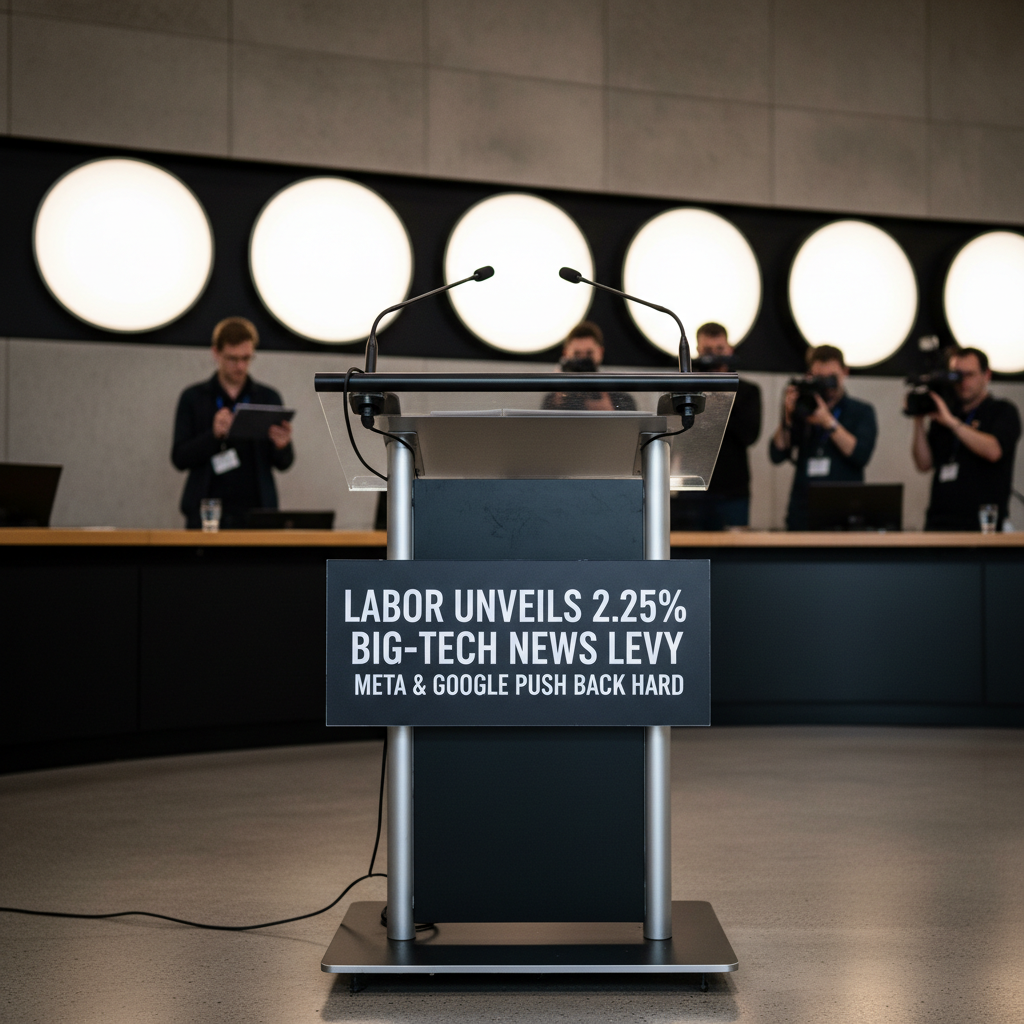
The Albanese government has released draft legislation that would impose a 2.25% levy on large digital platforms' Australian revenue if they fail to strike qualifying payment deals with Australian news publishers, setting up a direct confrontation with Meta and Google.
The Details
The proposed scheme, called the News Bargaining Incentive, targets digital platforms earning at least $250 million in Australian annual revenue. Social platforms with more than five million Australian monthly users and search services with more than 10 million monthly users would fall within scope, according to ABC News and The Guardian.
Under the draft legislation, platforms can reduce their levy liability — potentially to zero — by signing deals with at least four Australian media groups. Standard deals carry a 150% deduction against the levy; deals struck with smaller regional and local outlets attract a higher 170% deduction, according to ABC News. The structure is designed to push platforms toward negotiating rather than simply paying the tax.
Communications Minister Anika Wells defended the proposal in direct terms. "We believe it's only fair that large digital platforms contribute to the hard work of journalism that enriches their feeds and that drives their revenue," she said, as reported by ABC News.
The government projects the scheme will generate between $200 million and $250 million annually for Australian journalism, with the stated intent that the funds flow to news organisations rather than remain in consolidated revenue, according to The Guardian and ABC News.
Meta and Google rejected the proposal swiftly. A Meta spokesperson said the bill "is nothing more than a digital services tax" and called it "a government-mandated transfer of wealth," arguing the levy would apply to platforms regardless of whether news content appears on their services, according to ABC News. Google's response was more pointed: the company said it "reject[s] the need for this tax" and criticised the draft's exemptions for Microsoft, Snapchat and OpenAI, according to ABC News.
The criticism around exemptions has traction beyond the platforms themselves. The draft does not currently cover AI companies such as OpenAI, a gap noted by both Google and some supporters of stronger media compensation rules, according to ABC News and The Guardian.
Australia's major publishers are squarely on the other side of the debate. The ABC, News Corp, Nine, SBS, Network Ten, Southern Cross Media Group, ACM and Guardian Australia issued a joint statement backing the proposal. "The government's News Bargaining Incentive (NBI) draft legislation is a critical step toward securing the future of Australian news," the statement read, according to the ABC Media Centre.
Context
The News Bargaining Incentive is designed to close gaps in Australia's original News Media Bargaining Code, introduced in 2021 to compel digital platforms to negotiate with publishers over news content, according to ABC News.
The immediate trigger for the new draft was Meta's decision to stop renewing Australian news deals in 2024. Labor says that move exposed a structural weakness in the earlier code: platforms could avoid paying publishers simply by removing or deprioritising news from their services, according to ABC News and The Guardian. By shifting to a revenue-based levy rather than a content-presence trigger, the new scheme attempts to remove that escape route.
Rod Sims, the architect of the original 2021 code, assessed the draft positively. Sims said the legislation strikes the "right balance" but warned that smaller media organisations might still miss out on direct deals with platforms, according to ABC News. The 170% deduction for deals with smaller outlets is the government's answer to that concern, though Sims' caution suggests the structural risk to smaller publishers has not been fully resolved.
The central tension in the debate — whether the plan is a legitimate press-support mechanism or a selective digital services tax — remains unresolved. Meta and Google argue the levy is effectively a tax on their operations regardless of their relationship with journalism. Australian publishers counter that the platforms profit substantially from news without adequately compensating the organisations that produce it.
What's Next
The draft legislation is at consultation stage and has not yet been introduced to parliament, according to the coverage by ABC News and The Guardian. The government is accepting submissions on the proposal.
Google's objection to the AI platform exemption signals that the consultation period is likely to surface pressure on the government to either bring OpenAI and similar services into scope or explain the carve-out publicly. Whether the government widens the net before the bill reaches parliament is a question the draft period will need to answer, according to reporting by ABC News and The Guardian.
For publishers, the immediate task is converting the political momentum behind the joint statement into a bill that reaches parliament intact. Rod Sims' warning about smaller outlets suggests the media sector's internal alignment may face stress as the consultation process unfolds, per ABC News.
Never Miss a Signal
Get the latest breaking news and daily briefings from Zero Signal News directly to your inbox.