
Lebanese Army Restores Southern Access After Israel Destroys Litani River Bridges
Zero Signal Staff
Published April 19, 2026 at 8:40 AM ET · 161 days ago
AP News
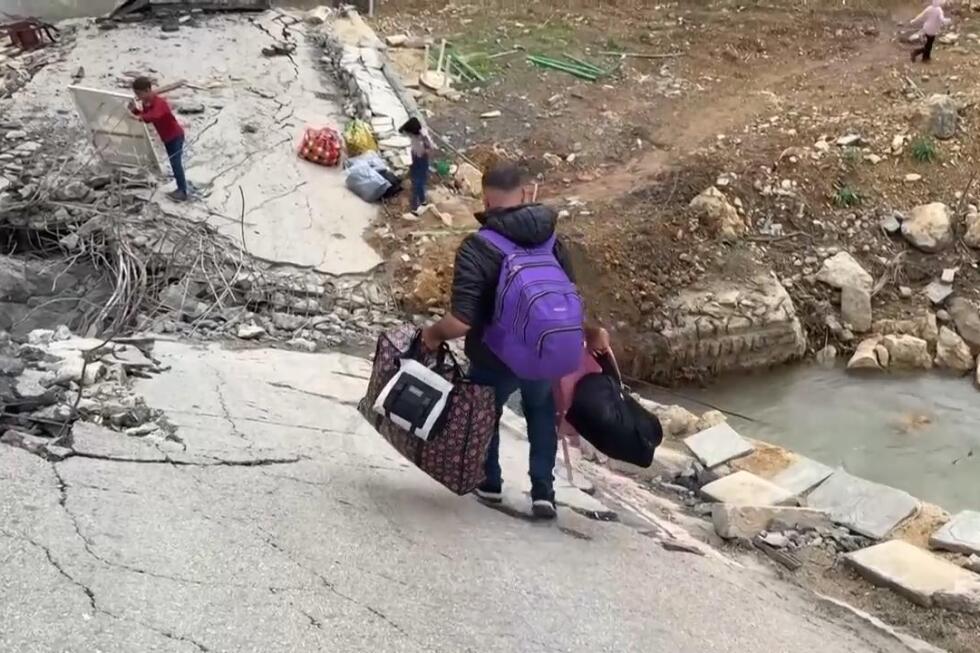
The Lebanese army and the National Litani Authority are constructing temporary crossings and filling riverbeds to restore access to southern Lebanon.
The Lebanese army and the National Litani Authority are constructing temporary crossings and filling riverbeds to restore access to southern Lebanon. These emergency measures follow a systematic Israeli campaign that destroyed all bridges over the Litani River, severing the final road link between the south and the rest of the country. Restoration efforts began immediately after a 10-day ceasefire took effect on April 17, 2026.
The Details
The recovery operation focuses on restoring vital transportation arteries. In the Tayr Filsay area of the Sour district, the National Litani Authority and the Lebanese Army's engineering department are installing a mobile-span bridge to reconnect citizens. At the Qasmiyeh crossing—the last main operational bridge before its destruction on April 16—the army supervised bulldozers filling the bombing crater to create a single narrow lane, allowing vehicles to cross one at a time.
Further east, authorities have reopened a secondary road at Zrarieh–Tayr Filsey to alleviate traffic. However, other major routes remain impassable, including the 'February 6 bridge' which was struck last month. The urgency of these repairs has been underscored by heavy congestion on roads leading south as displaced civilians attempt to return to their homes.
Between March 12 and April 16, the Israeli military struck at least nine bridges along the Litani River and its tributaries. These strikes were carried out under orders from Israeli Defence Minister Israel Katz to prevent the movement of weapons and Hezbollah militants. The destruction peaked just hours before the US-announced ceasefire, with the Qasmieh bridge falling on the very day the truce was set to begin.
Human Rights Watch has called for an investigation into the attack on the Qasmieh bridge, describing it as a potential war crime. The organization argues that the destruction of the last operational civilian crossing was a disproportionate attack that threatened to isolate tens of thousands of people from food and medicine.
Context
The bridge demolitions occurred during an invasion of southern Lebanon that began on March 2, 2026, following an escalation between Israel and Hezbollah. The conflict has resulted in a massive humanitarian crisis, with the Lebanese health ministry reporting at least 2,294 deaths and 7,544 injuries. Approximately 1.2 million people have been displaced nationwide, fleeing South Lebanon, the southern suburbs of Beirut, and parts of the Bekaa Valley.
Lebanese President Joseph Aoun characterized the systematic destruction of the bridges as a 'policy of collective punishment against civilians' and a prelude to a full ground invasion. The strategic goal of the Israeli military was to create a buffer by cutting off the south, which was seen as essential for monitoring and restricting Hezbollah activity.
Prior to the ceasefire, Israeli strikes intensified, including raids in the Sidon district on April 17 and a strike on a residential complex in Sour that killed 11 people. These actions occurred alongside the demolition of over 380 targets in southern Lebanon.
What's Next
The current 10-day ceasefire, announced by US President Donald Trump, remains fragile. While the Lebanese army continues to restore infrastructure, Israeli forces remain deployed in multiple positions within southern Lebanon, including along the coastal axis from Naqoura toward Bayyada and Shamaa. Israel has explicitly warned civilians against returning to areas south of the Litani River, stating that its forces are still positioned to monitor Hezbollah.
Hezbollah has indicated that it remains on high alert, stating it is keeping its 'finger on the trigger' should Israel violate the terms of the truce. The ability of the Lebanese government to fully restore civilian infrastructure will likely depend on whether the ceasefire holds and if Israeli forces withdraw from the occupied territories.
Never Miss a Signal
Get the latest breaking news and daily briefings from Zero Signal News directly to your inbox.