
Lebanon's 10-Day Ceasefire Holds Barely as Civilians Return to War-Battered South
Zero Signal Staff
Published April 18, 2026 at 12:47 PM ET · 181 days ago
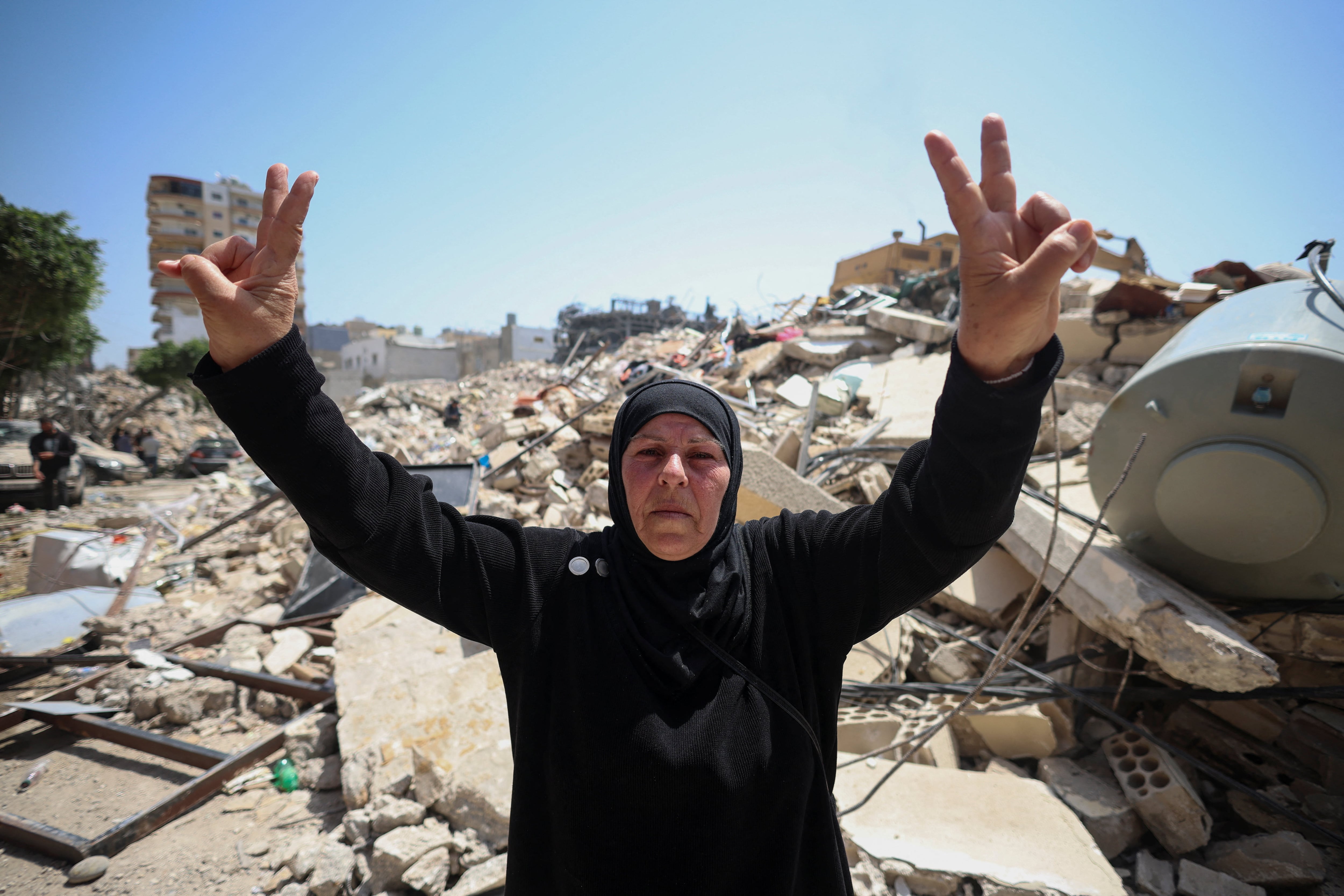
Reuters
A fragile 10-day ceasefire between Israel and Lebanon took effect at midnight local time on April 17, 2026, providing a tenuous reprieve after 46 days of intense conflict.
A fragile 10-day ceasefire between Israel and Lebanon took effect at midnight local time on April 17, 2026, providing a tenuous reprieve after 46 days of intense conflict. While displaced civilians have begun trickling back to their homes, the Lebanese army has already reported multiple ceasefire violations, including Israeli shelling in southern villages. The truce, announced by U.S. President Donald Trump, comes as Lebanon grapples with a staggering humanitarian crisis and thousands of casualties.
The Details
The ceasefire agreement, facilitated by the United States, requires the Lebanese government to prevent Hezbollah and other non-state armed groups from attacking Israel. Under the terms released by the U.S. State Department, all parties must recognize Lebanon's security forces as having exclusive responsibility for the nation's sovereignty and national defense. President Donald Trump emphasized the mandate on social media, stating that Israel is 'PROHIBITED' from further bombing of Lebanon.\n\nDespite the formal agreement, the truce has been unstable from its inception. The Lebanese army reported a series of violations by Israeli forces, specifically intermittent shelling of several villages in the south. Consequently, military officials have urged citizens to delay their return to southern regions. This instability follows a devastating escalation on April 8, 2026, when Israeli forces struck more than 150 locations simultaneously in a ten-minute onslaught, killing at least 303 people and wounding 1,150 others.\n\nThe scale of destruction is immense. According to the Government of Lebanon, the Israeli military has killed more than 2,000 people since March 2, 2026, including journalists and health workers, while injuring another 6,588. Le Monde reports that the total death toll over the 46-day war phase reached 2,196 in Lebanon, compared to 15 deaths on the Israeli side, comprising 13 soldiers and two civilians.\n\nHumanitarian concerns remain critical, with over one million people\u2014approximately one in five of the Lebanese population\u2014displaced from their homes. The logistical challenge of returning is further complicated by the destruction of critical infrastructure. Human Rights Watch has called for an investigation into the April 16 destruction of the Qasmieh bridge, which cut off territory south of the Litani River just hours before the ceasefire took hold, labeling the act as a potential war crime.\n\nHezbollah has maintained a defiant stance, asserting that the 'Israeli occupation' of Lebanese land grants the people a right to resist. This position suggests a significant hurdle for the long-term implementation of the ceasefire and the disarmament requirements sought by international mediators.
Context
Lebanon's current crisis is an accumulation of layered failures: a legacy of civil war, prolonged foreign occupation, deep political paralysis, and a catastrophic economic collapse. The recent war with Israel is the latest escalation in a volatile cycle. A previous U.S.-brokered truce in November 2024, which also called for Hezbollah's disarmament, failed spectacularly; UN peacekeepers recorded over 10,000 violations, primarily by Israeli forces, and M\u00e9decins Sans Fronti\u00e8res reported 370 Lebanese deaths following that deal.\n\nIn June 2025, the U.S. proposed a roadmap for Hezbollah to disarm in exchange for Israeli withdrawals from five occupied points in southern Lebanon, but the proposal was rejected by Hezbollah and Amal. The current military campaign is also a component of a broader U.S.-Israel conflict with Iran that began in late February 2026, an overarching war that has disrupted global energy markets and caused spikes in oil prices.\n\nReporting from the ground remains hazardous. Reuters Beirut Bureau Chief Maya Gebeily has described the environment as one where the nation is trapped between a fragile truce and total collapse, reflecting the pervasive instability that characterizes the Lebanese state.
What's Next
The current ceasefire is set for an initial ten-day window, with the possibility of extension by mutual agreement. Both Israel and Lebanon have requested that the United States facilitate direct negotiations to resolve lingering issues, most notably the precise demarcation of land boundaries.\n\nWhether the truce holds depends largely on the political will of the stakeholders and the ability of the Lebanese army to establish exclusive control over the south. A senior diplomat noted that while military infringements may occur, they do not necessarily signal an abandonment of the political commitment to the ceasefire terms.\n\nObservers are now watching to see if the U.S. can leverage its influence to prevent further violations. If the 10-day window expires without a permanent agreement or a successful extension, Lebanon faces the risk of returning to full-scale conflict amidst an already broken infrastructure.
Never Miss a Signal
Get the latest breaking news and daily briefings from Zero Signal News directly to your inbox.