
Maryland Becomes First State to Ban Using Shopper Data to Raise Grocery Prices
Zero Signal Staff
Published May 1, 2026 at 11:57 AM ET · 148 days ago
The New York Times
Maryland Governor Wes Moore signed the Protection From Predatory Pricing Act on April 28, 2026, making Maryland the first U.S.
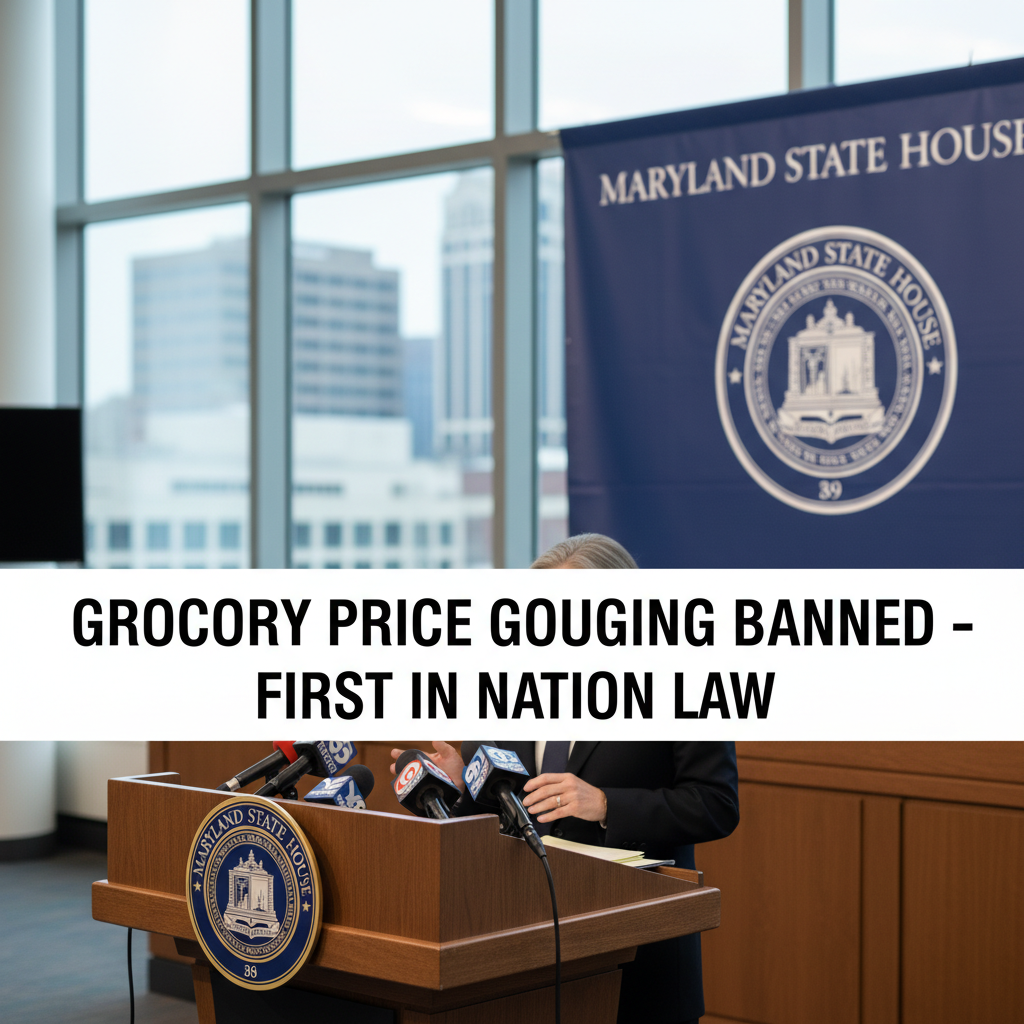
Maryland Governor Wes Moore signed the Protection From Predatory Pricing Act on April 28, 2026, making Maryland the first U.S. state to prohibit grocers and third-party delivery services from using shoppers' personal data to set higher prices at checkout. The law, HB 895, targets what advocates call surveillance pricing — the practice of using behavioral and location data to determine how much individual consumers will pay. Consumer advocates welcomed the milestone while warning that exemptions in the final bill could limit its real-world impact.
The Details
Gov. Moore signed HB 895 into law as Chapter 154 on April 28, 2026, according to the Maryland General Assembly's legislative record. The bill was introduced on February 4, 2026, passed both chambers earlier in April, and received final enrollment on April 11 after the House concurred with Senate amendments.
The Protection From Predatory Pricing Act prohibits covered food retailers and third-party delivery providers from engaging in dynamic pricing or using consumer personal data to set prices for consumer goods or services, according to the Maryland General Assembly's official synopsis. The law treats violations as unfair, abusive, or deceptive trade practices.
Gov. Moore framed the signing as a direct response to the use of consumer data against ordinary shoppers. "At a time when technology can predict what we need, when we need it, when we'll pay for it and also — when we'll pay more for it, and at a time when we're watching how big companies are then using these analytics against us to make record profits, Maryland is not just pushing back. Maryland is pushing forward because we are going to protect our people," Moore said, as quoted by The Guardian.
The governor's office said the law is intended to stop surveillance-data-driven price manipulation in grocery stores and to ensure consumers pay a transparent, consistent price at checkout.
The law's scope is narrower than a broad ban on all algorithmic or AI-assisted pricing, according to reporting from NPR, The Guardian, and the policy analysis firm MultiState. According to MultiState's analysis, the law applies to food retailers with locations 15,000 square feet or larger that conduct substantial grocery operations, along with third-party delivery providers. Coverage is limited to sales-tax-exempt food items — meaning products such as candy, soda, hot prepared foods, and other ready-to-eat items fall outside the law's reach.
Grace Gedye, a senior policy analyst at Consumer Reports, told NPR that the final bill carries significant limitations. "It's set out to be a bill to prohibit personalized pricing. Unfortunately, the version that came out of the legislature has some pretty serious exemptions and loopholes that make us concerned about how much of a real-world impact the bill will have," Gedye said.
Tom McBrien, counsel at the Electronic Privacy Information Center (EPIC), echoed that assessment in comments to The Guardian. "We're excited Maryland took this step but we do have serious concerns," McBrien said. Consumer advocates told NPR and The Guardian that carveouts for loyalty programs, promotions, and other pricing structures may limit the law's practical bite.
Context
The term surveillance pricing refers to the practice of using data such as a consumer's search history, browsing behavior, location, and purchase records to infer their willingness to pay and then adjust prices accordingly, as NPR explained in its coverage. The Federal Trade Commission under the Biden administration investigated such practices and reported that companies use a wide range of personal data to vary prices, according to The Guardian.
Maryland's law addresses the grocery and delivery sector specifically, distinguishing it from broader debates about algorithmic pricing across industries. According to MultiState, other states including California, Hawaii, and New York are exploring related personalized-pricing or algorithmic-pricing rules, though definitions and scope vary across those proposals.
The conflict between Maryland's official framing and the critics' assessment reflects a tension common in first-in-the-nation legislation: the final bill that passes is often narrower than the version that attracted initial advocacy support. According to reporting in NPR and The Guardian, the carveouts for loyalty programs and certain food categories were added during the legislative process and are at the center of advocates' concerns.
What's Next
The Maryland law takes effect as enacted, though the specific implementation timeline and enforcement mechanism were not detailed in the sources consulted. MultiState noted that other states are watching Maryland's approach as they develop their own personalized-pricing legislation, with California, Hawaii, and New York already exploring similar rules.
Consumer advocates from Consumer Reports and EPIC have indicated they will continue pressing for stronger enforcement and fewer exemptions in Maryland and in other state-level proposals. Whether the Maryland law prompts federal action was not addressed by the sourced reporting.
Never Miss a Signal
Get the latest breaking news and daily briefings from Zero Signal News directly to your inbox.