
May Day Strong Coalition Organizes Thousands of Boycotts and Rallies Across the U.S.
Zero Signal Staff
Published May 1, 2026 at 5:29 AM ET · 149 days ago
NPR, USA Today, The Guardian, WFAE / NC Local
A national coalition of labor unions, immigration advocates, and community groups coordinated hundreds of protests, walkouts, and economic boycotts across the United States on May 1, 2026, calling on workers and students to skip work, school, and sho
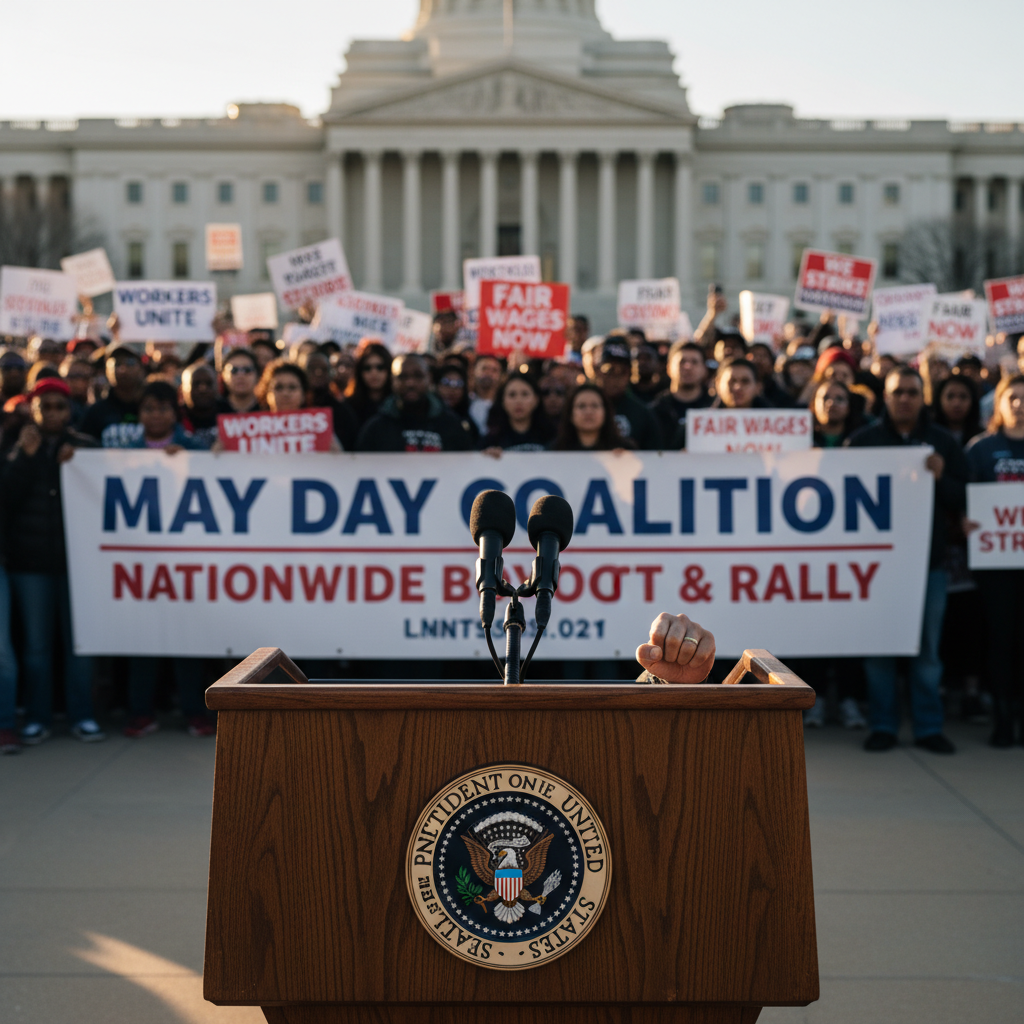
A national coalition of labor unions, immigration advocates, and community groups coordinated hundreds of protests, walkouts, and economic boycotts across the United States on May 1, 2026, calling on workers and students to skip work, school, and shopping to oppose Trump administration policies. The May Day Strong coalition anchored the actions, which organizers said were expected to include more than 3,000 events nationwide — more than double the roughly 1,300 held the previous year, according to organizer Neidi Dominguez, as reported by The Guardian. In North Carolina, the demonstrations carried a concrete operational impact: more than two dozen school districts closed or shifted to remote learning after thousands of school personnel requested leave to attend a Raleigh rally.
The Details
May Day Strong, a coalition of hundreds of labor unions, immigration advocates, and community groups — including 50501 and Indivisible — served as the primary organizing body behind the May 1 actions, according to USA Today. The coalition called for "no school, no work, no shopping" and anchored hundreds of protests, rallies, demonstrations, and walkouts tied to International Workers' Day.
NPR reported that organizers framed the May Day events as a continuation of earlier anti-Trump demonstrations held under the "No Kings" banner, which organizers said drew millions of participants nationwide. The May Day actions were intended to extend that momentum, directing public pressure at what activists described as a billionaire takeover of government.
The National Education Association, the nation's largest labor union, was a key organizing force behind the protests, NPR reported. NEA President Becky Pringle described the movement in terms of economic fairness. "We know there are bus drivers in New York and teachers in Idaho and nurses in Louisiana who are feeling the impact of a system that has decided … to put billionaires ahead of everyone else," Pringle told NPR.
The Guardian reported that the expected event count — more than 3,000 actions across the country — came from organizer Neidi Dominguez. That figure represents a significant increase from the approximately 1,300 May Day events the coalition organized the previous year, though the totals are coalition-reported estimates rather than independently audited counts.
NPR reported that protests were scheduled in major cities including Washington, New York, Chicago, and Los Angeles, in addition to dozens of smaller cities and towns. The combination of boycott calls and street demonstrations reflected the movement's dual strategy: visible public pressure alongside an economic message targeting consumer spending and workforce participation.
In Charlotte, North Carolina, more than 4,000 Charlotte-Mecklenburg Schools personnel requested leave for May 1, according to WFAE, which republished reporting from NC Local. That wave of requests contributed to one of at least two dozen North Carolina school districts that closed schools or shifted to remote learning because staff planned to attend a Raleigh rally billed as "Kids Over Corporations." The closures gave the broader May Day actions a concrete operational impact beyond street demonstrations.
Context
May 1 is observed internationally as International Workers' Day, a date historically associated with labor organizing and protest. In the United States, the federal Labor Day holiday falls in September, according to NPR, which means May Day has traditionally held less institutional weight domestically than in other countries — though it has periodically served as a focal point for large-scale U.S. labor and immigration actions.
The May Day Strong coalition's organizing effort drew on an existing network of anti-Trump activist groups, with NPR reporting that the actions were positioned as a follow-on to the "No Kings" demonstrations that organizers said had attracted millions earlier in 2026. USA Today reported that groups including 50501 and Indivisible were among those folded into the May Day Strong structure, indicating coordination across the broader progressive organizing infrastructure.
The North Carolina school closures, reported by WFAE and NC Local, illustrated how educator participation translated into operational disruptions that extended beyond the protest sites themselves. More than 4,000 CMS staff members requesting a single day of leave — enough to trigger district-wide closures — underscored the depth of teacher union involvement in the May Day effort.
What's Next
May Day Strong and its coalition partners had not publicly outlined a formal schedule of follow-up actions as of the NPR and USA Today reporting. The coalition's focus as of May 1 remained on maximizing participation in the day's events across cities including Washington, New York, Chicago, Los Angeles, and Raleigh.
North Carolina districts that closed or shifted to remote operations on May 1 were expected to resume normal schedules based on standard district protocols, according to the WFAE and NC Local reporting on district-level decisions made ahead of the rally.
Never Miss a Signal
Get the latest breaking news and daily briefings from Zero Signal News directly to your inbox.