
Medical Accuracy in 'The Pitt' Finale: The Dangers of the 'Wild Birth' Trend
Zero Signal Staff
Published April 17, 2026 at 12:19 AM ET · 183 days ago
New York Times
The Season 2 finale of HBO Max's 'The Pitt' has drawn critical attention for its stark portrayal of a 'wild birth' emergency.
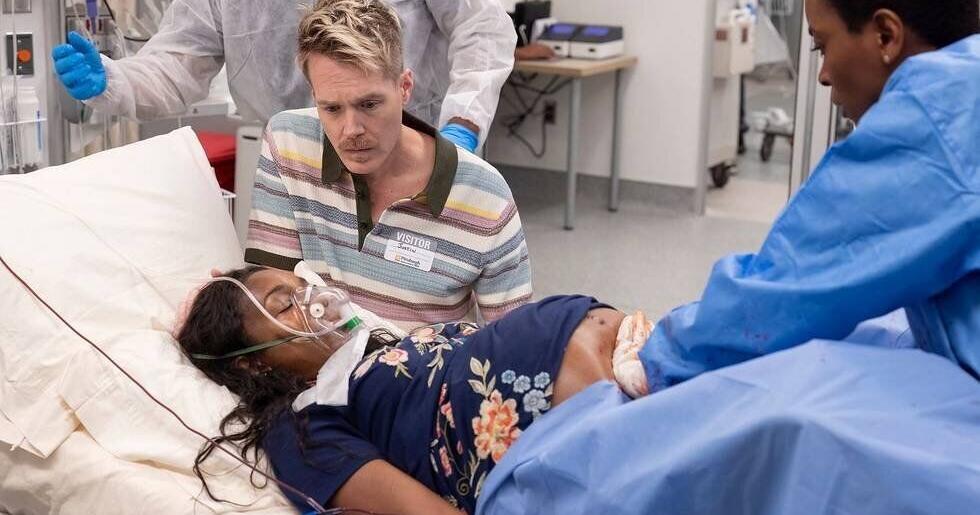
The Season 2 finale of HBO Max's 'The Pitt' has drawn critical attention for its stark portrayal of a 'wild birth' emergency. In the episode titled '9:00 P.M.,' a woman who chose unassisted childbirth arrives at the ER with severe preeclampsia, necessitating an emergency C-section to save both mother and child. Medical experts and critics suggest the storyline accurately reflects the life-threatening risks associated with unassisted birth trends.
The Details
The episode depicts a high-stakes medical crisis triggered by the decision to undergo a 'wild birth'—a practice where childbirth occurs without any medical monitoring, midwives, or doulas. The patient arrives at the fictional Pittsburgh Trauma Medical Center suffering from severe preeclampsia. As the condition escalates into eclampsia, characterized by life-threatening seizures, the hospital staff is forced into a full-scale mobilization.
Nearly every doctor on staff, including protagonist Dr. Michael 'Robby' Robinavitch, is required to manage the patient's seizures and perform the urgent C-section. The intensity of the case also serves as a crucible for the new intern, Dr. Toomarian, who struggles to maintain composure under the extreme pressure of the emergency.
Critically, the show frames the crisis not as a random medical tragedy, but as the result of a 'medically unsound wellness trend.' The narrative emphasizes that the danger was avoidable, illustrating how the 'freebirth' movement can place both the parent and the infant at extreme risk, particularly when complications like preeclampsia are present.
To ensure this level of realism, 'The Pitt' utilizes a robust network of consultants. The production employs a team of physicians as on-set medical consultants and casts real-life nurses to portray the nursing staff. Executive producer Noah Wyle has attributed the show's success to this commitment to clinical authenticity.
Context
The 'wild birth' or 'freebirth' movement is a real-world trend where individuals choose to give birth without any professional assistance. Medical professionals widely condemn the practice, citing the inability to respond to sudden, critical complications. Preeclampsia, specifically, involves high blood pressure and organ damage; when it progresses to eclampsia, it becomes a medical emergency that requires immediate intervention—often via C-section—to prevent maternal or fetal death.
Outside of the specific C-section plot, 'The Pitt' has gained a reputation for its precision. Dr. Robert Glatter, an Assistant Professor of Emergency Medicine at Lenox Hill Hospital, has validated the show's depiction of various clinical phenomena, including post-intoxication emergence agitation and focal impaired awareness seizures.
This commitment to accuracy has extended beyond the clinical. The show's depiction of healthcare worker mental health—specifically the silent suffering and burnout experienced by ER physicians—has been praised by psychiatrists. Dr. Kayla Simms of the University of Ottawa noted that the series captures the reality of providers who suffer in silence, a sentiment echoed by the show's depiction of Dr. Robby's own struggle with PTSD and the feeling of 'drowning' in his professional life.
What's Next
The impact of 'The Pitt' is already being felt within the industry. Kate Langrall Folb, program director of Hollywood, Health and Society at USC's Norman Lear Center, stated that the show is so accurate that other medical dramas and soap operas feel the need to 'up their game' to remain credible.
As the series continues to tackle the intersection of wellness trends and medical reality, it is expected to spark further public discourse on the dangers of unassisted childbirth. The show's focus on provider burnout also points toward a continuing narrative arc regarding the systemic crisis of mental health in emergency medicine, where some physicians face significantly shorter life expectancies due to the extreme stress of the field.
Never Miss a Signal
Get the latest breaking news and daily briefings from Zero Signal News directly to your inbox.