
Mexico Expands Sinaloa Security Checkpoints as Cartel Faction War Continues
Zero Signal Staff
Published May 5, 2026 at 1:26 AM ET · 160 days ago
Al Jazeera
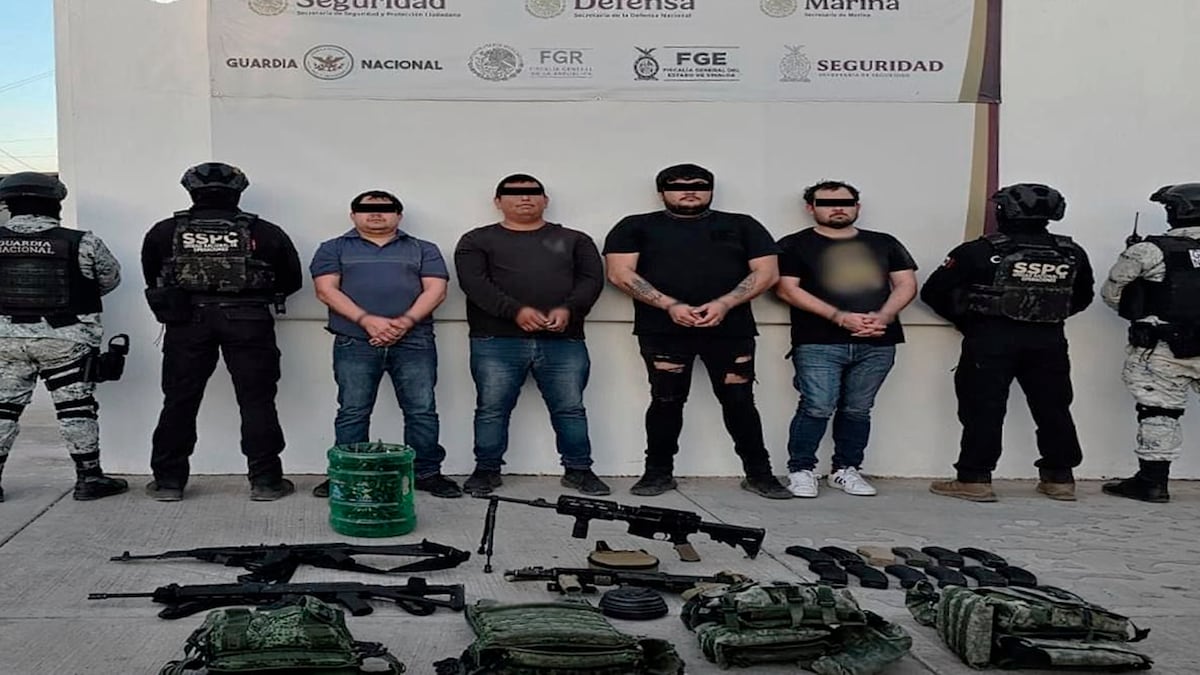
Mexican security forces have intensified their presence across parts of Sinaloa, setting up checkpoints as rival factions of the Sinaloa Cartel continue fighting for control, Al Jazeera reported May 5.
Mexican security forces have intensified their presence across parts of Sinaloa, setting up checkpoints as rival factions of the Sinaloa Cartel continue fighting for control, Al Jazeera reported May 5. The deployment has become more visible even as Al Jazeera reported that more than 3,000 people have been killed in nearly two years of violence.
The Details
Al Jazeera reported that the stronger security presence is unfolding across parts of Sinaloa, where checkpoints have become part of the federal response to cartel violence. The outlet tied the current deployment to a fight between rival Sinaloa Cartel factions, a conflict that has kept pressure on the state despite a visible military presence. Because the brief flags the casualty figure as not independently matched with the exact same wording in corroborating articles, the figure should be read as Al Jazeera's reported tally rather than an undisputed official count.
El Pais reported that after fighting between rival factions began, Mexico's federal government took control of security in Sinaloa and deployed thousands of soldiers. The outlet described the war as leaving thousands dead and missing over roughly a year and a half, with Culiacan at the center of the violence. El Pais also identified the latest wave of violence as an internal war between factions commonly described as Los Chapitos and Los Mayos or Mayitos.
La Silla Rota, citing Mexican security cabinet officials on May 4, reported that 13,300 military personnel were operating in Sinaloa. The outlet said that total included 2,732 special forces troops and that officials had focused the reinforced strategy on six municipalities. La Silla Rota identified those municipalities as Culiacan, Cosala, Elota, Badiraguato, Mocorito and Navolato.
Quadratin Sinaloa separately reported May 4 that Defense Secretary Ricardo Trevilla said federal operations were concentrated in six strategic regions and backed by more than 13,000 operational personnel. According to Quadratin Sinaloa, Trevilla said the military presence would continue indefinitely. The two local reports described the same broad security push while noting official figures and summaries that varied slightly in some details.
Security Secretary Omar Garcia Harfuch framed the deployment as a continuing federal order during a joint security cabinet briefing in Sinaloa, according to La Silla Rota. "The instruction from the presidency is to maintain the presence of all the institutions of the Mexican state in Sinaloa and keep working every day to pacify the state," Garcia Harfuch said. The briefing took place after Governor Ruben Rocha Moya took leave, according to the brief's source summary.
La Silla Rota also reported that authorities said homicides in Sinaloa had fallen 44% since Claudia Sheinbaum took office. The outlet presented that claim as part of officials' argument that the reinforced deployment is reducing violence, even as killings remain high. The brief rates that claim with medium confidence, so the reduction should stay clearly attributed to authorities as reported by La Silla Rota rather than stated as an independently verified trend.
The human toll remains central to the story. El Pais quoted an unnamed Culiacan resident describing exhaustion and resignation amid the cartel war: "This war is never going to end." The quote reflects one resident's account in El Pais, while the broader sourced record points to a prolonged security crisis, a large federal deployment and continuing violence in the state.
Context
The current security push is unfolding alongside a political crisis in Sinaloa, according to El Pais and La Silla Rota. The brief says U.S. accusations tied Governor Ruben Rocha Moya and other officials to drug trafficking, prompting Rocha Moya's temporary leave from office. That political backdrop is part of the sourced record around the May security cabinet briefing.
El Pais reported that Culiacan has been at the center of the war between the Sinaloa Cartel factions commonly described as Los Chapitos and Los Mayos or Mayitos. The same report said the conflict has left thousands dead and missing over roughly a year and a half. Al Jazeera's May 5 report put the death toll at more than 3,000 people in nearly two years, but the brief notes that wording was not independently matched exactly by the corroborating articles.
The federal strategy described by La Silla Rota is concentrated in Culiacan, Cosala, Elota, Badiraguato, Mocorito and Navolato. Quadratin Sinaloa reported a similar account of operations focused on six strategic regions and backed by more than 13,000 personnel. Together, the reports describe a state where the federal government has paired checkpoints and military deployments with public messaging that the security presence will continue.
What's Next
The most specific sourced next step is continued federal presence. Quadratin Sinaloa reported that Trevilla said the military deployment in Sinaloa would continue indefinitely, and La Silla Rota quoted him telling residents, "The people of Sinaloa should have certainty that they have the support of their armed forces."
Garcia Harfuch's statement, reported by La Silla Rota, also points to continued daily work by federal institutions in Sinaloa. Officials are presenting the reinforced deployment as focused on the six named municipalities and as part of an effort to pacify the state. The sourced record does not provide a fixed end date for the operation.
For now, the public record cited in the brief leaves two measurements side by side: official claims of a 44% decline in homicides since Sheinbaum took office, as reported by La Silla Rota, and continued accounts of high casualties and disappearances from Al Jazeera and El Pais. Any precise casualty language should remain attributed because the brief flags differences in how the toll is described across the consulted reports.
Never Miss a Signal
Get the latest breaking news and daily briefings from Zero Signal News directly to your inbox.