
Musk Tells OpenAI Jury the Company Tried to Keep Nonprofit Halo While Chasing For-Profit Gains
Zero Signal Staff
Published April 29, 2026 at 3:31 PM ET · 150 days ago
NPR News, Reuters, Associated Press
Elon Musk returned to the witness stand Tuesday in federal court in Oakland, California, telling jurors that OpenAI and its leaders pursued the credibility of nonprofit status while building a for-profit structure designed to maximize insider ownersh
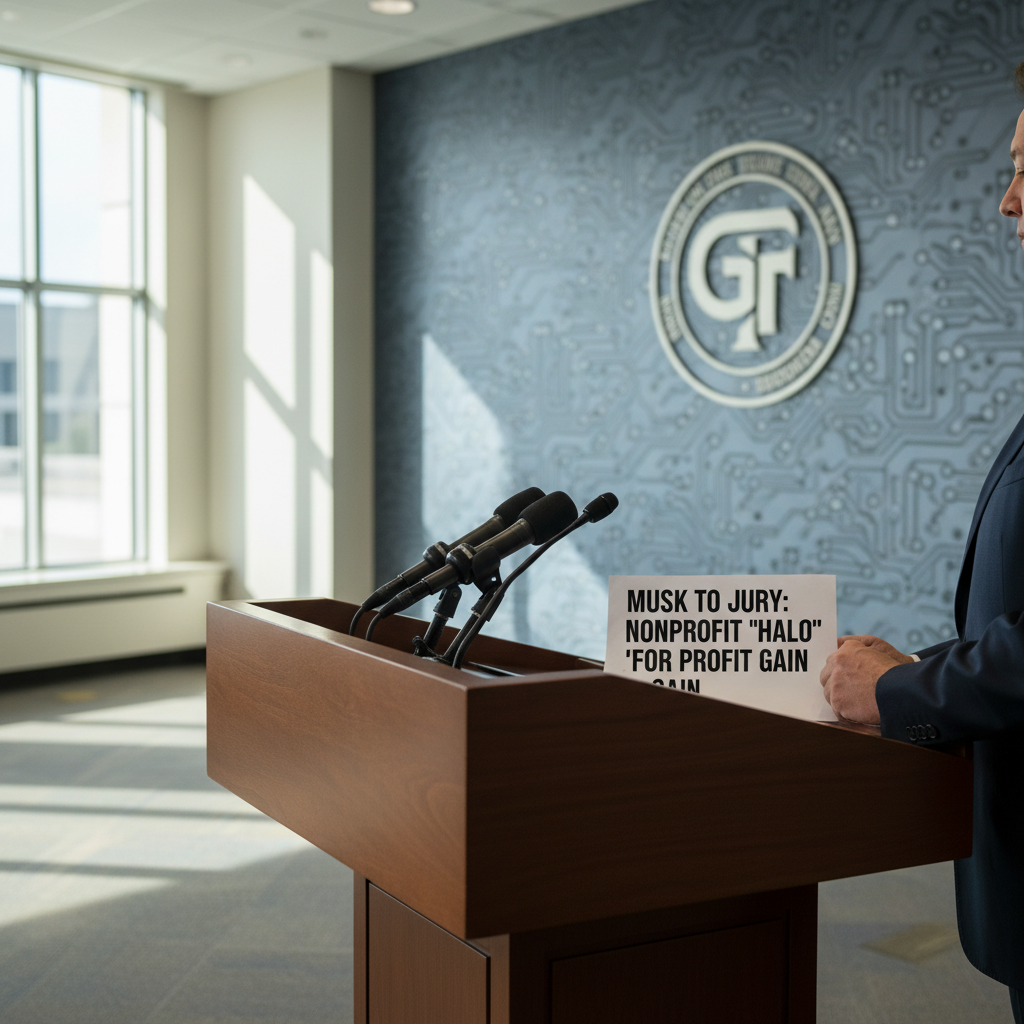
Elon Musk returned to the witness stand Tuesday in federal court in Oakland, California, telling jurors that OpenAI and its leaders pursued the credibility of nonprofit status while building a for-profit structure designed to maximize insider ownership. It was the second consecutive day of testimony from Musk in a three-week trial that pits him against OpenAI CEO Sam Altman, co-founder Greg Brockman, and Microsoft — a case that, according to Reuters, could affect OpenAI's corporate structure, its public image, and its path toward a potential public offering.
The Details
Musk co-founded OpenAI in 2015 alongside Altman and others as a nonprofit AI research lab with a stated mission of developing artificial intelligence for the long-term benefit of humanity. On Tuesday, he told the nine-person jury his view of what happened after that founding agreement was made.
'I felt like they had not been honest with me,' Musk said, according to Reuters. 'What they really wanted to do was create a for-profit where they had as much shareholder ownership as possible.'
That alleged dishonesty is the foundation of Musk's lawsuit, which claims that Altman, Brockman, and Microsoft steered OpenAI away from its founding mission for the benefit of insiders and investors, according to the Associated Press. The trial opened Monday and is scheduled to run three weeks before the nine-person jury in Oakland.
A central piece of evidence in Musk's argument is Microsoft's $10 billion investment in OpenAI, completed in 2023. Musk contended that a commitment of that size proves the organization had ceased to operate as a charity — that once a corporation writes a $10 billion check, the enterprise on the receiving end can no longer credibly claim the tax, governance, and public-trust advantages of nonprofit status. NPR and Reuters both reported the Microsoft deal featured prominently in his testimony.
'But what you can't do is have your cake and eat it too,' Musk told jurors Tuesday, as reported by NPR. He characterized OpenAI's conduct as an attempt to draw legitimacy and public goodwill from its nonprofit origins while operating a business structured around shareholder returns.
Musk also testified about a specific moment that crystallized his suspicions. After the Microsoft investment became public, he said, Altman offered him the opportunity to buy a stake in OpenAI. As reported by Reuters, Musk's assessment was pointed: 'Frankly, it felt like a bribe.'
OpenAI's lawyers challenged that entire framing. They argued that Musk's lawsuit is not a principled defense of OpenAI's charitable mission but an expression of rivalry and a desire for control that he was denied, Reuters reported. Their account of events: Musk wanted OpenAI to become a for-profit company he could lead; when that did not happen, he went on to found the competing AI company xAI and then filed suit against his former collaborators. OpenAI's legal team told the jury that sequence — competitor launched first, lawsuit filed after — is what actually explains Musk's presence in court.
Context
OpenAI was founded in 2015 by Musk, Altman, and others as a nonprofit AI lab, structured specifically to develop artificial intelligence without the pressure of shareholder returns, according to Reuters. The nonprofit model was intended to keep the organization's incentives aligned with broad societal benefit rather than investor profit.
In the years that followed, OpenAI created a for-profit arm to raise the capital needed to compete at the frontier of AI development. Its lawyers have argued that the structural evolution was not a betrayal of the founding mission but a competitive necessity — computing costs and the resources of rivals such as Google made outside investment essential, NPR and Reuters reported.
Microsoft's $10 billion investment in 2023 became the most prominent flashpoint in the dispute. For Musk, it marked a clear and irreversible departure from the nonprofit structure he says he signed on to support. For OpenAI, it was a practical tool that allowed the organization to continue building systems competitive with the largest technology companies in the world.
The stakes of the trial extend well beyond the personal dispute between Musk and Altman. Reuters reported that the outcome could influence OpenAI's ongoing corporate restructuring and its potential plans to go public — decisions that would affect how one of the most influential AI companies in the world is governed and who benefits from its growth.
What's Next
The trial is scheduled to run for three weeks before the nine-person jury in Oakland, with additional testimony and cross-examination expected to continue in the days ahead, according to the Associated Press.
Reuters reported that the proceedings could directly influence OpenAI's plans to restructure its corporate form and any timeline toward an initial public offering. How the jury resolves the factual and legal disputes between Musk and OpenAI's current leadership may determine the terms under which the company moves into its next phase.
Never Miss a Signal
Get the latest breaking news and daily briefings from Zero Signal News directly to your inbox.