Namibia Demands Open-Ended Reparations Framework, Rejects Germany's Final Settlement Clause
Zero Signal Staff
Published April 10, 2026 at 6:14 AM ET · 1 day ago
NewsData.io
President Netumbo Nandi-Ndaitwah said on April 10 that Namibia will reject any genocide reparations agreement with Germany that includes language designed to permanently close negotiations, insisting the country maintain the right to pursue future...
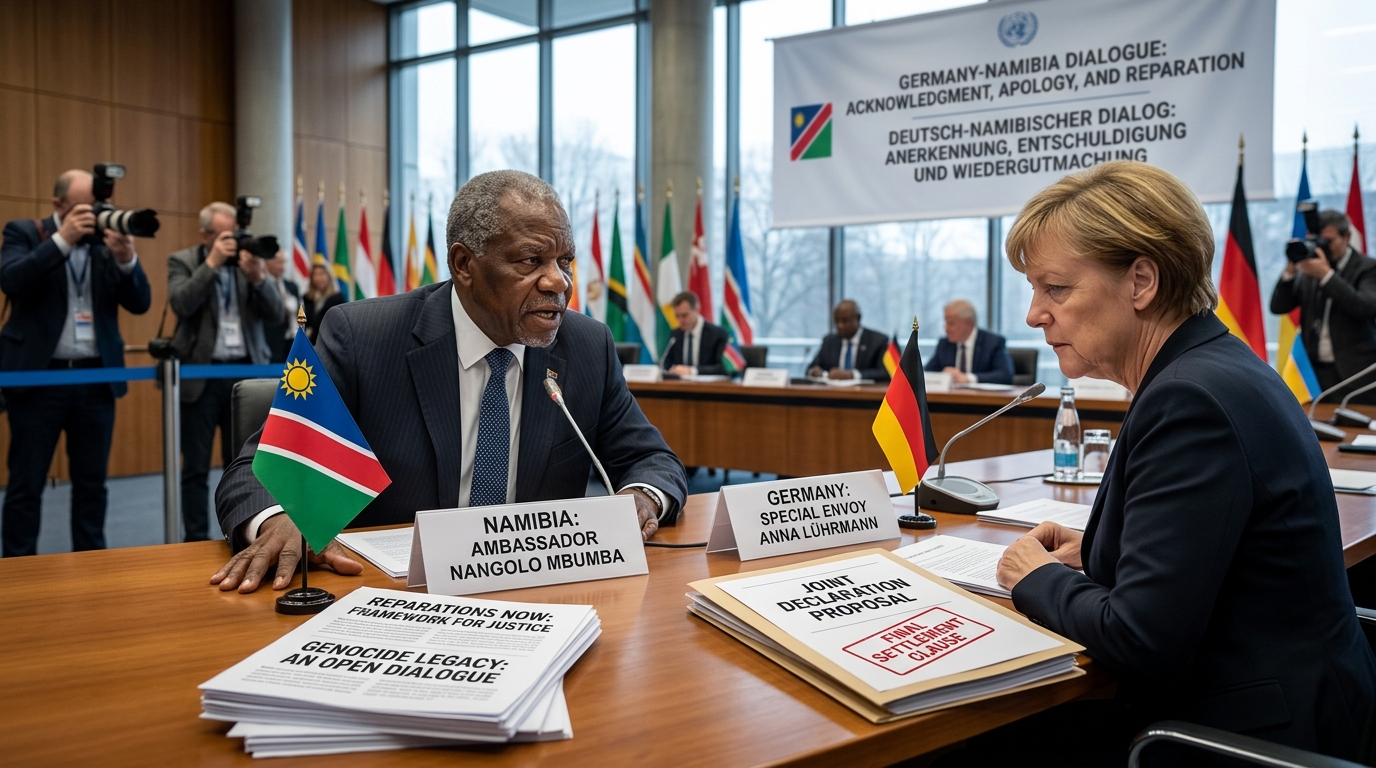
President Netumbo Nandi-Ndaitwah said on April 10 that Namibia will reject any genocide reparations agreement with Germany that includes language designed to permanently close negotiations, insisting the country maintain the right to pursue future claims beyond an initial US$1.1 billion package.
Speaking during her state of the nation address, Nandi-Ndaitwah confirmed that Namibia had already removed Article 21 from earlier draft agreements—a clause that would have declared the matter settled after the initial payment. "We cannot accept that. It cannot talk about closing the chapter," she said, citing Germany's ongoing negotiations with Holocaust survivors as a precedent for maintaining open dialogue across decades.
The president framed the shift as essential to protecting Namibian interests. "Instead of saying that once we are given this US$1.1 billion, then everything is closed," she stated, Namibia's position requires keeping future reparations claims available. The revised joint declaration now reflects this stance, with negotiations expected to conclude before the end of 2026 after more than a decade of talks.
Opposition leader McHenry Venaani challenged the adequacy of the package, pointing to United Nations resolutions demanding trillions in slavery reparations. "Why are you allowing Germans to practise apartheid atonement for the genocide victims in these numbers?" Venaani asked during the parliamentary session. He argued that Germany's historical compensation to Jewish Holocaust victims—substantially higher and ongoing—should set the standard for Namibian claims.
Affected communities have submitted three separate reparations figures: N$9 trillion, N$450 billion, and N$250 billion, according to Joyce Muzengua, head of the human rights desk for the Landless People's Movement. These figures account for loss of life, livestock, and cultural heritage from the 1904 genocide targeting Nama and OvaHerero populations.
Context
Germany formally acknowledged the 1904-1908 killings as genocide in 2016 and offered approximately N$21.4 billion in development aid over 30 years in 2021. The Nama and OvaHerero communities have long disputed both the characterization of payments as "aid" rather than reparations and the adequacy of the amounts offered.
The comparison to Holocaust reparations is direct and ongoing. Germany continues to compensate Holocaust survivors and their descendants through multiple mechanisms established after World War II, with payments and recognition programs extending into the present. This contrasts with the one-time settlement structure initially proposed for Namibia.
Community representatives have also raised concerns about consultation processes. In 2025, Josef Kauandenge, president of the Association for Localised Interest, criticized the government for excluding traditional chiefs from official genocide commemoration programs, calling the omission a "travesty" that ignored the true representatives of descendant communities.
What's Next
The framework shift creates a precedent-setting model for reparations negotiations globally. By insisting on open-ended language rather than finality clauses, Namibia is positioning future governments to revisit compensation if economic or political circumstances change—a structure that may influence how other nations approach historical injustices.
Nandi-Ndaitwah indicated a conclusion is possible before year-end 2026, contingent on "collective political will." However, the removal of closure language suggests negotiations may extend well beyond any initial agreement, particularly if affected communities continue demanding figures substantially higher than the current US$1.1 billion offer.
Never Miss a Signal
Get the latest breaking news and daily briefings from Zero Signal News directly to your inbox.