
NASA Plans Nuclear-Powered Mars Mission by End of 2028
Zero Signal Staff
Published April 15, 2026 at 12:16 PM ET · 185 days ago
MIT Tech Review
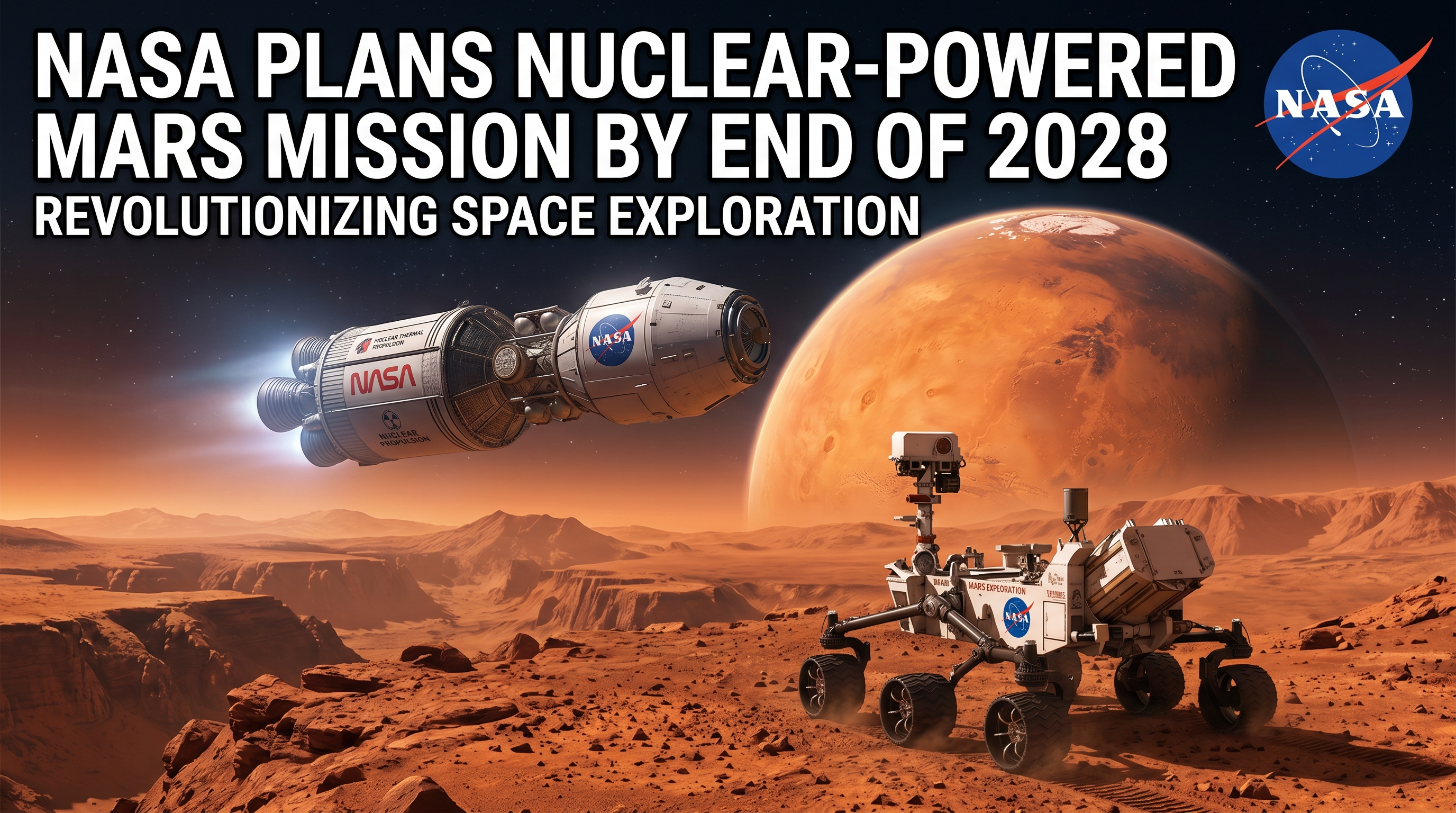
NASA aims to launch a nuclear reactor-powered interplanetary spacecraft to Mars by the end of 2028, marking the first crewed deep-space mission powered by on-board nuclear propulsion.
NASA aims to launch a nuclear reactor-powered interplanetary spacecraft to Mars by the end of 2028, marking the first crewed deep-space mission powered by on-board nuclear propulsion. The project represents a significant shift in spacecraft design and could give the United States a competitive advantage in space exploration against China, though technical details remain limited.
NASA revealed the nuclear spacecraft initiative just before the Artemis II mission completed its lunar trajectory, positioning the project as part of a broader expansion of human spaceflight capabilities. The spacecraft would use a nuclear reactor to power propulsion systems, changing how long-distance space travel operates compared to traditional chemical rockets.
The specific mechanics of the nuclear-powered system remain largely confidential, but experts consulted by MIT Technology Review indicated the reactor would generate sustained power for propulsion over extended missions—a critical requirement for the multi-month journey to Mars. A successful demonstration would establish nuclear propulsion as viable for future deep-space exploration beyond Earth orbit.
The project carries geopolitical weight. U.S. space officials have framed the mission partly as a response to China's advancing space capabilities and ambitions for lunar and Mars exploration. The 2028 timeline represents an aggressive development schedule for integrating nuclear technology into spacecraft systems, which typically require extensive testing and regulatory approval.
THE DETAILS section must also note that while the mission represents a technical milestone, the project remains shrouded in operational secrecy. NASA has not released detailed specifications about reactor design, shielding systems, or contingency protocols—standard practice for early-stage deep-space initiatives involving novel propulsion technologies.
Context
Nuclear propulsion has long been theoretical in space exploration. Previous concepts, including nuclear thermal and nuclear electric propulsion, have been studied since the 1960s, but no operational nuclear reactor has ever powered an interplanetary spacecraft. The technology offers significant advantages over chemical propulsion: sustained thrust over longer periods and higher specific impulse, which reduces fuel mass requirements and mission duration.
The Artemis program, which conducted its first crewed lunar mission in 2024 and followed with Artemis II's lunar flyby in 2025, established the foundation for deep-space human missions. Mars missions require different propulsion strategies than lunar missions due to distance and transit time—a journey to Mars typically requires six to nine months depending on orbital alignment, making nuclear power's sustained energy generation an attractive option.
China has publicly stated intentions to establish a crewed lunar base and conduct Mars exploration missions within the next decade. The competitive dimension of space exploration has accelerated investment in advanced propulsion technologies across multiple nations, with nuclear systems representing one of the most promising near-term options for reducing mission timelines and increasing payload capacity.
What's Next
NASA's 2028 target will require successful completion of ground-based reactor testing, safety certifications, and integration trials over the next two years. The agency has not announced specific launch dates or mission profiles beyond the end-of-2028 deployment window, meaning technical milestones and regulatory clearances will determine whether the timeline holds.
If the mission proceeds on schedule and succeeds, it would likely accelerate adoption of nuclear propulsion for subsequent Mars missions and deep-space exploration programs. Failure or significant delays would reset expectations for nuclear-powered spaceflight by years, potentially shifting long-term space strategy back toward chemical propulsion or alternative advanced systems. The project's success will also influence international space policy, as other nations assess whether to pursue similar nuclear propulsion programs.
Never Miss a Signal
Get the latest breaking news and daily briefings from Zero Signal News directly to your inbox.