
NASA Upgrades International Space Station Computing Power with HP ZBook Fury G9
Zero Signal Staff
Published April 22, 2026 at 12:51 AM ET · 158 days ago
NASA / The Verge / HP
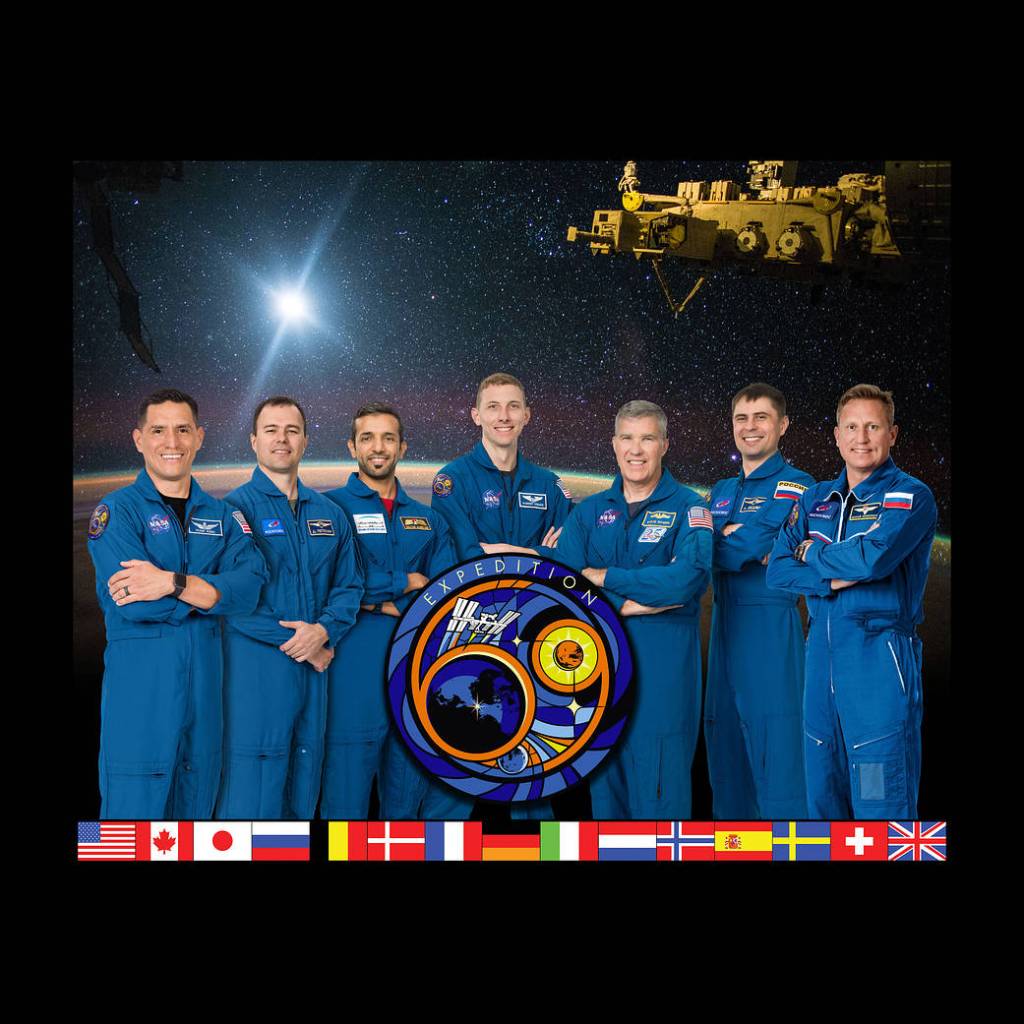
The crew of NASA's Expedition 74 has begun a comprehensive technology refresh aboard the International Space Station, replacing aging network servers and activating new high-performance laptop computers.
The crew of NASA's Expedition 74 has begun a comprehensive technology refresh aboard the International Space Station, replacing aging network servers and activating new high-performance laptop computers. The station is transitioning from HP ZBook Fury G2 models to the significantly more powerful ZBook Fury G9 workstations. This upgrade ensures the orbital laboratory maintains the computational capacity required for complex science and station operations.
The Details
The upgrade process began in earnest on April 17, 2026, when the Expedition 74 crew convened to review the activation sequence, which prioritizes the replacement of network servers before the laptops are brought online. Earlier, on April 15, astronaut Chris Williams began the physical preparation by unpacking the new hardware.
NASA spokesperson Joshua Finch confirmed that the HP ZBook G9 Mobile Workstation was selected as the next standard laptop for the ISS. In total, 35 of these workstations are being deployed, representing the third generation of HP computing platforms onboard. This adds to a broader infrastructure that already includes over 100 active HP workstations and 20 backup units.
These custom-configured G9 units are designed for extreme reliability and performance. Each machine is equipped with an Intel Core Ultra 9 vPro HX processor and an Nvidia RTX Pro Blackwell laptop GPU. Memory and storage are heavily bolstered for redundancy, featuring 128GB of DDR5 ECC SODIMM memory and four 2TB NVMe SSDs configured in a RAID array.
Specialized hardware modifications were necessary for the space environment. Because the ISS relies primarily on DC power, HP developed a NASA-exclusive universal AC/DC power adapter, as standard commercial chargers are incompatible with the station's power grid.
To ensure flight safety, the ZBook Fury G9s underwent two years of rigorous testing. This included exposure to neutron bombardment in radiation chambers to simulate the orbital environment, battery fire-risk evaluations, touch-temperature checks, and cooling fan noise modulation. Each unit required a formal Certification of Flight Readiness from NASA before launch.
HP also implemented a strict single-source supplier strategy for critical components. By ensuring every part comes from one verified manufacturer, NASA can efficiently retest and isolate variables if hardware failures occur in orbit.
Context
The partnership between HP and NASA is a long-standing collaboration spanning over 50 years, beginning in 1968 with the Apollo lunar module and mission control. The move toward modern centralized computing on the ISS accelerated in 2016 when 120 HP workstations were first selected as the primary computing devices.
Computing in microgravity presents unique challenges. Manoj Leelanivas, President of HP Solutions, has noted that traditional principles of convection—which govern air and liquid cooling on Earth—do not apply in space. Additionally, hardware must be hardened against constant radiation exposure to prevent system crashes and data corruption.
To combat these issues, the G9 leverages Error-Correcting Code (ECC) memory to automatically detect and fix RAM errors and RAID storage to prevent data loss. These safeguards are critical given the lack of immediate on-site IT support 250 miles above Earth. The vulnerability of space-based IT was recently highlighted during the Artemis II mission, where astronauts encountered software issues with Microsoft Outlook that required intervention from ground control.
What's Next
The deployment of the G9 workstations is expected to provide a significant boost in processing power for the station's ongoing research and operational needs. However, this may be one of the final major compute refreshes for the facility. The International Space Station is currently slated for de-orbiting sometime in 2030.
As NASA looks toward the future, the lessons learned from the G9's radiation hardening and thermal management will likely inform the development of computing systems for the upcoming Artemis missions and the eventual colonization of the Moon and Mars, where environmental challenges will be even more severe.
Never Miss a Signal
Get the latest breaking news and daily briefings from Zero Signal News directly to your inbox.