Nigeria's Federal Government to Lead New National Drug-Use Survey With UNODC and MTN Foundation
Zero Signal Staff
Published April 30, 2026 at 11:24 AM ET · 149 days ago
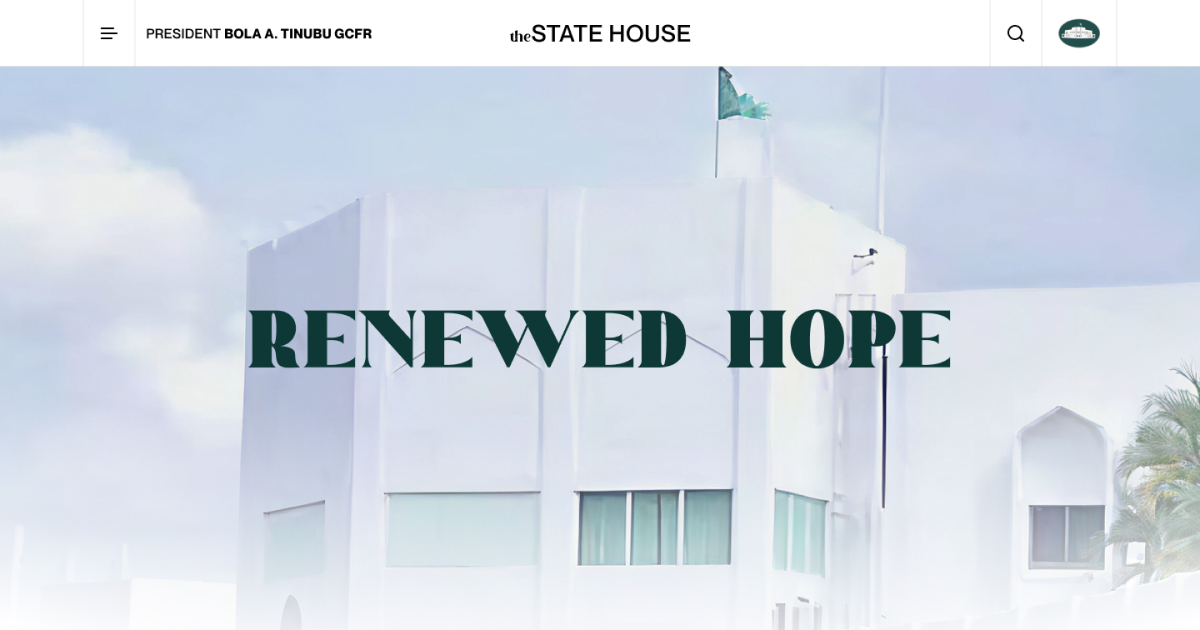
State House, Abuja
Vice President Kashim Shettima announced on April 29 that the Federal Government of Nigeria would take ownership and leadership of a new National Substance Use Survey, being conducted in partnership with the United Nations Office on Drugs and Crime a
Vice President Kashim Shettima announced on April 29 that the Federal Government of Nigeria would take ownership and leadership of a new National Substance Use Survey, being conducted in partnership with the United Nations Office on Drugs and Crime and the MTN Nigeria Foundation. No findings have been released; the survey is in its early coordination phase, with a final report not expected until the first quarter of next year.
The Details
Speaking at the State House in Abuja, Shettima said the federal government would not play a peripheral role in the initiative. "We are establishing a Project Management Office (PMO) within this office," he said, according to the State House. "The PMO will coordinate government's participation across all stages: questionnaire design, field oversight, inter-agency engagement, and the launch and utilization of the final report."
Shettima set a firm expectation for how the survey's output should be used. "We expect the findings to land as policy inputs, not as documents, and we expect a full and final report no later than the first quarter of next year," he said, per the State House readout.
The announcement was separately reported by The Nation and The Sun, both outlets noting that a key objective of the new survey is to generate local-government-level data — a more granular baseline than prior efforts — to guide targeted policy interventions across Nigeria's 36 states and Federal Capital Territory.
The establishment of a Project Management Office within the Office of the Vice President signals a degree of institutional commitment beyond a typical policy endorsement. The PMO structure places federal coordination directly under Shettima's office, covering the full survey lifecycle from questionnaire design through field data collection and final report publication.
The UNODC and MTN Nigeria Foundation are jointly implementing the survey, with the federal government now positioned as the lead coordinating authority. The survey does not yet have published findings, and the scope of its methodology has not been publicly detailed beyond the government's stated goal of local-government-level data collection.
Consultant neurologist Dr Temitope Farombi, in a separate interview with The Guardian Nigeria, called on the government to enforce stricter regulation of drug distribution. Farombi warned that rising substance abuse is worsening mental-health conditions, particularly among young people. "Many are increasingly resorting to substance use as a coping mechanism for life challenges, economic hardship, and social pressure," he told The Guardian. His comments represent one medical professional's assessment and are sourced to a single interview, not to any new government finding or independent study.
Farombi's warning comes as survey planners work from a years-old national baseline. Nigeria's 2018 national drug-use survey, conducted by the National Bureau of Statistics, estimated past-year drug use prevalence at 14.4 percent among people aged 15 to 64 — approximately 14.3 million people. The NBS presented that survey as the foundational evidence base for prevention, treatment, and care policy in Nigeria.
Context
The 2018 National Bureau of Statistics survey remains the primary reference point for substance use policy in Nigeria. It established the 14.4 percent prevalence figure that policymakers and researchers have since used to size the problem nationally. But that figure is now eight years old, and it offered national-level aggregates rather than the subnational granularity that local interventions require.
A 2025 ecological analysis published in the Nigerian Medical Journal drew on that 2018 survey alongside National Drug Law Enforcement Agency enforcement data. The study found marked regional variation in both drug-use burden and enforcement activity across Nigeria — a finding that the new survey's emphasis on local-government-level data appears designed to address, according to the State House announcement and subsequent coverage in The Nation and The Sun.
The federal government's decision to plant the coordinating PMO inside the Vice President's office rather than at a line ministry level suggests the survey is being treated as a cross-agency priority, not a standalone health department project. Subnational data would, in principle, allow states and local governments to calibrate prevention and treatment resources against actual measured need rather than national averages. None of those policy conclusions are available yet; they depend on survey findings that will not exist until at least the first quarter of next year.
Nigeria has a standing drug regulatory framework administered by the NDLEA, but the new survey is focused on evidence generation rather than enforcement. The partnership model — federal government, a UN agency, and a major private-sector foundation — mirrors approaches used in other lower-middle-income countries seeking to build robust national health data infrastructure with external technical support.
What's Next
The Project Management Office within the Vice President's office is expected to begin coordinating questionnaire design, field oversight, and inter-agency engagement, according to the State House. No timeline for fieldwork or interim data releases has been publicly announced.
Shettima has set the first quarter of next year as the deadline for a full and final report, per the State House readout. That report is expected to serve as a policy input rather than a standalone document, though what specific legislative or regulatory actions might follow will depend on what the survey finds.
Dr Farombi's call for stricter regulation of drug distribution, reported by The Guardian Nigeria, adds a policy dimension to the survey's launch — though those regulatory proposals are not part of the survey's current mandate. Any changes to Nigeria's drug distribution regulatory framework would be a separate government process.
Never Miss a Signal
Get the latest breaking news and daily briefings from Zero Signal News directly to your inbox.