
Oil Hits Four-Year High as Hegseth Clashes With Senate Over Iran War's Legal Clock
Zero Signal Staff
Published May 1, 2026 at 9:36 AM ET · 149 days ago
CBS News, Reuters, CNN, TIME
Brent crude soared above $126 a barrel on April 30, its highest price since March 2022, as an effective closure of the Strait of Hormuz drove fuel costs higher for American drivers and Defense Secretary Pete Hegseth faced pointed challenges from sena
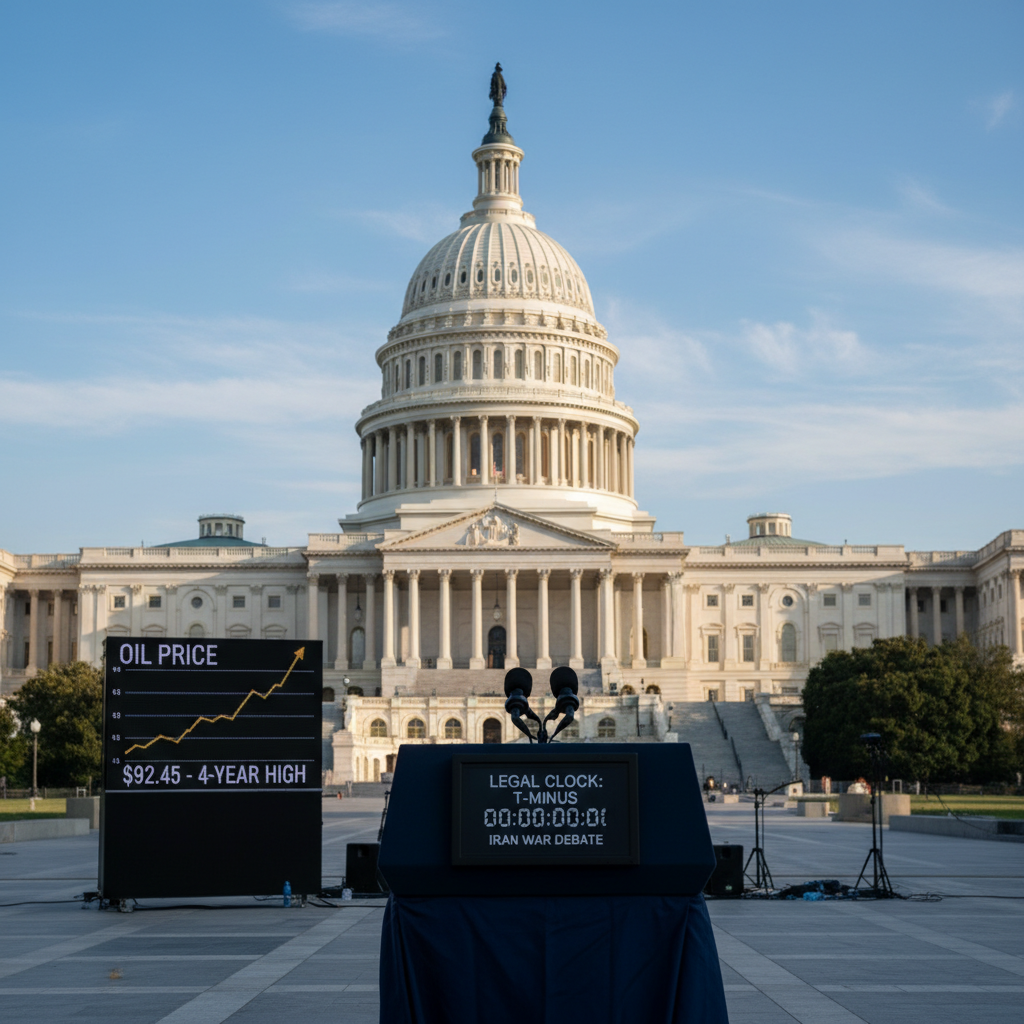
Brent crude soared above $126 a barrel on April 30, its highest price since March 2022, as an effective closure of the Strait of Hormuz drove fuel costs higher for American drivers and Defense Secretary Pete Hegseth faced pointed challenges from senators of both parties over the White House's legal authority to continue the Iran war.
The Details
The spike in oil prices — which Reuters reported reflected Brent roughly doubling from its prewar level at certain points since the conflict began in late February — came as only a small fraction of normal vessel traffic moved through the Strait of Hormuz, the chokepoint that handles roughly a fifth of global oil and liquefied natural gas transit.
The disruption fed through quickly to motorists. AAA's national average for a gallon of regular gasoline reached $4.39 on Friday, according to CBS News — up nine cents from the prior day and 34 cents from the week before.
On the same day oil hit its peak, Hegseth appeared before senators and defended the administration's position that the conflict remains legally authorized. His central argument: a current ceasefire pauses or halts the 60-day clock established by the War Powers Resolution.
"We are in a ceasefire right now, which our understanding means the 60-day clock pauses or stops," Hegseth told senators, according to CNN and TIME.
Many lawmakers, including members of his own party, rejected that reading. The War Powers Resolution requires a president to cease hostilities within 60 days of notifying Congress unless lawmakers authorize the conflict or the president certifies withdrawal. Trump formally notified Congress of hostilities with Iran on March 2, making May 1 the date many legislators treat as the operative deadline.
"The Constitution gives Congress an essential role in decisions of war and peace, and the War Powers Act establishes a clear 60-day deadline for Congress to either authorize or end U.S. involvement in foreign hostilities," said Sen. Susan Collins of Maine, a Republican who broke with most of her party to support the latest Senate measure aimed at reasserting congressional authority.
Sen. Adam Schiff of California, who led the Democratic push, went further. "In my view, this war was illegal from the start, because there was no attack on the United States, there was no imminent threat of attack," Schiff said in comments reported by CNN.
The Senate ultimately blocked Schiff's resolution on April 30 by a 47-50 procedural vote. Collins and Sen. Rand Paul crossed the aisle to join Democrats in support, while Sen. John Fetterman broke with most of his caucus to oppose it.
The war's financial costs also drew fresh scrutiny Thursday. CBS News, citing U.S. officials and earlier CNN reporting, said internal estimates place the Pentagon's true expenditure closer to $40 billion to $50 billion — significantly more than the roughly $25 billion public figure, which is focused primarily on munitions costs.
Context
The War Powers Resolution has rarely, if ever, successfully forced a president to end a military operation, according to TIME, which noted that history raises real doubts about how enforceable any deadline will be in practice.
The administration's argument that a ceasefire pauses the 60-day clock is disputed and unresolved. CNN and TIME reported that senators including Tim Kaine, Collins, and Schiff publicly questioned whether the statute permits such a reading, but no definitive legal authority has settled the question.
Inside Iran, CBS News reported ongoing economic pressure, including a prolonged internet shutdown and heavy losses to online businesses — effects that have compounded alongside the continued disruption to global energy markets.
What's Next
With May 1 marking the date many lawmakers treat as the 60-day War Powers deadline, the administration faces continued congressional and legal pressure to either seek formal authorization for the Iran conflict or wind down hostilities. The Senate's failure to pass Schiff's resolution leaves the question of enforcement unresolved. Meanwhile, the near-closure of the Strait of Hormuz continues to keep oil prices elevated, with further moves in energy markets likely to track the course of the conflict.
Never Miss a Signal
Get the latest breaking news and daily briefings from Zero Signal News directly to your inbox.