
Oil Prices Retreat From Monday Spike but Stay Above $100 as U.S.-Iran Gulf Fighting Intensifies
Zero Signal Staff
Published May 5, 2026 at 3:22 AM ET · 160 days ago
The New York Times, Reuters, CNBC
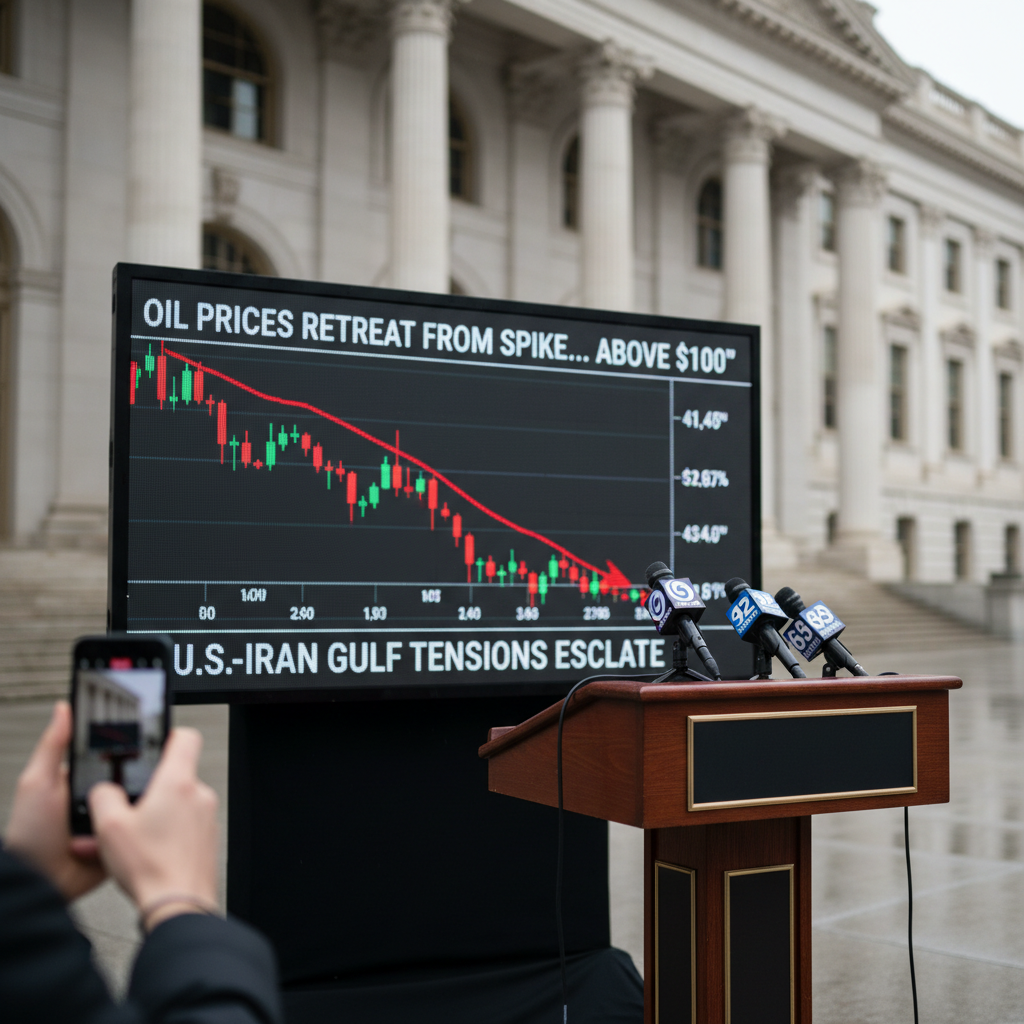
Oil prices pulled back on May 5 after a sharp rise the previous day, but remained firmly above $100 per barrel as renewed fighting between the United States and Iran in the Gulf kept supply disruption fears alive and cast doubt over a fragile truce,
Oil prices pulled back on May 5 after a sharp rise the previous day, but remained firmly above $100 per barrel as renewed fighting between the United States and Iran in the Gulf kept supply disruption fears alive and cast doubt over a fragile truce, according to reports from The New York Times, Reuters, and CNBC.
The Details
Brent crude fell 1.3% to $112.93 a barrel while U.S. crude slid 2.3% to $104, Reuters reported, retreating after both benchmarks jumped in the prior session on fears that the escalating conflict could disrupt supply flows through the region. In Asia trade, CNBC cited Reuters figures showing Brent down 0.5% at $113.85 and U.S. crude off 1.3% at $105.03 — levels that still reflected the previous day's surge and kept both benchmarks well above the $100 threshold.
The New York Times reported that oil prices remained elevated as Middle East tensions intensified. The price volatility followed fresh attacks by the U.S. and Iran in the Gulf on Monday. The two nations are contesting control over the Strait of Hormuz, and Reuters reported that the renewed clashes left a fragile truce in doubt.
IG market analyst Tony Sycamore said the pattern of hostilities underscored how unstable the situation remains: "It really signifies that the stalemate remains in place, it's been a very shaky start."
Context
The Strait of Hormuz is a critical global energy chokepoint, and any threat to traffic through the narrow waterway can quickly move crude prices. Shipping group Maersk said a U.S.-flagged vehicle carrier exited the Gulf through the Strait of Hormuz on Monday with U.S. military accompaniment, a visible sign of the elevated security environment as hostilities flared between Washington and Tehran.
The conflict also rippled beyond energy markets. Asian equities fell alongside the oil move, signaling broader risk-off sentiment as investors weighed the potential for sustained disruption tied to the Gulf fighting, according to Reuters and CNBC reporting. The simultaneous drop in stocks and the pullback in oil prices from their Monday highs illustrated how closely global markets are tracking the military developments around one of the world's most important oil transit routes.
What's Next
With the truce between Washington and Tehran in doubt and both nations continuing to contest control of the Strait of Hormuz, markets are pricing in the risk of sustained supply disruption. Further hostilities around the critical chokepoint could keep crude benchmarks elevated even after Monday's spike, leaving traders focused on whether the fragile ceasefire can hold and whether military traffic through the waterway faces additional constraints.
Never Miss a Signal
Get the latest breaking news and daily briefings from Zero Signal News directly to your inbox.