
OpenAI CFO Pushes Back on Growth Concerns, Cites 'Vertical Wall of Demand'
Zero Signal Staff
Published April 30, 2026 at 10:38 PM ET · 149 days ago
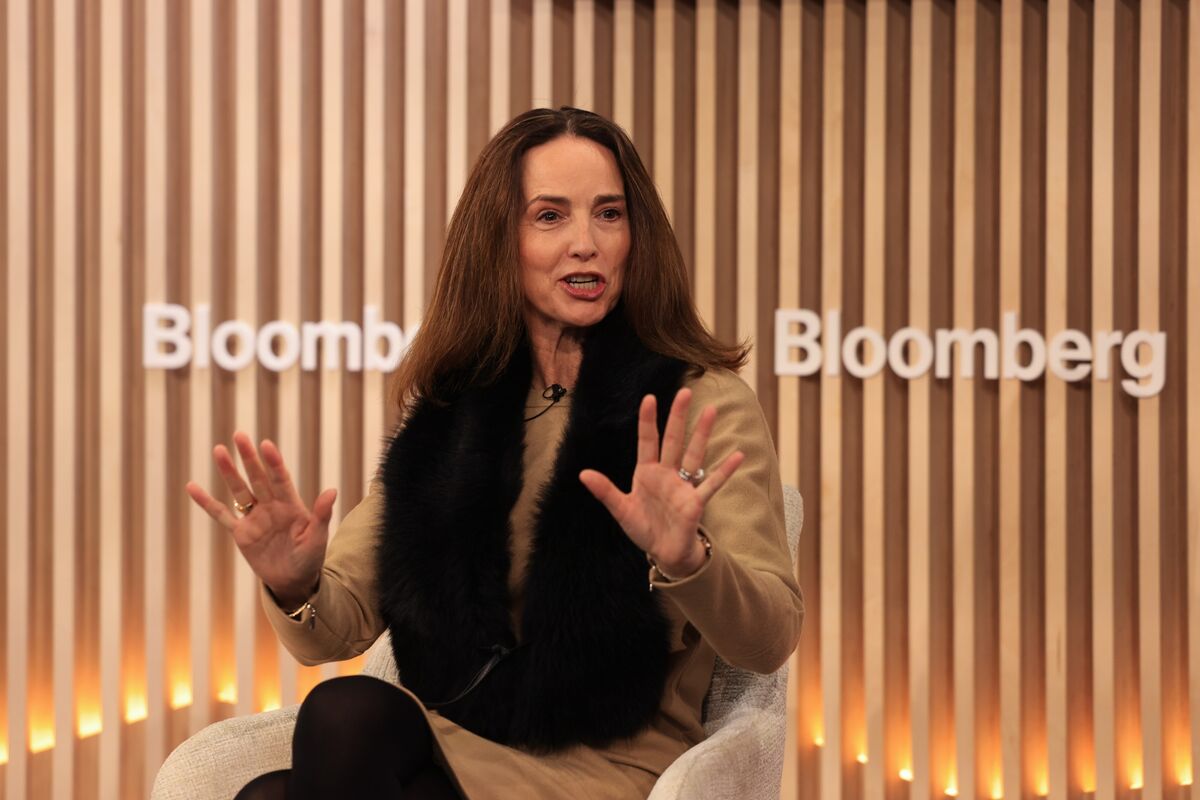
Bloomberg
OpenAI Chief Financial Officer Sarah Friar said the company is meeting its top-level objectives and sees "a vertical wall of demand" for its products, according to Bloomberg, pushing back against a Wall Street Journal report that the artificial intel
OpenAI Chief Financial Officer Sarah Friar said the company is meeting its top-level objectives and sees "a vertical wall of demand" for its products, according to Bloomberg, pushing back against a Wall Street Journal report that the artificial intelligence company had missed internal revenue and user-growth targets.
The Details
Friar told Bloomberg that OpenAI feels it is "beating our plan at the highest level," while acknowledging that individual metrics can shift because the business is young and not perfectly forecastable. Her remarks were the company's most direct public defense against a wave of scrutiny that followed the Journal's account of internal shortfalls.
The Journal report, as relayed by CNBC and Reuters, said OpenAI had fallen short of its own revenue and user-growth estimates, raising questions about whether the company could fund its data-center expansion plans. CNBC and Reuters both published the account on April 28.
In a joint statement to CNBC, Friar and Chief Executive Officer Sam Altman disputed the report in blunt terms. "This is ridiculous. We are totally aligned on buying as much compute as we can and working hard on it together every day," the two executives said.
Reuters, citing people familiar with the matter and the Wall Street Journal, reported separately that Friar had expressed concerns to internal leaders about OpenAI's ability to pay for future computing contracts if revenue did not grow fast enough. The competing claims — internal worry on one side, public confidence on the other — remained unresolved as of the Bloomberg interview published April 30.
The tension at the center of the coverage is a direct conflict between two accounts. On one side, the Wall Street Journal's reporting, relayed by CNBC and Reuters, describes internal misses and financing concerns. On the other, Friar's Bloomberg interview and the joint statement to CNBC present a company on plan and committed to aggressive compute spending. OpenAI has not released audited financial disclosures that would settle the dispute.
Separately, the South China Morning Post published an interview with Friar in which she outlined a potential long-term revenue line: selling AI data-center and infrastructure services to other businesses. Friar said OpenAI is not actively pursuing that effort now, but explained the strategic logic. "If all we do is buy from others, all we're doing is giving them our IP because they're learning how to build AI infrastructure," she told the Post.
The infrastructure comments add a forward dimension to a company whose public narrative has been dominated this week by questions about whether current revenue can keep pace with current spending.
Context
The scale of OpenAI's compute commitments makes the revenue question consequential for vendors as well as for the company itself. Reuters reported that Oracle has signed a five-year computing deal with OpenAI valued at $300 billion, an arrangement that illustrates how central infrastructure spending is to OpenAI's operating model. Any gap between revenue and spending commitments at that scale has downstream effects on the companies supplying that capacity.
OpenAI's financial position is also shaped by its investor base. Quartz, via Yahoo Finance, reported that the company raised a $122 billion funding round at an $852 billion post-money valuation, a capitalization that reflects the scale of external backing behind its expansion plans.
The company's relationship with Microsoft — historically its largest compute partner — is also in transition. CNBC reported that OpenAI recently changed its Microsoft arrangement so Microsoft no longer holds an exclusive license to OpenAI intellectual property. The shift means OpenAI now has broader flexibility to work with other infrastructure providers, which connects directly to the compute-spending questions raised in the Journal report.
The dispute over internal targets arrives as OpenAI is navigating a corporate restructuring, rapid headcount growth, and intensifying competition in the generative AI market. Friar, who joined as CFO to help prepare the company for greater financial scrutiny, is now the primary public voice on the metrics questions — a role that the Bloomberg and CNBC interviews this week made explicit.
What's Next
The disputed claims about OpenAI's internal targets are unresolved. According to the fact brief, no reconciliation of the Wall Street Journal's reporting and OpenAI leadership's public denials had emerged as of the Bloomberg interview on April 30. The Wall Street Journal source report was not directly available for independent verification, and Bloomberg's full interview is behind a paywall.
Friar's Bloomberg interview, as the most recent public statement from OpenAI leadership, leaves open whether the company will provide additional financial disclosures. She indicated individual metrics can move in a young business without that constituting a top-level plan miss — a framing that may face continued pressure from investors and infrastructure partners who have committed to multi-year deals based on OpenAI's growth projections.
The South China Morning Post interview suggests OpenAI is at least considering a structural response to its compute costs: building the capacity to sell infrastructure services outward rather than only consuming them. Friar characterized that option as a future possibility rather than an active initiative.
Never Miss a Signal
Get the latest breaking news and daily briefings from Zero Signal News directly to your inbox.