
Over 250 Feared Dead After Overcrowded Rohingya Refugee Boat Capsizes in Andaman Sea
Zero Signal Staff
Published April 17, 2026 at 9:36 AM ET · 1 day ago
UNHCR/IOM, Reuters, BBC, Al Jazeera
Approximately 250 people are missing and feared dead after an overcrowded boat carrying Rohingya refugees and Bangladeshi nationals capsized in the Andaman Sea in early April 2026.
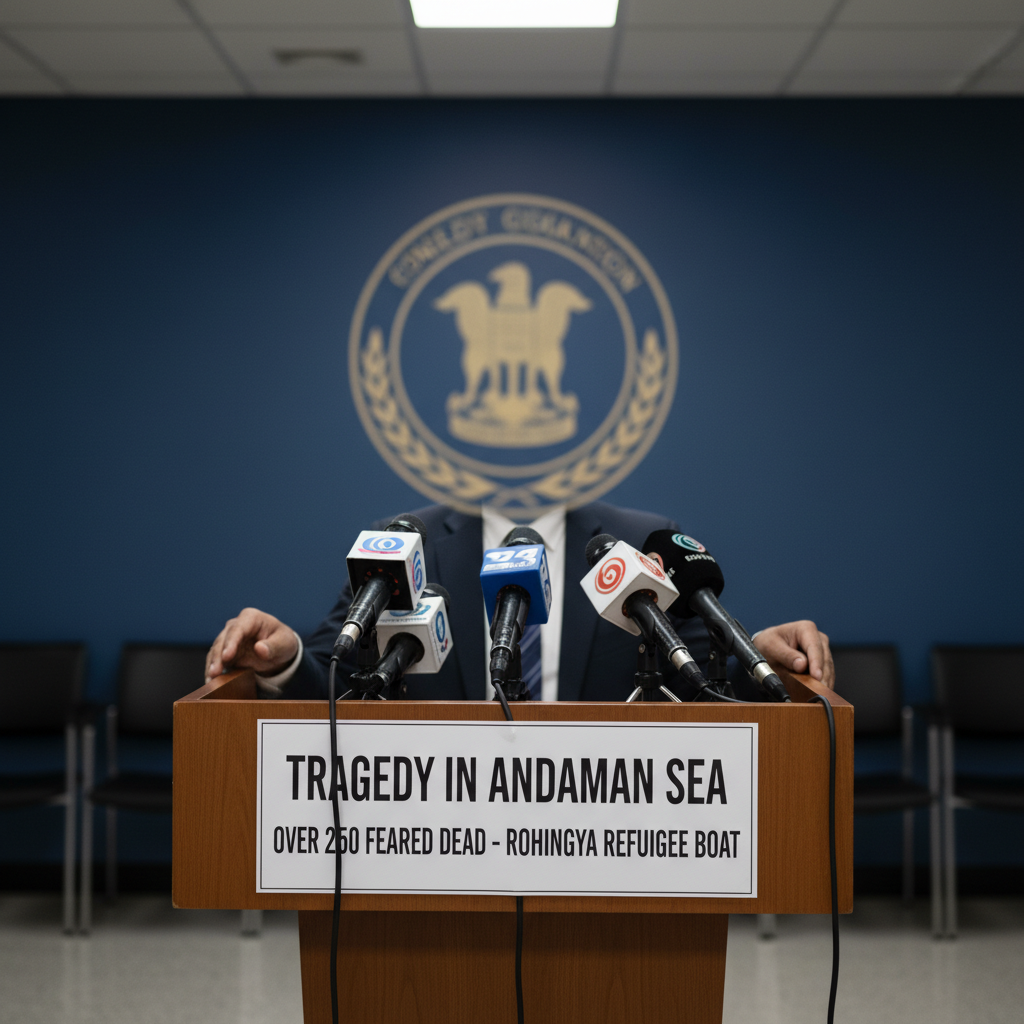
Approximately 250 people are missing and feared dead after an overcrowded boat carrying Rohingya refugees and Bangladeshi nationals capsized in the Andaman Sea in early April 2026. The vessel, which departed from Teknaf in southern Bangladesh, was bound for Malaysia when it succumbed to heavy winds and rough seas. Survivors describe a harrowing journey marked by trafficking, suffocation, and desperation.
The Details
The tragedy began around April 4, 2026, when the vessel left Teknaf, Bangladesh. According to survivors, the journey was managed by human traffickers who lured passengers with promises of employment in Malaysia. The voyage involved a multi-stage process where passengers were first transported on small fishing boats and later transferred to a larger trawler near Myanmar waters. To evade security patrols, some passengers were forced to hide in bushes before boarding the main vessel.\n\nConditions aboard the trawler were described as brutal. Survivor Mohammed Rofique reported that traffickers forced passengers into sweltering storage compartments designed for fish and nets to keep them hidden from patrolling authorities. Rofique recalled, 'We were asking for water and they closed the hatches of our compartment. We were suffocating, screaming for oxygen.' He estimated that between 25 and 35 people died from suffocation before the boat ever capsized.\n\nOther survivors recounted similar horrors. Rafiqul Islam, 40, stated that some passengers died in the holding area of the trawler and that he was burned by oil spilling from the vessel. The boat traveled for four days before hitting rough seas and heavy winds during the second week of April, leading to its eventual capsize.\n\nRescue efforts were limited. The Motor Tanker Meghna Pride, a Bangladesh-flagged vessel sailing toward Indonesia, rescued nine individuals who were found clinging to drums and wooden debris. These survivors were subsequently transferred to the Bangladesh Coast Guard vessel Mansoor Ali. However, of the nine rescued, six were detained by police on suspicion of involvement in the trafficking operation.\n\nFor the families left behind, the disaster is a personal catastrophe. Umme Tara, a grandmother in a refugee camp, is mourning her daughter, Umme Habiba, and grandson, Mohammed Salman. Habiba had sought to reunite with her husband in Malaysia, dreaming of providing for her family. 'My heart aches, it cries. I can't stand it anymore,' Tara said.
Context
The Andaman Sea has become a perilous corridor for the Rohingya, a stateless Muslim minority fleeing systemic violence and a deadly military crackdown in Myanmar's Rakhine state. Since 2017, approximately 1.2 million Rohingya have sought refuge in camps in Cox's Bazar, Bangladesh. The desperation to leave is fueled by deteriorating conditions; an International Rescue Committee survey indicates that only 2% of Rohingya parents feel hopeful about their children's future.\n\nEconomic hardship in the camps has exacerbated the vulnerability of the population. Food rations have been slashed to as little as $7 USD per person per month, and nearly 69% of refugee households report children dropping out of school, with half indicating that children have been forced into labor. These conditions make the promises of traffickers\u2014though often fraudulent\u2014seem like the only viable escape.\n\nMalaysia remains a primary destination due to its Muslim-majority population and existing Rohingya diaspora. This is not an isolated incident; in May 2025, the UNHCR reported that 427 Rohingya were feared dead in two separate shipwrecks off the Myanmar coast. The ongoing conflict in Rakhine state between the Myanmar military and the Arakan Army continues to block hopes of a safe return to their homeland.
What's Next
International humanitarian agencies have called for urgent global intervention. In a joint statement, the UNHCR and IOM asserted that this tragedy 'highlights the devastating human cost of protracted displacement and the continued absence of durable solutions for the Rohingya.'\n\nInvestigations into the trafficking network responsible for the voyage are ongoing, following the detention of six individuals rescued from the debris. However, the root causes\u2014statelessness and the lack of legal pathways for resettlement\u2014remain unaddressed. Without a political resolution in Myanmar or expanded resettlement programs, experts warn that more refugees will continue to risk the Andaman Sea, fueling a lucrative and lethal trafficking industry.
Never Miss a Signal
Get the latest breaking news and daily briefings from Zero Signal News directly to your inbox.