
Pope Leo XIV Condemns Corruption and 'Tyrants' During Historic Africa Tour in Cameroon
Zero Signal Staff
Published April 17, 2026 at 8:39 AM ET · 182 days ago
AP News
Pope Leo XIV has called on the government of Cameroon to dismantle systemic corruption and urged an end to regional violence during a high-profile visit to the conflict-torn nation.
Pope Leo XIV has called on the government of Cameroon to dismantle systemic corruption and urged an end to regional violence during a high-profile visit to the conflict-torn nation. The first American pope in history is currently on an 11-day pilgrimage across four African nations, using his platform to blast global tyrants and the exploitation of the continent. His visit to the epicenter of Cameroon's separatist conflict briefly paused fighting as he advocated for peace and youth investment.
The Details
During a visit to Yaoundé on April 15, Pope Leo XIV met with President Paul Biya, the world's oldest ruler, and delivered a stern warning regarding the state of governance. The Pope insisted that the 'chains of corruption' must be broken for peace and justice to prevail, arguing that such corruption disfigures authority and strips it of credibility. He further linked social instability to economic failure, stating that persistent unemployment and social exclusion are primary drivers of violence, and called for strategic investment in the education and entrepreneurship of young people.
On April 16, the pontiff traveled to Bamenda, the center of the Anglophone separatist conflict. In a speech at Saint Joseph's Cathedral, Pope Leo XIV condemned a 'handful of tyrants' who he claims are ravaging the world. He remarked that while the 'masters of war' can destroy in a moment, it often takes a lifetime to rebuild. To emphasize the need for unity, the Pope presided over an interfaith peace meeting featuring a Catholic nun, an imam, a Presbyterian moderator, and a Mankon traditional chief, while expressing gratitude that the local crisis had not devolved into a religious war.
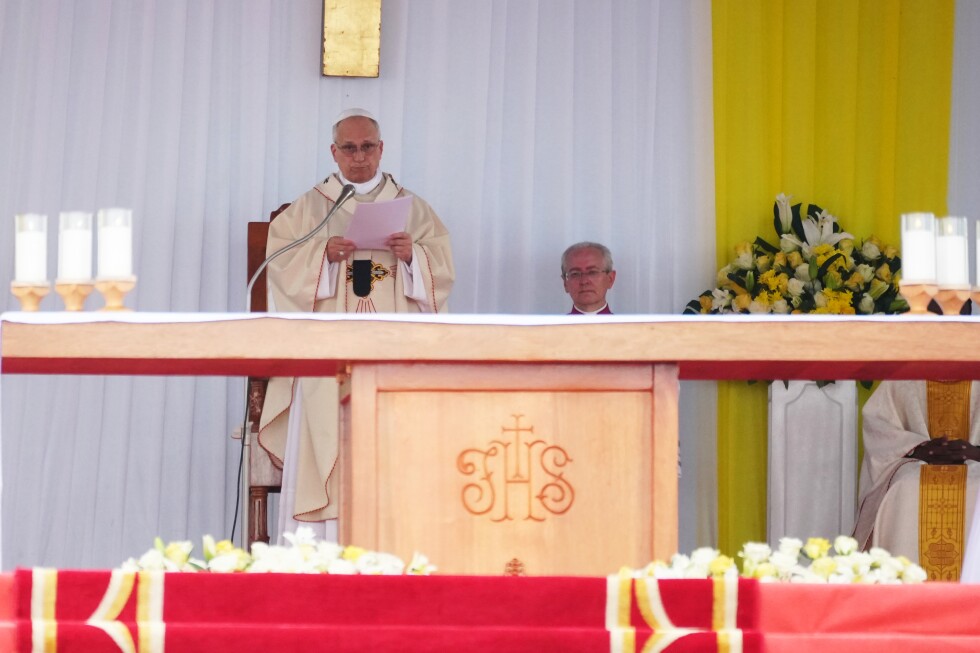
At a Mass held at Bamenda Airport, attended by an estimated 20,000 people, the Pope expanded his critique to include external actors. He pointed to the damage caused by those who 'lay their hands on the African continent to exploit and plunder it' in the name of profit. This sentiment echoed earlier calls from his predecessor, Pope Francis, and highlighted the intersection of internal political failure and external exploitation.
Further condemning the intersection of faith and power, Pope Leo XIV issued a stern warning against those who manipulate religion for military or economic gain. He described such actions as dragging the sacred 'into darkness and filth.'
On April 17, the Pope moved to the port city of Douala to celebrate Mass and visit a local hospital. The Vatican anticipated a massive turnout for the liturgy, with predictions of up to 600,000 people—the largest crowd of his entire African tour.
Context
The visit takes place against the backdrop of a violent separatist conflict in Cameroon's Anglophone regions. Beginning in 2017, the rebellion sought to create an independent state called Ambazonia, rooted in colonial-era divisions between British and French administrations. According to the International Crisis Group, the conflict has displaced over 600,000 people and resulted in more than 6,000 deaths. Separatist fighters notably announced a three-day ceasefire to coincide with the Pope's arrival in Bamenda.
Pope Leo XIV's visit is historically significant as he is the first American to hold the papacy. His tenure has been marked by outspoken critiques of global conflicts, including the U.S.-Israeli war on Iran, which has led to public friction with U.S. President Donald Trump. His calls for peace in Cameroon have been supported by other religious leaders, including the Archbishop of Canterbury, Sarah Mullally.
Economically, the region remains fragile. While World Bank data indicates a low official unemployment rate of 3.5%, the reality for the youth is stark: 57% of the labor force aged 18 to 35 is employed in the informal sector, leaving them vulnerable to the social exclusion the Pope highlighted in Yaoundé.
What's Next
The outcome of the Pope's visit may be measured by whether the temporary three-day ceasefire in Bamenda can be leveraged into a more permanent diplomatic breakthrough. However, the ability of President Paul Biya—who recently won a disputed eighth term—to act on the Pope's calls to root out corruption remains a critical question for the stability of the government.
As the tour continues through Angola and Equatorial Guinea, observers will look for further signals regarding the Pope's stance on Western interference in African affairs. His insistence on the role of women in decision-making processes also suggests a push for broader social reform across the nations he visits.
Finally, the massive scale of the Douala liturgy is expected to serve as a barometer for the public's reception of this American pontiff's message in one of Africa's most complex political environments.
Never Miss a Signal
Get the latest breaking news and daily briefings from Zero Signal News directly to your inbox.