
Pope Leo XIV Confronts Catholicism's Colonial Legacy at Angola Slave-Trade Shrine
Zero Signal Staff
Published April 19, 2026 at 8:36 AM ET · 161 days ago
AP News
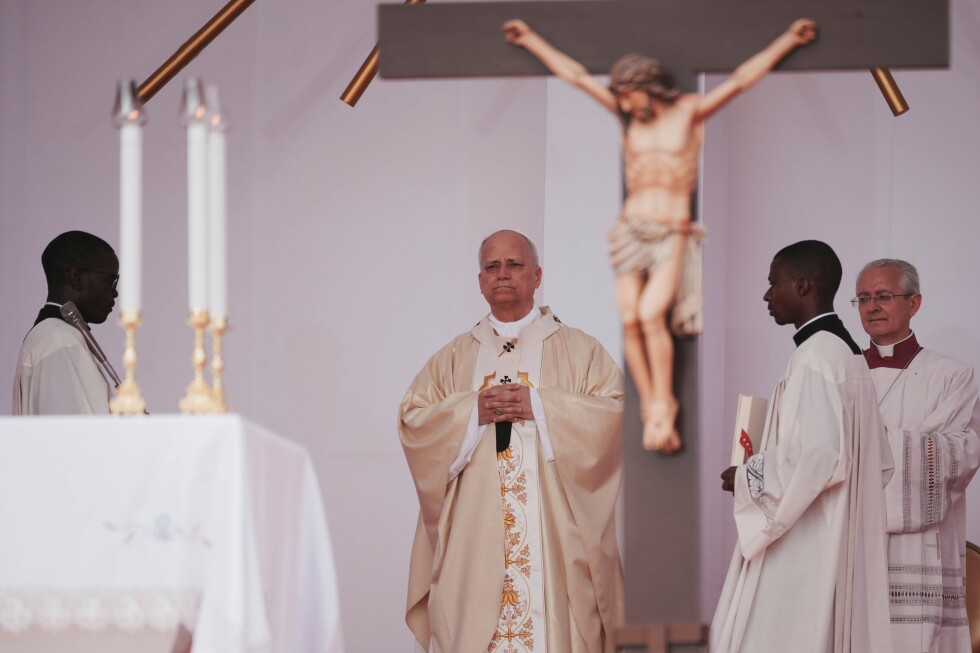
Pope Leo XIV visited the Church of Our Lady of Muxima in Angola on Sunday, April 19, 2026, as part of an 11-day apostolic journey through Africa.
Pope Leo XIV visited the Church of Our Lady of Muxima in Angola on Sunday, April 19, 2026, as part of an 11-day apostolic journey through Africa. The visit to the riverside shrine is deeply symbolic, as the site served as a hub for the trans-Atlantic slave trade during the era of Portuguese colonization. The pilgrimage marks a confrontation with the Catholic Church's historical role in justifying the enslavement of millions.
The Details
During his visit to Muxima, Pope Leo XIV planned to recite the Rosary on the esplanade adjacent to the fortress and chapel. The Church of Our Lady of Muxima was established by Portuguese colonizers in the late 16th century. For centuries, it served as a point of profound trauma: enslaved Africans were baptized by Portuguese priests at the church before being forced to march approximately 145 kilometers to the port of Luanda for shipment to the Americas.
Angola represents the largest point of departure for the trans-Atlantic slave route, with more than 5 million people forced across the Atlantic from the region—nearly half of the estimated 12.5 million Africans deported in total. This history was intertwined with early Vatican directives from the 15th century, which authorized Portuguese colonizers to enslave non-Christians, providing a religious veneer for colonial exploitation.
Earlier in his Angolan visit, the Pope celebrated Holy Mass in Kilamba, south of Luanda, where he called upon the population to fight the 'scourge of corruption' and establish a culture of justice. In meetings with government authorities, including President João Lourenço, Leo XIV challenged leaders to break the 'cycle of interests' that have historically plundered the African continent.
Local clergy have viewed the visit as an attempt to redefine the site's legacy. Reverend Celestino Epalanga of the Catholic Bishops' Conference of Angola stated that the Pope's presence gives the shrine a new significance, moving it from a 'place of evil' to a sacred space of reflection and healing.
Context
The visit is personally significant for Pope Leo XIV, the first U.S.-born pope. A genealogical study has revealed that Leo, born Robert Prevost, possesses Creole heritage; records indicate his maternal great-grandparents were people of color in Louisiana. His ancestry includes both enslaved individuals and slave owners, creating a direct lineage link to the very systems he is addressing in Angola, where some of the first enslaved people sent to Louisiana originated.
Angola's relationship with the Catholic Church is among the oldest in southern Africa, dating back 500 years to the arrival of Portuguese settlers in the Kongo Kingdom. Despite a Catholic population of over 20 million—roughly 58% of the country—Angola currently has no cardinal. This underscores a broader disparity in the Church's hierarchy, where only 14 of the 121 cardinals eligible to elect a pope are from Africa.
Politically and economically, the visit occurs against a backdrop of extreme inequality. While Angola is a global leader in oil and diamond production, World Bank data from 2023 suggests over 30% of the population lives on less than $2.15 a day. The country is still recovering from a 27-year civil war that ended in 2002, a conflict that served as a Cold War proxy between the U.S., South Africa, the Soviet Union, and Cuba.
What's Next
Pope Leo XIV is expected to conclude his three-day visit to Angola before departing for Equatorial Guinea on Tuesday. This trip is the third leg of a four-nation tour that began in Algeria and Cameroon, a journey he decided upon shortly after his election in May 2025.
Observers, including Nigerian priest Rev. Stan Chu Ilo, suggest that Leo is actively attempting to increase African presence and influence within the Vatican hierarchy. This trend is evidenced by the recent promotion of Nigeria's Monsignor Anthony Ekpo to a high-ranking position at the Vatican.
Whether the Pope will issue a formal apology or a more explicit condemnation of the Church's role in the slave trade at Muxima remains unclear. However, the visit is widely viewed as a strategic effort to heal historical wounds and reposition the Papacy's relationship with the Global South.
Never Miss a Signal
Get the latest breaking news and daily briefings from Zero Signal News directly to your inbox.