
Prediction Market Traders Face Tax Filing Uncertainty as IRS Offers No Guidance
Zero Signal Staff
Published April 15, 2026 at 12:14 PM ET · 184 days ago
Ars Technica
With Tax Day arriving on April 15, 2026, millions of Americans who earned money on prediction market platforms like Kalshi and Polymarket face a critical problem: the Internal Revenue Service has issued no official guidance on how to report those...
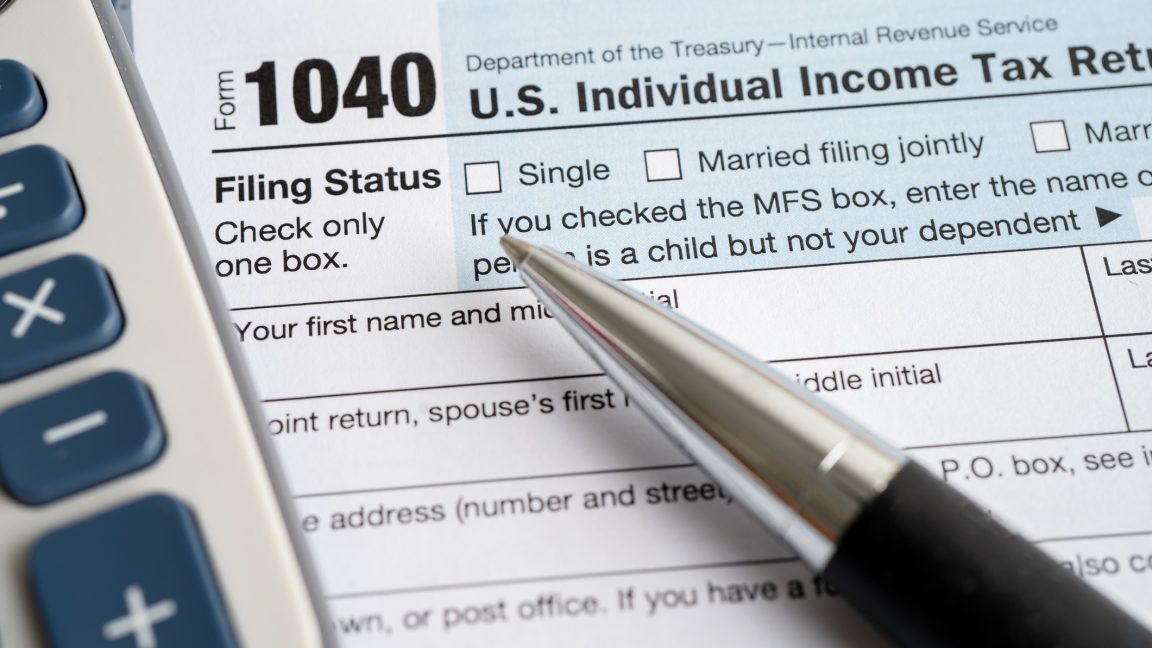
With Tax Day arriving on April 15, 2026, millions of Americans who earned money on prediction market platforms like Kalshi and Polymarket face a critical problem: the Internal Revenue Service has issued no official guidance on how to report those winnings. Tax professionals across the country are divided on the correct approach, leaving traders to choose between treating gains as gambling income, financial derivatives, or regular earnings—with no certainty any choice is correct.
Prediction markets have grown from a niche concern to a mainstream tax issue in less than a year. Kalshi alone processed over $12 billion in monthly trade volume in March 2026, according to markets tracker Defi Rate. An estimated 3 percent of the U.S. population now uses prediction markets, translating to millions of people legally obligated to report winnings to the IRS.
The absence of IRS guidance has created a patchwork of filing approaches. Some traders apply rules designed for financial derivatives like futures contracts. Others treat prediction market gains as gambling winnings, which requires tracking each bet individually rather than reporting a net total. Still others simply report earnings as regular income. Patrick Camuso, an accountant specializing in digital assets, described the situation bluntly: "You have a vacuum of guidance. It puts the taxpayer in a bad position."
Nate Meininger, a Phoenix-based prediction market trader, relies on tax documents provided by platforms like Kalshi and consults with an accountant to determine what he owes. Traders using offshore platforms like Polymarket face additional complexity—many access these sites through virtual private networks despite legal restrictions on unlicensed platforms, and these exchanges do not issue tax documentation. U.S. citizens remain obligated to self-report all income regardless of source, leaving offshore traders in legal limbo.
The situation mirrors the early years of cryptocurrency taxation. The IRS did not issue guidance on Bitcoin and blockchain assets until 2014, five years after Bitcoin's launch. That guidance was updated in 2019, and crypto exchanges were not legally required to issue tax forms to the IRS until 2023. Prediction markets may follow a similar timeline of delayed rule-making.
Context
The IRS has historically taken years to establish clear rules for emerging financial instruments. When Bitcoin launched in 2009, the agency provided no guidance until 2014. The lag between adoption and regulation reflects the challenge of writing tax code for technologies that move faster than government processes.
Kalshi and Polymarket have experienced explosive growth since 2025. Kalshi's predominantly American user base generated $12 billion in monthly trading volume in March 2026. The platforms have attracted millions of traders seeking to bet on election outcomes, economic indicators, and other events—a market that barely existed as a mainstream phenomenon two years ago.
The IRS is currently undergoing significant modernization, including efforts spearheaded by operatives from the Department of Government Efficiency. The agency is developing more sophisticated audit strategies; in 2025, the IRS paid Palantir Technologies $1.8 million to improve a custom tool designed to identify high-value audit cases. This modernization effort suggests the agency may eventually develop more aggressive enforcement around prediction market reporting—but no timeline has been announced.
What's Next
Tax professionals expect the IRS will eventually issue guidance on prediction markets, but the timeline remains unclear. Until then, traders filing today are making educated guesses about compliance. Some traders are betting on IRS leniency, reasoning that the agency cannot reasonably expect taxpayers to follow rules that do not exist. However, as the IRS expands its audit capabilities and enforcement tools, traders who misreport or fail to report prediction market gains face potential liability for back taxes, penalties, and interest once official guidance is eventually issued.
Never Miss a Signal
Get the latest breaking news and daily briefings from Zero Signal News directly to your inbox.