
Rocket Lab CEO Forecasts Space Sector Boom Amid SpaceX IPO Speculation
Zero Signal Staff
Published April 17, 2026 at 9:35 AM ET · 182 days ago
CNBC, Bloomberg, NASA, and The Atlantic
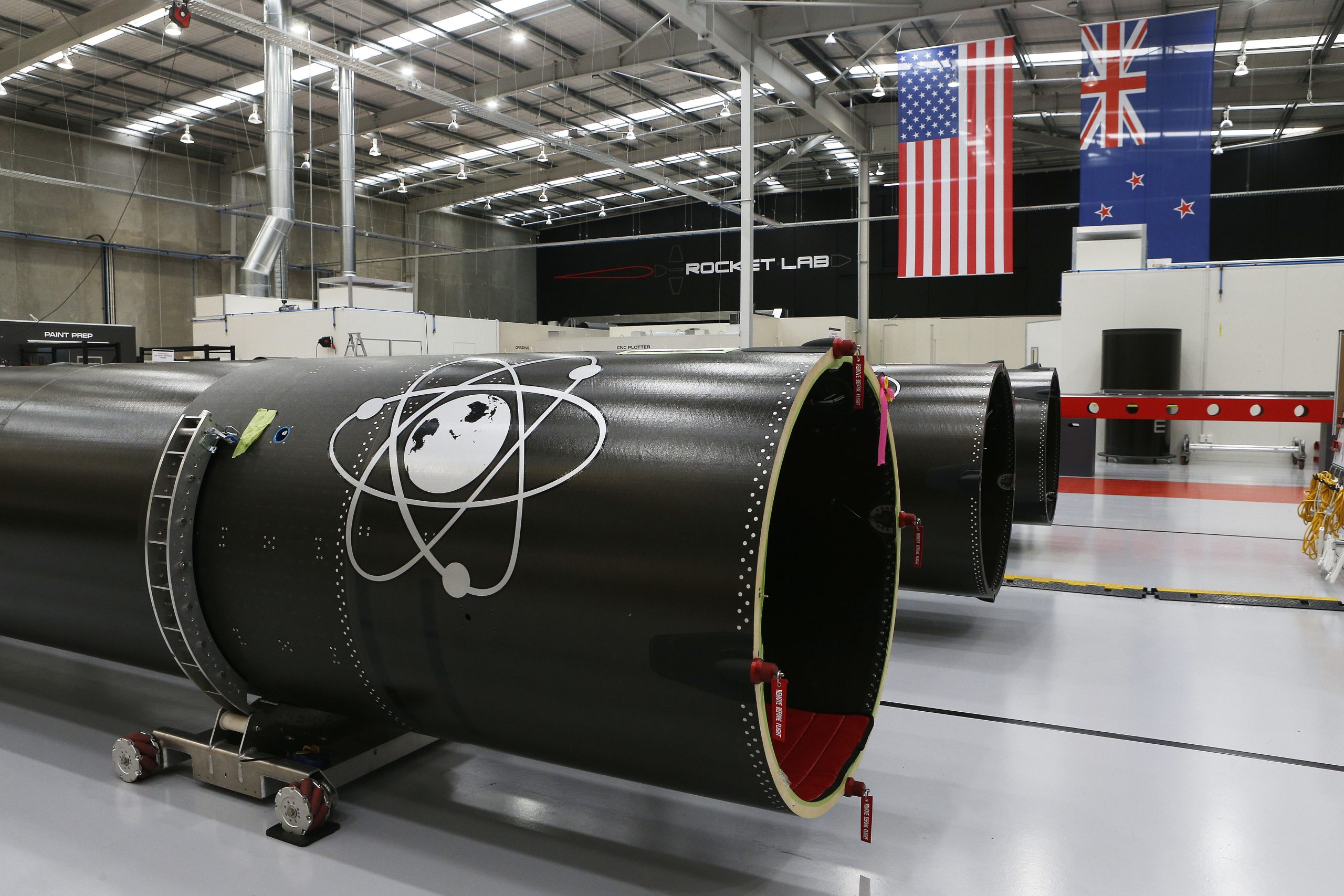
Rocket Lab CEO Peter Beck expects a significant surge in the space sector, driven by a confluence of rising satellite demand, increased defense spending, and a looming SpaceX initial public offering.
Rocket Lab CEO Peter Beck expects a significant surge in the space sector, driven by a confluence of rising satellite demand, increased defense spending, and a looming SpaceX initial public offering. The industry is seeing a wave of renewed investor interest alongside major technical milestones and shifts in government policy. This momentum comes as SpaceX moves toward a potential historic public listing that could value the company at over $2 trillion.
The Details
In interviews with CNBC on April 17, 2026, Peter Beck emphasized that the space market is entering a phase of accelerated growth. Beck identified Europe as the next 'actionable' market for Rocket Lab, signaling an aggressive international expansion strategy. This move follows Rocket Lab's recent $155.3 million acquisition of Mynaric, a deal completed with a mix of cash and 2.28 million shares. The acquisition provides Rocket Lab with laser optical communications terminals and establishes its first formal presence in the European market.
Complementing its expansion, Rocket Lab also unveiled 'Gauss,' a new electric spacecraft thruster designed for satellite operators. With a production capacity exceeding 200 units per year, Gauss is built to support large constellations and extended missions. The company's strategic focus on vertical integration remains central to its growth. Beck noted that owning a rocket is nearly essential for any application requiring the delivery of significant mass into orbit, describing this capability as the future of the space market.
Market response to these developments was immediate, with RKLB shares rising between 9% and 12.68% on April 16. This climb was fueled by the Mynaric acquisition, the launch of Gauss, and a series of analyst upgrades. The broader sector is similarly bullish, evidenced by record Q1 2026 inflows into the Procure Space ETF (UFO) and the launch of the Global X Space Tech ETF (ORBX).
Concurrent with Rocket Lab's growth is the looming SpaceX IPO. Reports indicate SpaceX has confidentially filed for a listing that could be the largest in history, seeking to raise up to $75 billion. While an S-1 filing is expected in May with a potential June roadshow, prediction markets currently assign a 62% probability to a June listing. To prepare for the transition, SpaceX reportedly accelerated its employee share vesting schedule in mid-April.
However, the SpaceX valuation remains a point of debate. While some sources cite a target above $2 trillion, others place it closer to $1.75 trillion. Financial analysts note that at a $2 trillion valuation, SpaceX would trade at more than 100 times its annual sales, given that 2025 revenues were below $20 billion. The company also reported a net loss of nearly $5 billion in 2025, largely attributed to capital costs associated with its merger with xAI in February 2026.
Context
The current industry rally is supported by significant government and institutional milestones. On April 14, 2026, the White House launched the National Initiative for American Space Nuclear Power. This directive tasks NASA, the Department of Energy, and the Department of Defense with developing orbital nuclear reactors by 2028 and lunar surface reactors by 2030.
Human spaceflight also reached a historic milestone on April 10, 2026, when NASA's Artemis II crew—consisting of Wiseman, Glover, Koch, and Hansen—successfully returned to Earth. The nine-day mission included a lunar flyby, marking the first time humans have traveled beyond low Earth orbit in over 50 years, since the Apollo 17 mission in 1972.
SpaceX continues to dominate the launch landscape, accounting for over 80% of all U.S. commercial rocket launches last year and maintaining more than 9 million Starlink subscribers. Other industry players are also moving toward public markets, such as HawkEye 360, which filed its S-1 in April after reporting a 75% year-over-year revenue increase to $117.7 million.
What's Next
The coming weeks will be critical for the space sector's financial trajectory. The anticipated release of the SpaceX S-1 in May will provide the first official look at the company's financials and its internal valuation of the xAI merger. Depending on the outcome of the potential June roadshow, a SpaceX IPO could trigger a massive rotation of capital into other space-related equities and ETFs.
Operationally, Rocket Lab will focus on integrating Mynaric's laser technology into its satellite offerings and scaling Gauss thruster production. The company's success in Europe will be a key indicator of whether it can effectively challenge the established launch and satellite providers in that region.
On the government side, the progress of the National Initiative for American Space Nuclear Power will be tracked as NASA and the DoD move toward the 2028 orbital reactor deadline. These developments, combined with the momentum from Artemis II, suggest a transition from experimental exploration to a permanent, nuclear-powered industrial presence in deep space.
Source
https://www.cnbc.comNever Miss a Signal
Get the latest breaking news and daily briefings from Zero Signal News directly to your inbox.