
Russia's VPN Crackdown Backfires as Digital Censorship Disrupts Banking Sector
Zero Signal Staff
Published April 17, 2026 at 7:34 AM ET · 1 day ago
Reuters
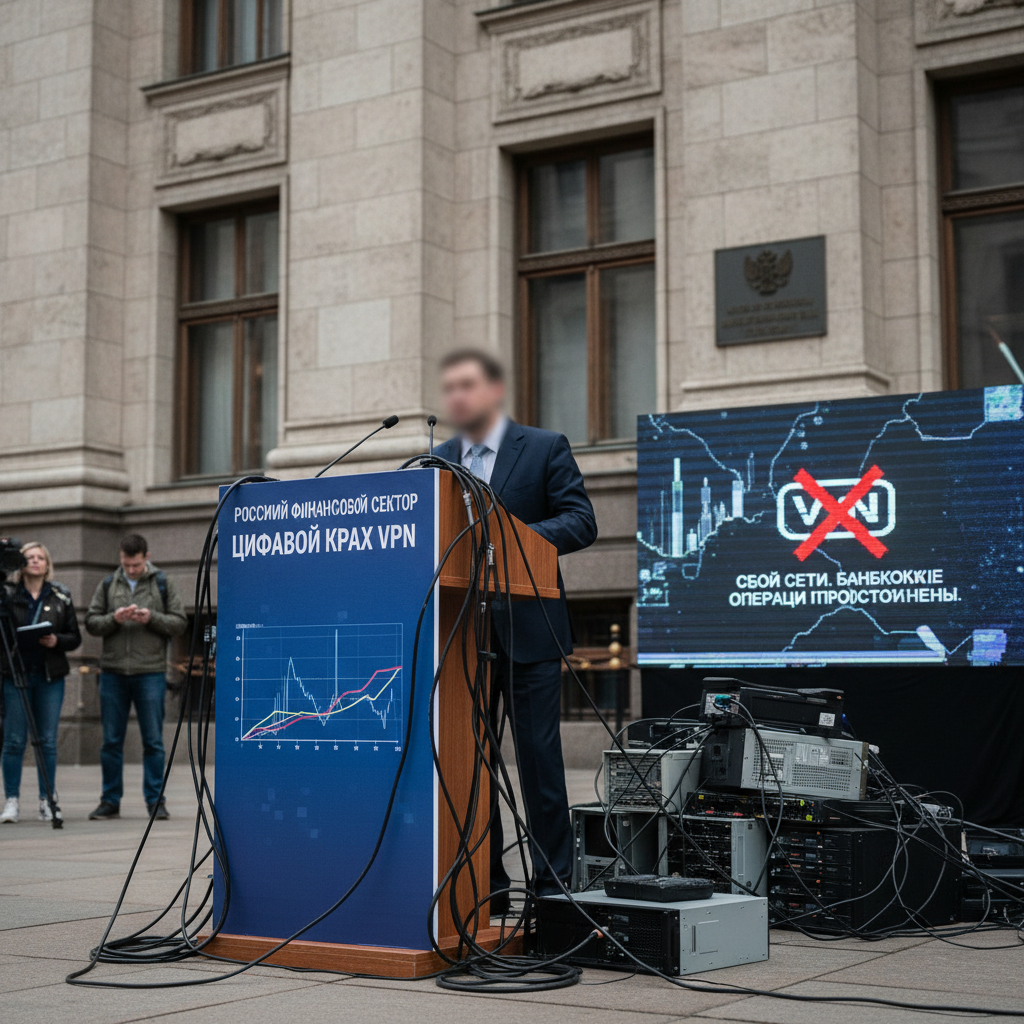
A sweeping crackdown on Virtual Private Networks (VPNs) in Russia has inadvertently crippled the nation's banking and payment infrastructure.
A sweeping crackdown on Virtual Private Networks (VPNs) in Russia has inadvertently crippled the nation's banking and payment infrastructure. The unintended disruptions, peaking in early April 2026, have sparked rare public dissent from pro-Kremlin figures and a surge in digital resistance as the state attempts to isolate its population from the global internet.
The Details
The digital instability reached a critical point on April 4, 2026, when attempts by the state regulator Roskomnadzor to block VPNs triggered widespread outages in banking apps and payment systems. The collateral damage was severe enough that the Moscow metro was forced to allow passengers entry without payment, and regional institutions, including a zoo, requested that visitors pay only in cash. While Roskomnadzor has denied responsibility, reports from Bloomberg and The Bell indicate the disruptions were caused by an overload in the regulator's filtering systems.
This incident follows a massive escalation in censorship efforts. By mid-January 2026, Russia had blocked over 400 VPNs—a 70% increase from the previous year. Authorities have also implemented an opaque 'white list' of approved applications and periodically shut down mobile internet in various regions, often citing the need to counter Ukrainian drone strikes. Western diplomats have noted that the 2026 campaign represents a level of digital repression previously unseen in the country.
Despite these restrictions, the popularity of banned platforms persists. Telegram founder Pavel Durov reported that 65 million daily active users remain in Russia, with 50 million sending at least one message per day. Durov characterized the public's efforts to bypass the blocks as a 'Digital Resistance.'
Public frustration is manifesting in rare high-profile breaks from the state line. Ivan Okhlobystin, a pro-Kremlin actor who previously characterized the invasion of Ukraine as a 'holy war,' joined other celebrities in appealing to President Putin. Okhlobystin described the internet clampdown as a 'huge mistake' and argued that restricting information in the 21st century is 'beyond comprehension.'
State efforts to stifle physical protests against these measures have also increased. Local authorities in nearly a dozen regions have blocked scheduled rallies against censorship, citing unrelated reasons such as snow removal, tree inspections, and lingering COVID-19 restrictions.
Context
The current crackdown is the culmination of a multi-year effort to build a 'sovereign internet.' Since the 2022 invasion of Ukraine, Russia has systematically blocked Meta's Facebook and Instagram, as well as X. By 2024, the state began throttling YouTube and blocking Cloudflare's Encrypted Client Hello (ECH) protocol to eliminate secure loopholes.
Activists and analysts suggest the Kremlin is moving toward a 'North Korea model' of internet control, utilizing a domestic infrastructure to fully firewall the population. This shift has led to a perpetual 'cat and mouse' game, where users frequently rotate through different VPN providers to maintain access to the global web.
This digital isolation is occurring alongside declining domestic popularity for the administration. State polling agency VtSIOM recently reported that President Putin's approval rating has fallen to 67.8%, the lowest level since the start of the full-scale invasion in February 2022.
What's Next
The immediate future of the Russian internet likely involves further attempts to refine the 'white list' and isolate the RuNet from foreign protocols. However, the April 4 banking failure suggests a critical technical fragility in Roskomnadzor's filtering architecture that the state must resolve to avoid further economic instability.
As the government continues to block access to information, the 'Digital Resistance' is expected to evolve, potentially shifting toward more decentralized or peer-to-peer communication methods. The rare emergence of dissent from pro-government celebrities may also signal a growing divide between the Kremlin's tactical censorship goals and the practical realities of a modern, digitally-dependent economy.
Observers will be watching for whether the government responds to the fall in approval ratings with further restrictions or an attempt to stabilize the digital economy to prevent further systemic failures.
Never Miss a Signal
Get the latest breaking news and daily briefings from Zero Signal News directly to your inbox.