
Satellite Images Show Israeli Forces Razed Nearly a Third of a Southern Lebanon Village
Zero Signal Staff
Published April 24, 2026 at 6:42 AM ET · 156 days ago
BBC News
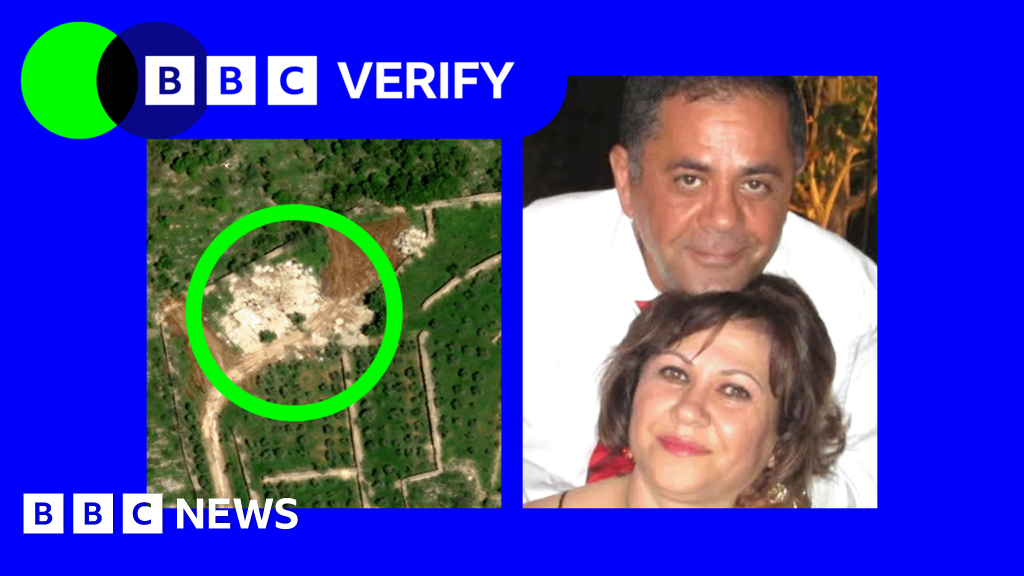
Joe and Diana Elias learned their home in Qouzah, southern Lebanon was destroyed by Israeli forces not through an official notification, but by studying satellite imagery from halfway around the world.
Joe and Diana Elias learned their home in Qouzah, southern Lebanon was destroyed by Israeli forces not through an official notification, but by studying satellite imagery from halfway around the world. The discovery, reported by BBC Verify, is one data point within a broader pattern: IDF operations levelled nearly a third of all buildings in Qouzah's main residential area between March 3 and April 16, 2026, according to BBC Verify's satellite analysis.
The Details
The Eliases spent 26 years in the United States before returning to Qouzah, where Joe served as mayor for more than a decade. He built the family home nearly 20 years ago after six years of saving. Their land was planted with olive, fig and pomegranate trees; the family produced around 1,000 litres of organic olive oil a year, according to BBC News.
"It's a catastrophe… for all of us, not only my family, but every single family that lives in that town," Joe Elias told BBC Verify after analysing the satellite footage that confirmed his home was gone.
Satellite imagery from intelligence firm MAIAR, reviewed by BBC News, showed three IDF armoured vehicles positioned 200 metres from the Elias house on April 16, along with tanks and bulldozers elsewhere in the village. The compound itself no longer appeared in post-April 16 imagery.
The IDF told BBC News that Hezbollah had operated from civilian areas including Qouzah, and that it struck military targets — including the Elias home — to prevent attacks on Israeli forces. Hezbollah has not publicly responded to that specific claim.
The scale of destruction in Qouzah is not an isolated case. Lebanese officials reported to Reuters that Israeli forces have carried out destruction across 39 villages in southern Lebanon since a 10-day ceasefire took effect on April 16, 2026. That ceasefire halted open hostilities but did not end the Israeli military presence: Israeli forces continue to occupy villages up to 10 kilometres beyond the Lebanese border, Reuters reported.
The Israeli military also published a map on social media marking a red line through 21 villages, warning residents not to approach a belt of territory stretching between the border and the Litani River area, according to Reuters.
"I understand there is a world with two parties shooting at each other, firing missiles and all of this," Elias said. "But at the end, in reality, the Lebanese civilian is the one who pays the price."
International law experts told BBC News that the level of building destruction in southern Lebanese villages may amount to a war crime. No formal legal proceedings have been announced, according to the sourced record.
Context
Renewed fighting between Hezbollah and Israel began on March 2, 2026, after Hezbollah fired rockets in retaliation for the killing of Iran's supreme leader, according to BBC News. The latest round of conflict is estimated to have displaced more than 1.2 million people across Lebanon since that date, according to BBC News citing UN OCHA figures.
The Eliases' story represents a pattern playing out across dozens of communities. Residents of southern Lebanese villages have largely been barred from returning to assess damage firsthand, leaving satellite imagery as one of the few tools available to confirm what has happened to their properties.
In a written post sharing footage of destroyed olive groves, Joe Elias described the experience of watching from a distance: "My wife and I are trying to hold on to what's left… to memories that are slipping away from us like the falling rubble."
What's Next
The April 16 ceasefire remains in effect, but Reuters reported that Israeli forces have shown no signs of withdrawing from occupied positions up to 10km inside Lebanese territory. Lebanese officials have documented destruction in 39 villages since the ceasefire began, and no timeline for an Israeli withdrawal has been publicly confirmed.
For the Eliases and thousands of other displaced Lebanese civilians, the question of return remains unresolved. Satellite imagery has confirmed what happened to their home; whether they can rebuild, or when they will be permitted to reach the village, depends on negotiations and military movements that remain ongoing.
Never Miss a Signal
Get the latest breaking news and daily briefings from Zero Signal News directly to your inbox.