
South Korea Mandates Free Mobile Data Access for 7 Million Subscribers
Zero Signal Staff
Published April 10, 2026 at 6:08 PM ET · 15 hours ago
The Register
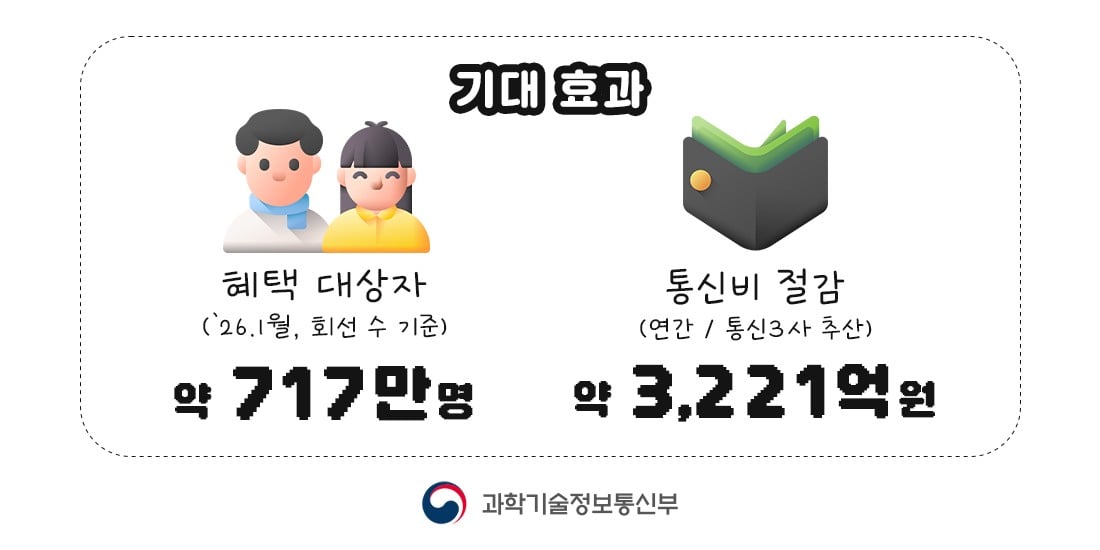
South Korea's Ministry of Science announced a universal basic mobile data program on April 9, 2026, requiring the nation's three dominant carriers to provide unlimited access at 400 kilobits per second to over 7 million subscribers after their...
South Korea's Ministry of Science announced a universal basic mobile data program on April 9, 2026, requiring the nation's three dominant carriers to provide unlimited access at 400 kilobits per second to over 7 million subscribers after their monthly data allowances expire. The initiative ties carrier participation to government demands for improved security practices and expanded service offerings following recent data breaches.
SK Telecom, KT, and LG Uplus have agreed to implement the scheme, which guarantees baseline connectivity to all citizens regardless of their paid data tier. The 400 Kbps speed is sufficient for basic tasks like email and text-based web browsing but insufficient for video streaming or large file downloads.
Deputy Prime Minister Bae Kyunghoon framed the program as essential infrastructure. "Citizens can't do without access to online services," he said in the ministry's announcement. He also described it as a response to recent security failures by the three carriers, stating the industry must "move beyond mere pledges not to repeat past mistakes" and instead demonstrate "a complete transformation that the public can tangibly perceive."
The three carriers committed to additional concessions beyond the basic data program. They agreed to launch 5G plans priced at 20,000 won ($13.50) or less and to expand data and calling allowances for senior citizens. The carriers also promised to upgrade Wi-Fi infrastructure on subways and long-distance trains.
The government sweetened the arrangement by pledging support for carrier research into AI-capable networks, though Deputy Prime Minister Bae emphasized that carriers must independently invest in network infrastructure—not just datacenters—to ensure AI applications reach all citizens.
Context
South Korea's three carriers have faced mounting public pressure over security lapses. SK Telecom suffered a major data breach in 2023, LG Uplus experienced a 3-terabyte leak posted to the dark web, and KT's femtocell security failures exposed customers to snooping and potential malware distribution. These incidents damaged public trust and regulatory standing for the industry.
The universal basic data concept differs from universal basic income proposals that have gained limited adoption globally. South Korea's approach targets essential digital infrastructure rather than cash transfers. The 7 million subscriber baseline represents a significant portion of the country's approximately 52 million mobile users, making this one of the broadest mandatory carrier obligations in the telecommunications sector.
What's Next
The program's success will depend on how carriers implement the 400 Kbps baseline without degrading service for paying customers during peak usage periods. Network congestion during high-traffic hours could test whether the guaranteed speed holds in practice, particularly in dense urban areas where demand concentrates.
The government's support for AI network research signals an expectation that carriers will modernize infrastructure beyond current 5G standards. Carriers that fail to meet the expanded service commitments or security standards face potential regulatory consequences, as the program explicitly ties business privileges to demonstrable performance improvements.
Never Miss a Signal
Get the latest breaking news and daily briefings from Zero Signal News directly to your inbox.