
Southern Poverty Law Center Indicted on Federal Fraud Charges Over Extremist Informant Payments
Zero Signal Staff
Published April 22, 2026 at 12:51 AM ET · 158 days ago
AP News
The Southern Poverty Law Center (SPLC) was indicted Tuesday by a federal grand jury in Alabama on 11 counts including wire fraud, bank fraud, and conspiracy to commit money laundering.
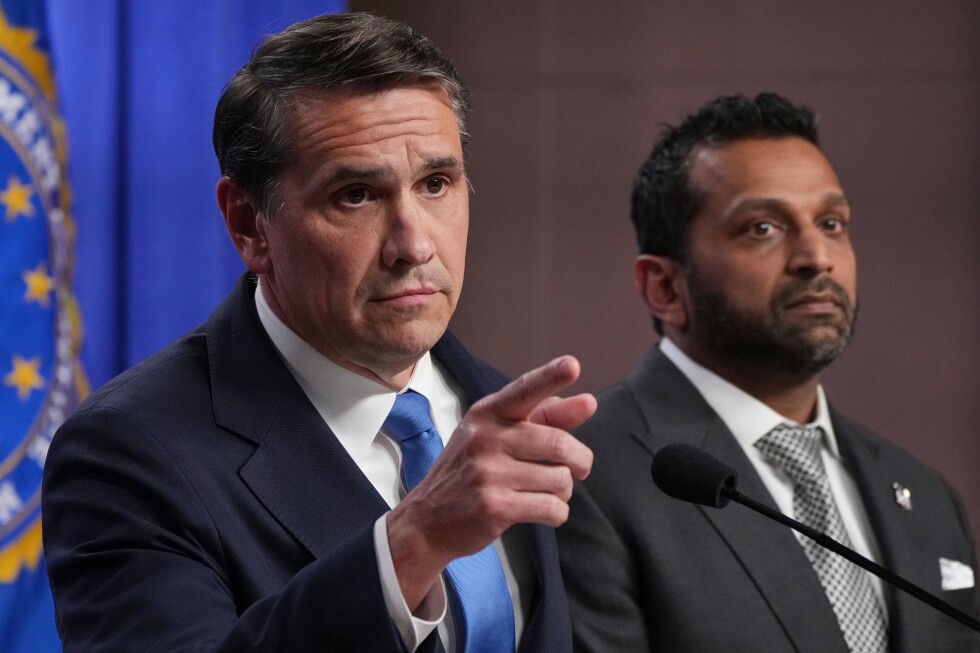
The Southern Poverty Law Center (SPLC) was indicted Tuesday by a federal grand jury in Alabama on 11 counts including wire fraud, bank fraud, and conspiracy to commit money laundering. The Department of Justice alleges the nonprofit defrauded donors by using millions of dollars to pay members of the very violent extremist groups the organization purports to oppose. Acting Attorney General Todd Blanche and FBI Director Kash Patel announced the charges during a joint press conference.
The Details
The federal indictment alleges that between 2014 and 2023, the SPLC paid at least $3 million to at least eight individuals affiliated with hate groups, including the Ku Klux Klan, National Alliance, and the National Socialist Movement. Prosecutors claim the organization used secret bank accounts linked to fictitious entities and prepaid cards to hide these payments from donors. Acting Attorney General Todd Blanche stated that the SPLC was 'manufacturing the extremism it purports to oppose by paying sources to stoke racial hatred.'
Specific details in the indictment highlight several high-paying informants, referred to internally as 'the Fs.' One informant, identified as F-9, reportedly received over $1 million between 2014 and 2023 while affiliated with the neo-Nazi National Alliance. Another, F-37, was paid over $270,000 and allegedly made racist postings under SPLC supervision and attended the 2017 'Unite the Right' rally in Charlottesville at the organization's direction.
prosecutors also allege that an informant known as F-9 stole 25 boxes of documents from an extremist group's headquarters with the knowledge of a high-level SPLC employee. These documents were then used as the basis for a report on the organization's 'Hatewatch' site. According to the DOJ, another informant, F-39, was paid approximately $6,000 to falsely claim responsibility for the theft.
FBI Director Kash Patel described the payments as an 'egregious violation,' arguing that the donor network's funds were used to pay the leadership of hate groups, thereby fueling the hatred the SPLC claimed to spend its resources dismantling.
Currently, only the SPLC as an organization has been charged, though the Justice Department noted that the investigation remains ongoing and individuals may face future charges.
Context
Founded in 1971 in Montgomery, Alabama, the SPLC originally focused on fighting white supremacist groups through civil litigation. As a 501(c)(3) nonprofit, the group relies on public and corporate donations and asserts that it accepts no government funding.
The indictment follows a period of escalating tension between the SPLC and the current administration. In October 2025, FBI Director Kash Patel severed the FBI's relationship with the organization, characterizing it as a 'partisan smear machine.' This occurred the same week the FBI cut ties with the Anti-Defamation League.
In December 2025, House Republicans held congressional hearings accusing the SPLC of targeting Christian and conservative Americans. The group also faced scrutiny after its 2024 'Year in Hate and Extremism' report characterized Turning Point USA as extremist, a designation that drew renewed attention following the assassination of activist Charlie Kirk last year.
What's Next
The SPLC has signaled it will fight the charges. Interim CEO Bryan Fair stated that the organization will 'vigorously defend' itself and its staff, claiming the federal government has been 'weaponized' to target the rights of vulnerable people. Fair defended the informant program as a necessary tool for monitoring threats of violence, stating that the information gathered saved lives and was often shared with law enforcement.
Fair also noted that the SPLC no longer employs paid informants and that the program was kept secret to protect the safety of those infiltrating violent groups. The case is expected to center on whether these payments constituted a legitimate intelligence operation or a fraudulent misuse of donor funds.
The indictment has triggered broader debates regarding the potential for the Department of Justice to target political opponents, echoing concerns raised in other recent investigations into critics of the Trump administration.
Never Miss a Signal
Get the latest breaking news and daily briefings from Zero Signal News directly to your inbox.