
S&P 500 Rises as Bank Earnings Signal Economic Resilience
Zero Signal Staff
Published April 15, 2026 at 7:23 PM ET · 184 days ago
Google News
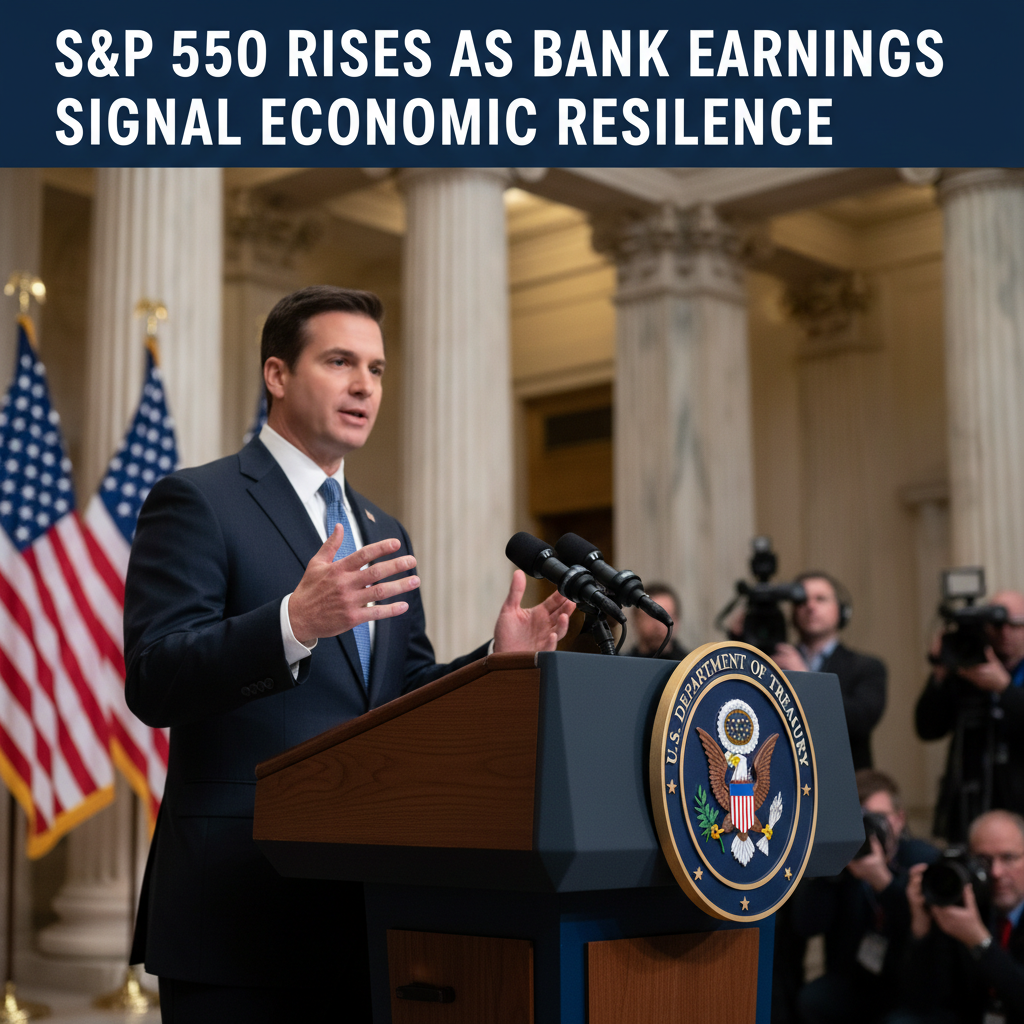
The S&P 500 closed higher on April 15, 2026, as major bank earnings reports suggested the U.S. economy continues to withstand current pressures.
The S&P 500 closed higher on April 15, 2026, as major bank earnings reports suggested the U.S. economy continues to withstand current pressures. Financial sector results provided investors with concrete evidence of consumer spending and lending activity holding steady.
Major banks reported first-quarter earnings that met or exceeded analyst expectations, with loan portfolios and deposit bases remaining stable. The positive results lifted financial stocks, which comprise roughly 13% of the S&P 500's market capitalization, and provided broad market support across other sectors.
Consumer spending data embedded in bank earnings showed credit card balances and auto loan originations remained within historical ranges, indicating households have not dramatically curtailed purchases despite elevated interest rates. This metric directly contradicts predictions from some analysts who had forecast a sharper pullback in consumer activity by mid-2026.
Market participants on financial social media platforms and trading forums noted the earnings results as a relief after weeks of mixed economic signals. Traders on X and Reddit's r/stocks communities highlighted that bank profitability remained intact despite the Federal Reserve's interest rate environment, suggesting the sector had successfully adapted to current conditions.
The broader market rally reflected rotation into financial and industrial stocks, sectors that typically benefit when economic growth remains positive. Technology stocks, which had dominated gains earlier in the year, saw modest pullbacks as investors rebalanced portfolios based on the updated economic outlook.
Context
Bank earnings carry outsized weight in market sentiment because financial institutions serve as a real-time lens into broader economic health. Their loan portfolios reflect consumer and business borrowing patterns, while deposit flows indicate confidence in the financial system itself.
The April 2026 earnings season marked the first major test of the economy's resilience following the Federal Reserve's rate hikes that began in 2023. Previous earnings cycles in 2024 and 2025 had shown deteriorating credit quality and rising loan loss provisions, but the first-quarter 2026 results suggested that trend had stabilized. The S&P 500 had gained approximately 8% year-to-date through mid-April, but bank stocks specifically had lagged broader indices until these earnings releases.
What's Next
Earnings season will continue through late April and into May, with reports from technology, healthcare, and energy sectors still pending. These results will determine whether the market's current optimism about economic durability holds or whether cracks emerge in other industries less directly tied to consumer lending.
The Federal Reserve's next policy meeting is scheduled for May 6-7, 2026. If earnings continue to show economic stability, market participants will closely watch Fed communications for any signals about interest rate cuts, which could influence equity valuations in the months ahead.
Never Miss a Signal
Get the latest breaking news and daily briefings from Zero Signal News directly to your inbox.